

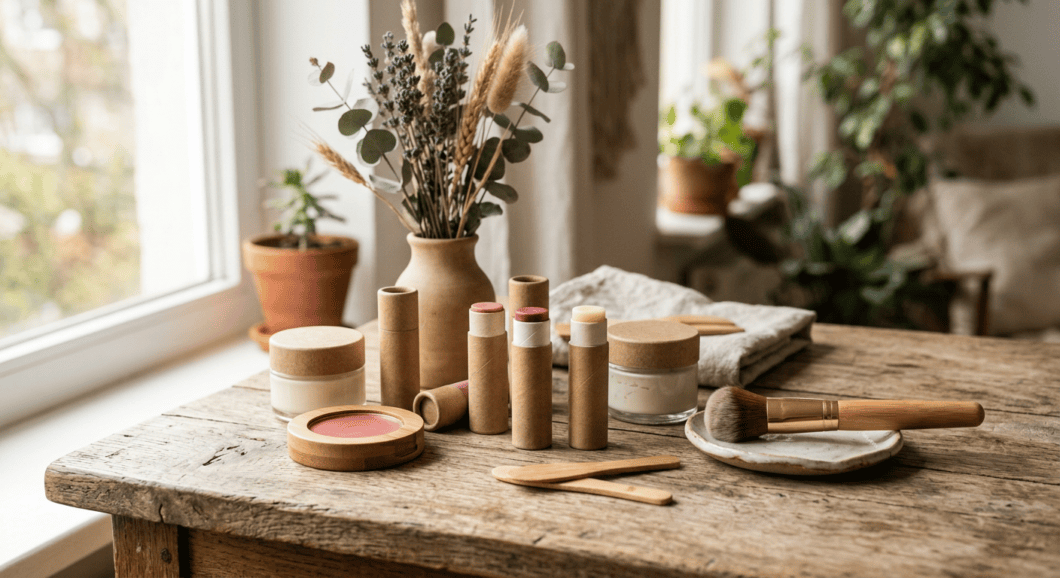
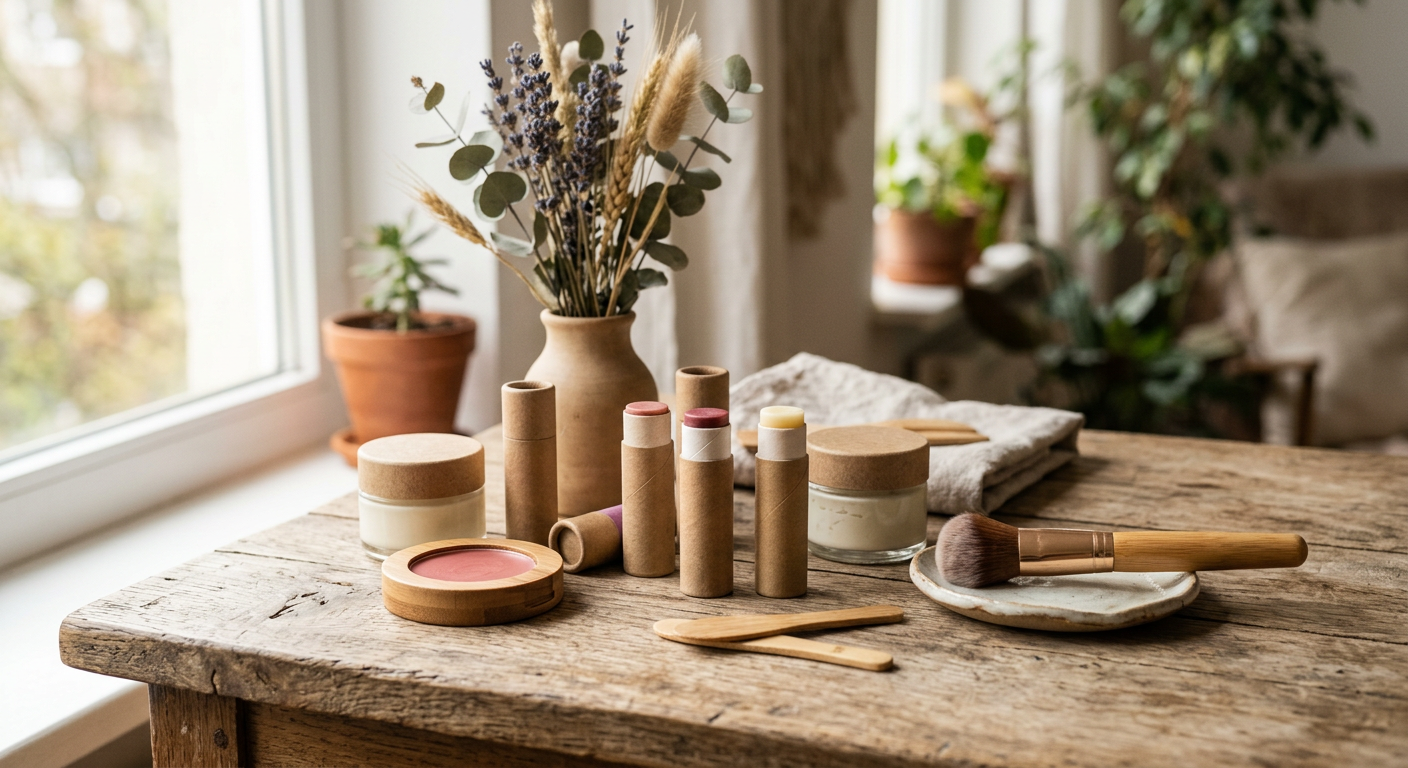
Roughly 10% of beauty packaging is small-format stuff: lip balm tubes, compact caps, sample vials. Curbside recycling facilities can’t process any of it, according to The Ellen MacArthur Foundation via Vogue. It goes to landfill no matter how carefully you sort your bins. Compostable products take a different route, with packaging and sometimes the formula itself designed to break down completely rather than sit around for a few centuries. If you pay attention to what happens to your empties, these are the products to keep an eye on.
What “Compostable” Actually Means in Beauty
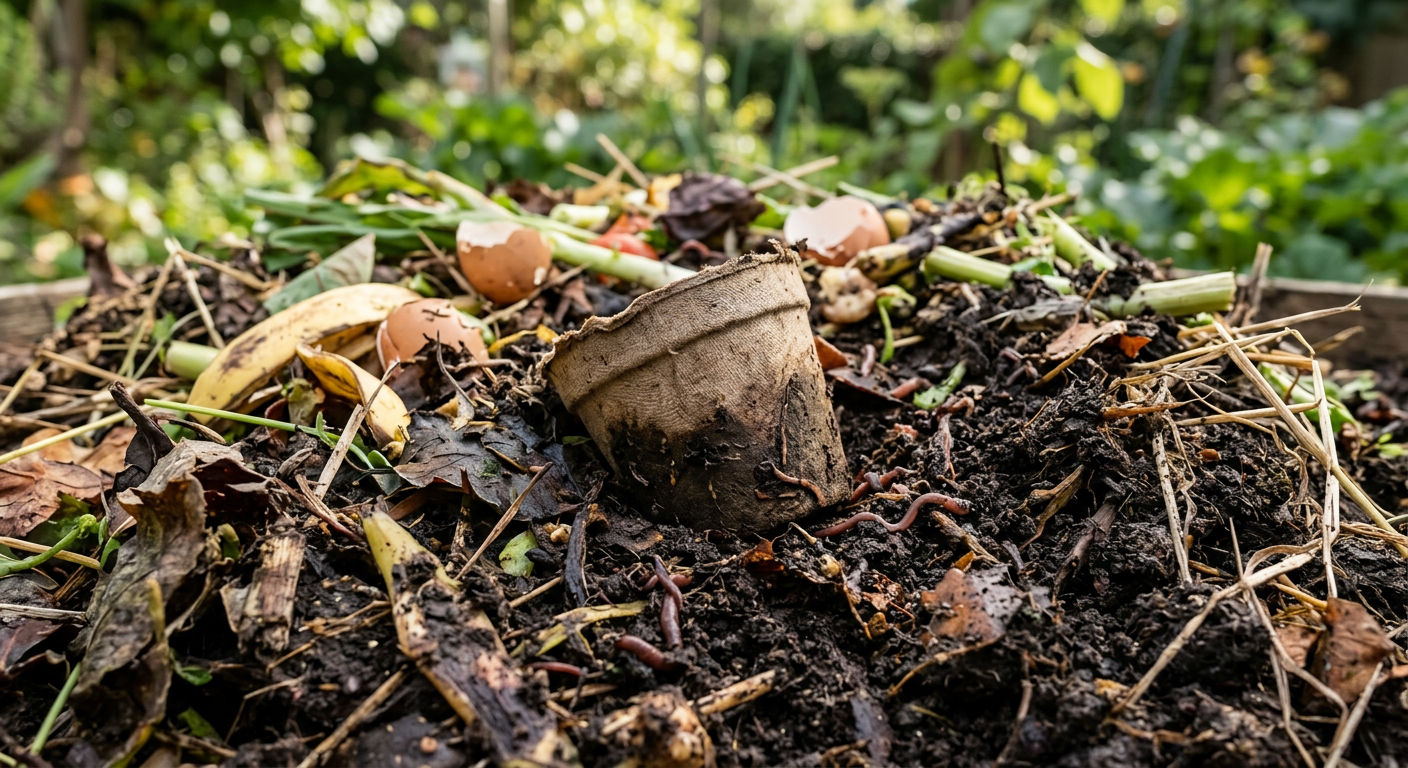
“Compostable” gets thrown around loosely, so precision matters. A material is biodegradable if microorganisms can break it down over time, but that definition barely means anything on its own. Plenty of plastics biodegrade too, given a few thousand years.
Compostable packaging has to clear a higher bar. To use the label, materials must break down within a defined window and leave no harmful residue, as Wendy Rowe lays out in her guide to biodegradable beauty.
Home Compostable vs. Industrial Compostable
Compostable products don’t all work the same way. Home compostable materials break down in a backyard bin at normal temperatures. Industrial compostable materials need the high heat and controlled conditions of a commercial facility.
The distinction is easy to miss and expensive to ignore. A product labeled “compostable” might only decompose at an industrial site you’ll never have access to. Before anything goes in your garden bin, check whether the brand specifies home or industrial composting.
The Materials to Look For
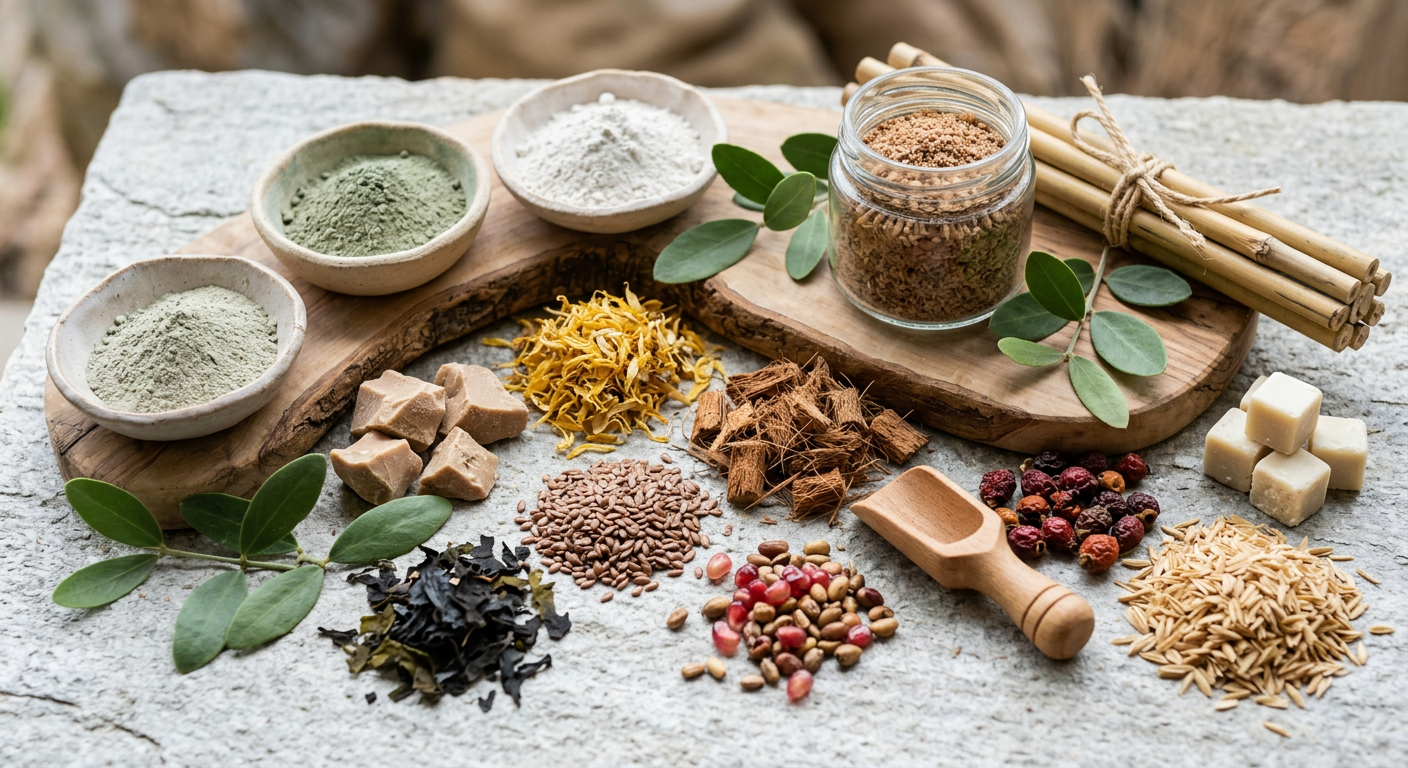
Compostable beauty runs on a fairly narrow set of plant-based and mineral inputs. Learning them is the quickest way to tell a real product from a greenwashed one.
Wendy Rowe points to cork, bamboo, hemp, and seaweed for packaging structure, plus paper, wood pulp, straw, and corn starch for molded components. These break down cleanly, and many come from renewable or waste-stream sources.
Quick Reference: Compostable Beauty Materials
| Material | Common Use | Compost Type |
|---|---|---|
| Bamboo | Brush handles, compacts, caps | Home (untreated) |
| Cork | Jar lids, applicators | Home |
| Hemp | Fabric wipes, packaging fiber | Home |
| Seaweed/algae | Films, capsules | Home |
| Corn starch (PLA) | Molded trays, wraps | Industrial |
| Wood pulp/paper | Cartons, tubes | Home |
Treat the table as a filter. When a product touts vague “eco materials” without naming a single one, read that as a warning rather than a feature.
Product Categories Worth Watching
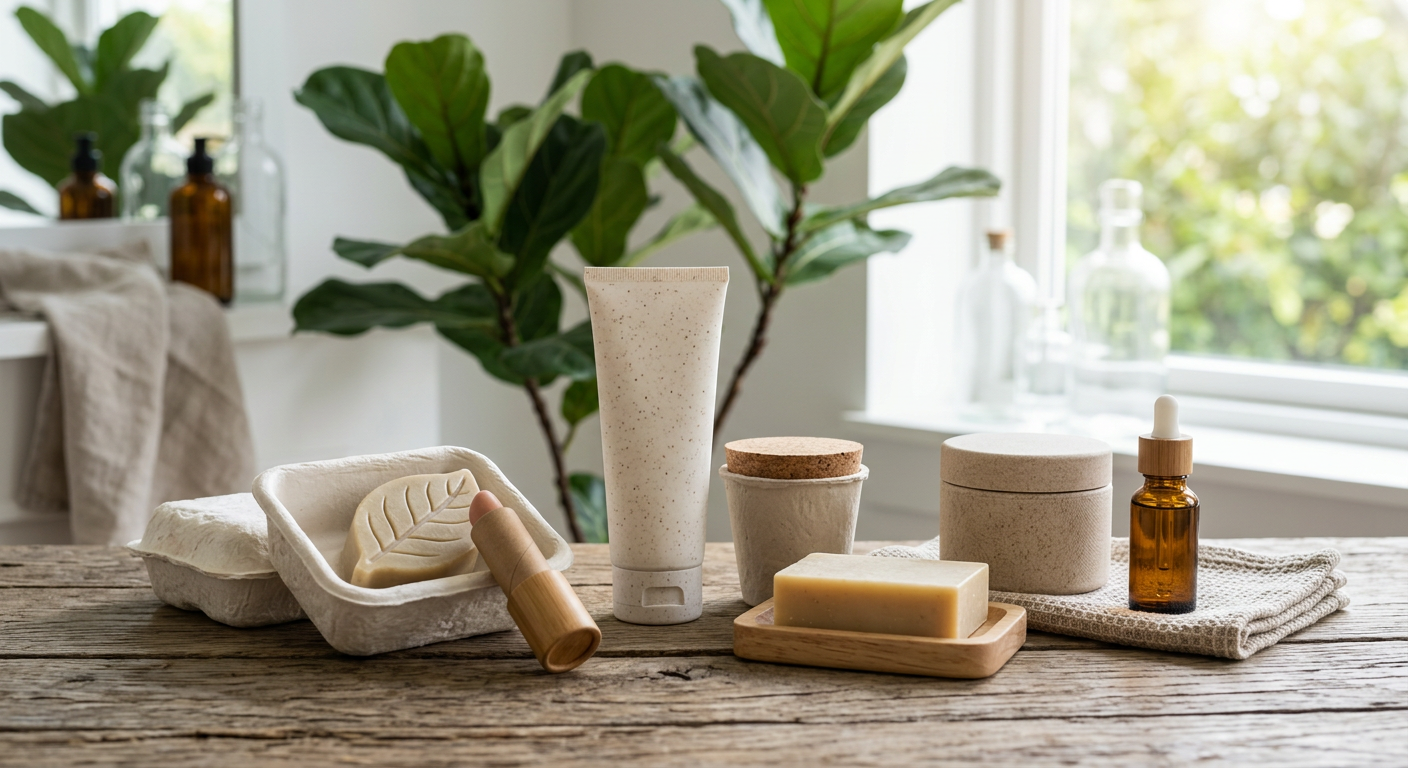
Compostable progress hasn’t spread evenly across the beauty aisle. A handful of categories have moved faster than the rest, and that’s where the credible options are right now.
Solid bars. Shampoo and conditioner bars skip the bottle entirely and usually ship in paper wraps. The Bloom Shampoo & Conditioner Bar, flagged by ZeroWasteStore, is a good example of packaging-free formulation.
Makeup with bamboo housing. Antonym Cosmetics and similar brands build their products around bamboo cases, which Makeup.com describes as both sustainable and durable. Bamboo compacts do the job of the plastic clamshells filling up landfills.
Lip and facial care in compostable tubes. Poppy & Pout, tested by sustainability creator Krys Gier, packs its lip balm in paper tubes instead of plastic. It’s a small change that adds up when you consider how many balm tubes get thrown out each year.
How to Verify a Compostable Claim
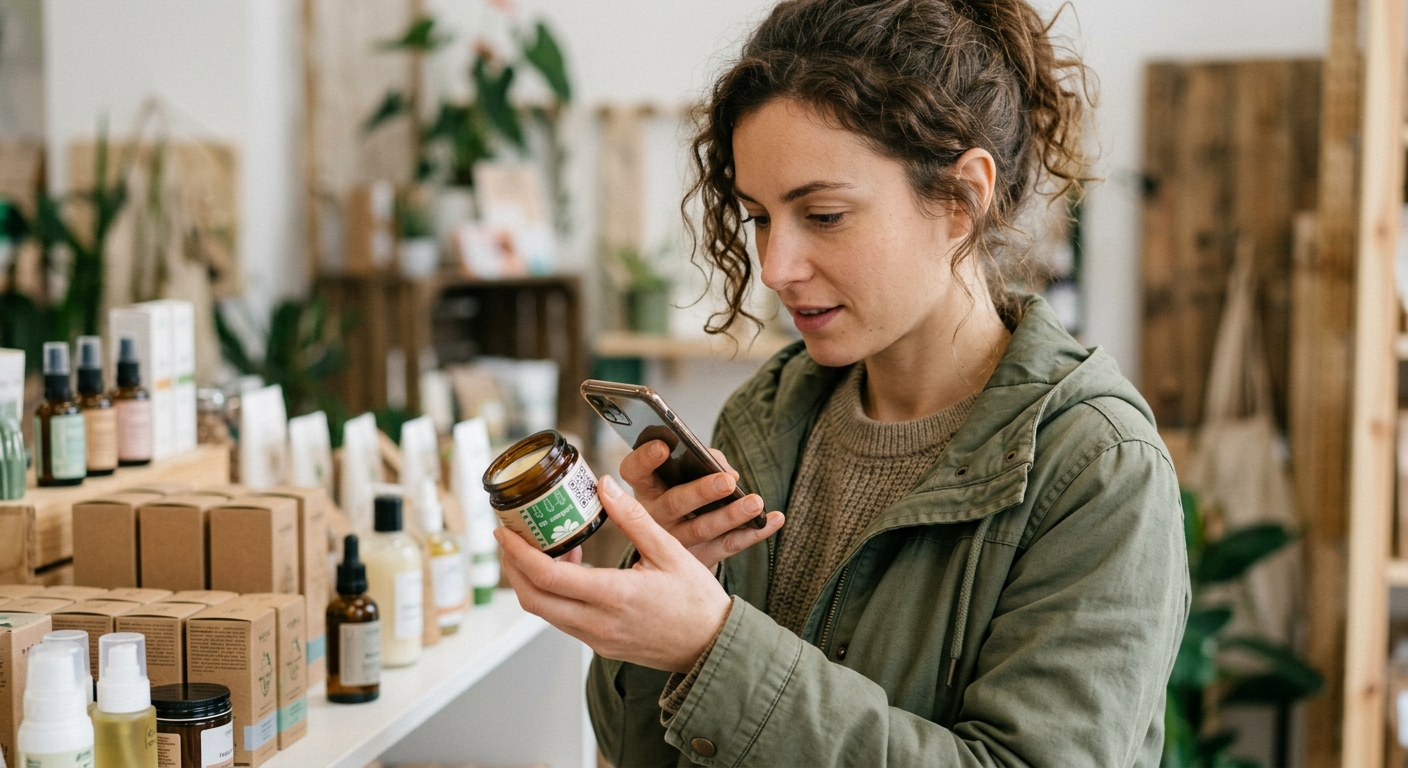
Skepticism pays off here. More than half of consumers now doubt the authenticity of clean beauty claims, and 70% research a company’s environmental record before they buy, according to Devera.
Look for specifics, not slogans. Legitimate brands disclose their exact materials, name the compost type, and increasingly back their claims with Life Cycle Assessment data that measures a product’s impact across its full lifespan.
Green Flags and Red Flags
- Green flag: Named materials (bamboo, cork, seaweed) and clear home vs. industrial guidance.
- Green flag: Third-party certification and published sourcing details.
- Red flag: Words like “natural” or “eco-friendly” with nothing to back them up.
- Red flag: Compostable packaging wrapped around a formula full of microplastics.
That second red flag is the one people overlook. A compostable tube counts for little if the product inside is loaded with synthetic microplastics. Favor brands that deal with both the packaging and the formula.
Why This Market Is Accelerating
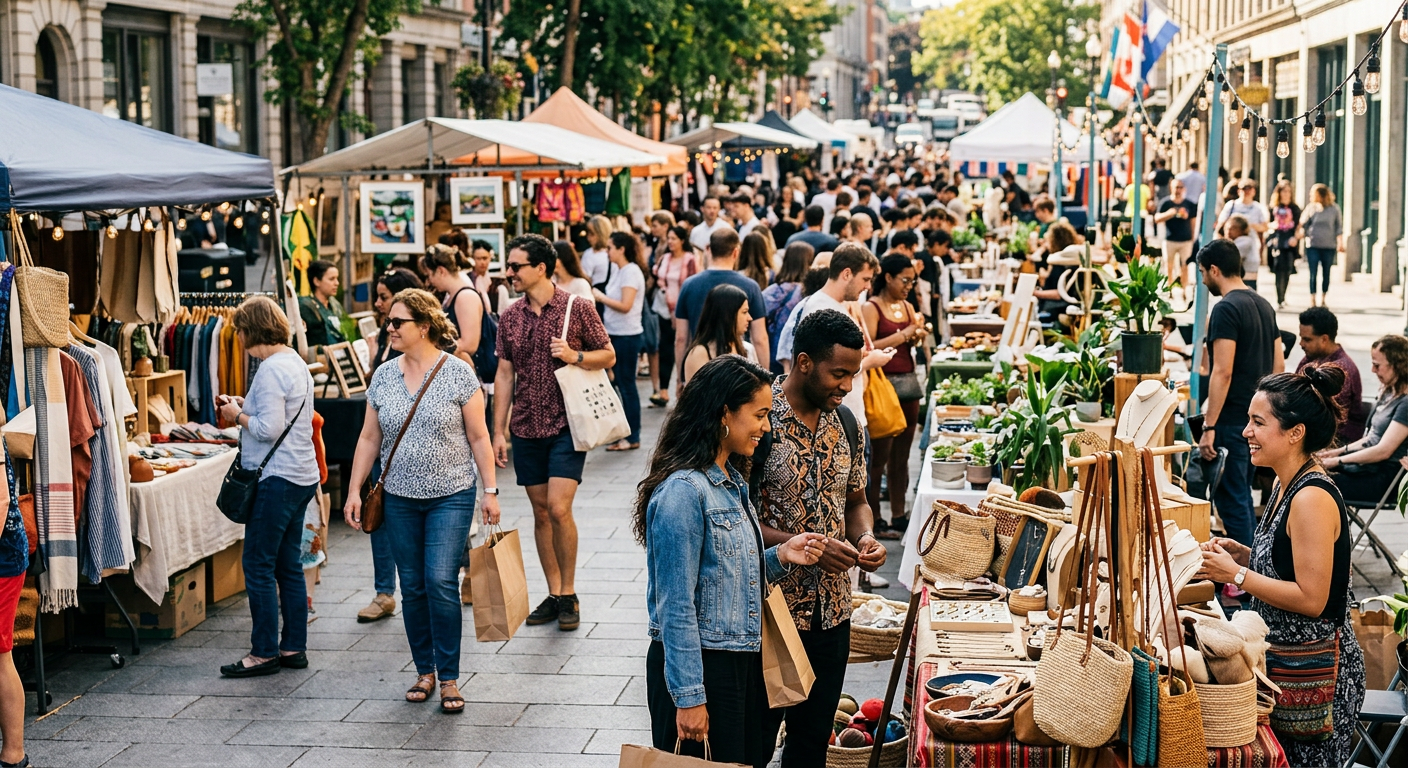
Demand is doing the heavy lifting, and the numbers make the case. Vogue reports that 76% of consumers now actively seek out sustainable products.
Younger shoppers push harder still. Among Generation Z, 67.7% prioritize sustainability in their beauty purchases and 56.2% will pay more for eco-friendly options, per Devera. That kind of buying power reshapes what companies develop.
Sustainable beauty has gone, in the words of ZeroWasteStore, “from niche to necessary.” Microplastic-free makeup, refillable systems, and compostable packaging are turning into baseline expectations instead of premium add-ons.
Building a Compostable Routine
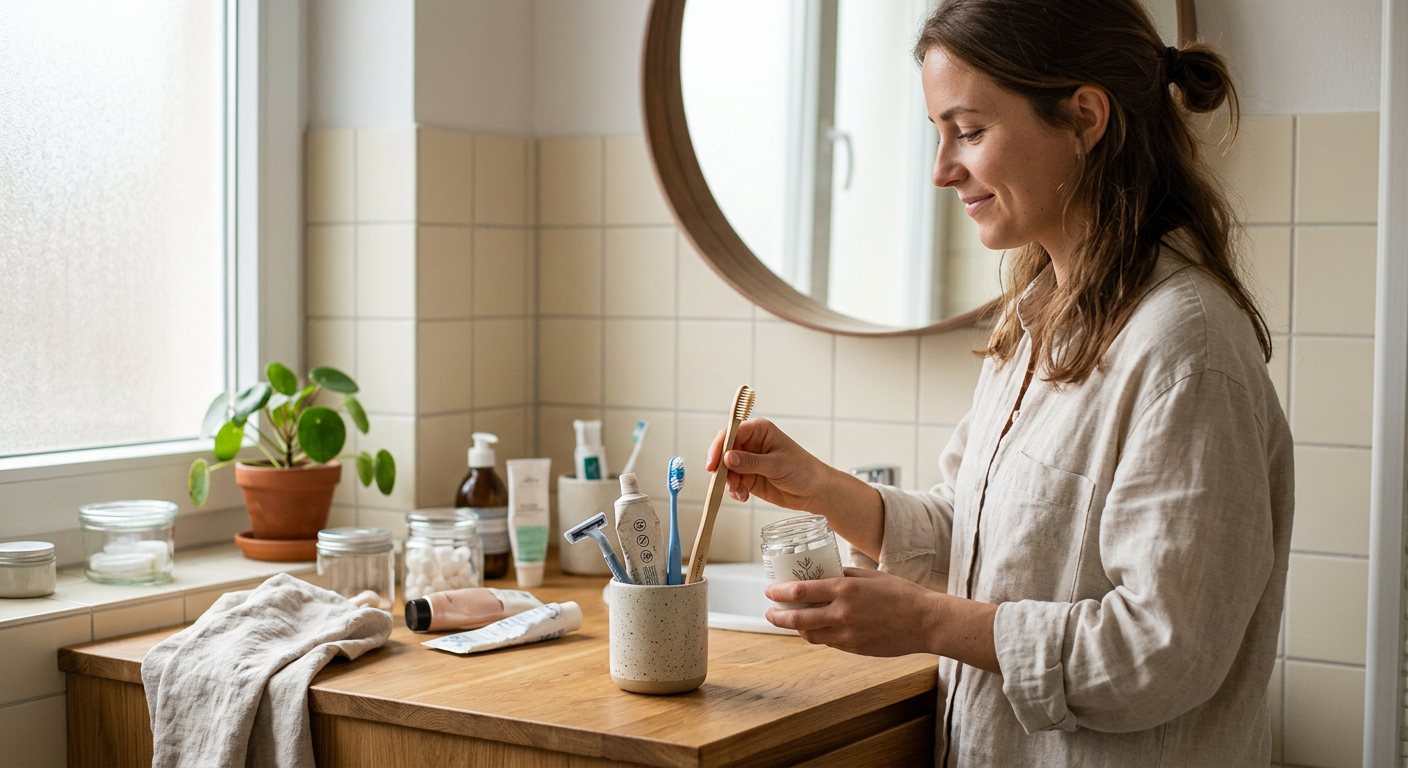
There’s no need to gut your entire vanity in a weekend. The greener move is to replace products as you finish them, not to bin things that still work.
Start with the categories that already have solid compostable options: shampoo and conditioner bars, lip balm in paper tubes, and bamboo-housed makeup. These are easy to find and ask for almost no compromise on performance.
After that, run the verification checklist on anything new you consider. A brand that names its materials, specifies the compost type, and skips the microplastics is one you can buy from without second-guessing.
Conclusion
Compostable beauty products solve a problem recycling can’t touch: they keep small-format packaging out of landfills by breaking down completely. The categories to watch right now are solid bars, bamboo-housed makeup, and paper-tube lip care from brands that are open about their materials.
Check every claim against named materials, clear composting guidance, and microplastic-free formulas. With 76% of consumers already hunting for sustainable products, the market is expanding fast, and better options show up every season. Audit your routine this week, pick one product you can swap for a compostable alternative, and buy it the next time you run out.
FAQ
Q: Are compostable beauty products as effective as conventional ones?
Usually, yes. Shampoo bars, bamboo compacts, and paper-tube lip balms hold up well against conventional versions, and the sustainability creators who test them tend to come away impressed.
Q: Can I compost beauty packaging in my backyard bin?
Only if it’s labeled home compostable. Untreated bamboo, cork, and paper break down at home. Corn starch (PLA) products usually need an industrial composting facility.
Q: What’s the difference between biodegradable and compostable?
Biodegradable just means a material breaks down eventually, which is a weak claim when even plastics technically qualify over millennia. Compostable is stricter: the material has to decompose within a set period and leave no harmful residue.
Q: How do I avoid greenwashing when shopping for compostable beauty?
Look for named materials and clear composting instructions instead of vague terms like “eco-friendly.” With 70% of consumers now researching environmental credentials, credible brands publish their sourcing details and third-party certifications.
Q: Does compostable packaging mean the formula is also clean?
Not always. A compostable tube can still hold synthetic microplastics, so favor brands that handle both the packaging and the formulation.
Q: Are compostable beauty products more expensive?
They can cost more, though prices are dropping as demand grows. And 56.2% of Gen Z consumers say they’ll pay more for eco-friendly beauty, which is helping push prices toward the competitive range.