

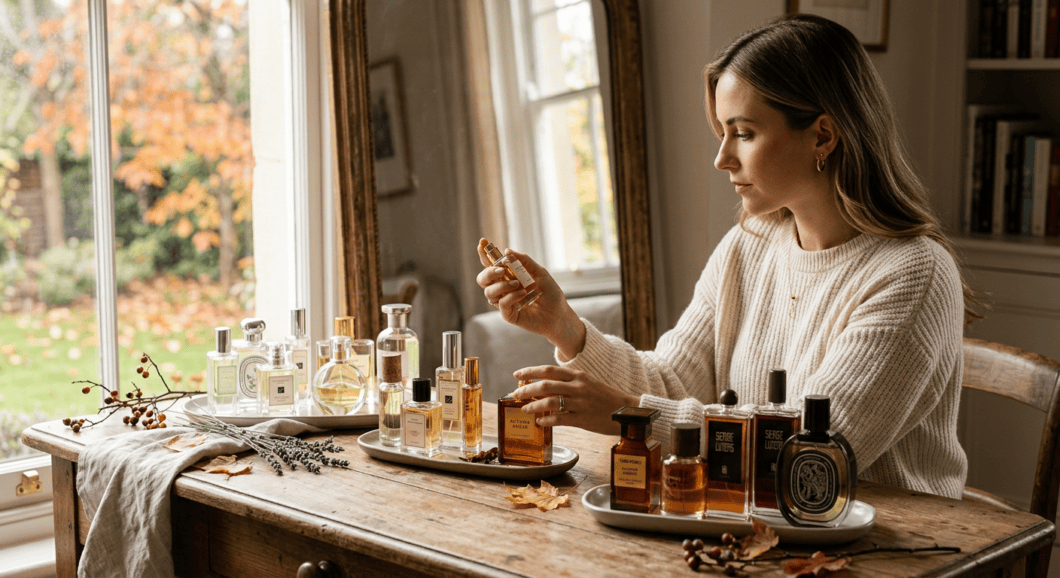
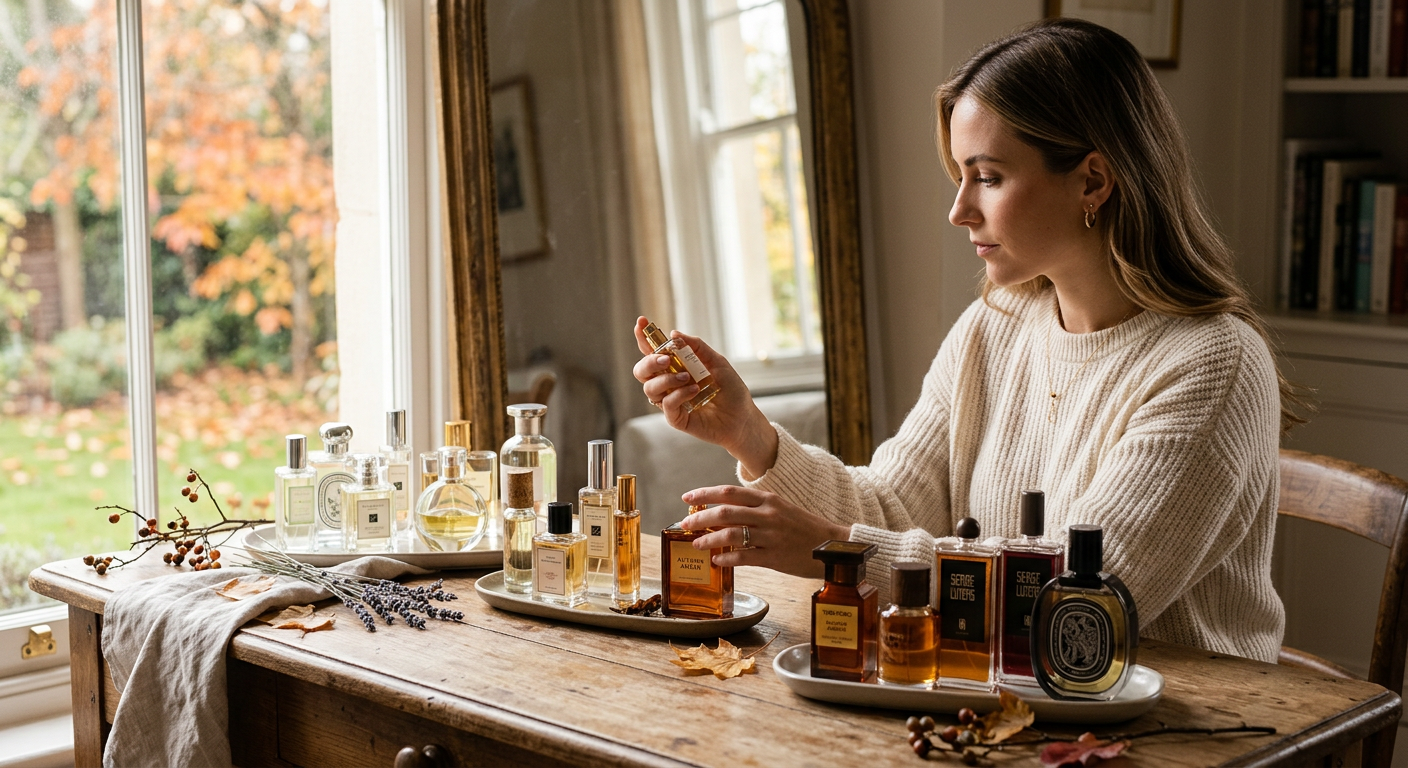
The perfume that turns heads on a crisp October evening can smell flat and cloying by July. Your skin, the air, even your mood shift with the calendar, and your fragrance should follow. Choosing a signature fragrance for every season isn’t really about owning one perfect bottle. It’s about building a scent wardrobe that fits how you actually live. Younger buyers already treat it this way: Gen Z owns 8 to 12 different fragrances on average, against 2 to 3 for Boomers, choosing variety over a single scent (Scento).
This guide breaks down how temperature, skin chemistry, and scent families work together, so you can pick the right fragrance for spring, summer, autumn, and winter.
Why Season Changes How a Fragrance Performs
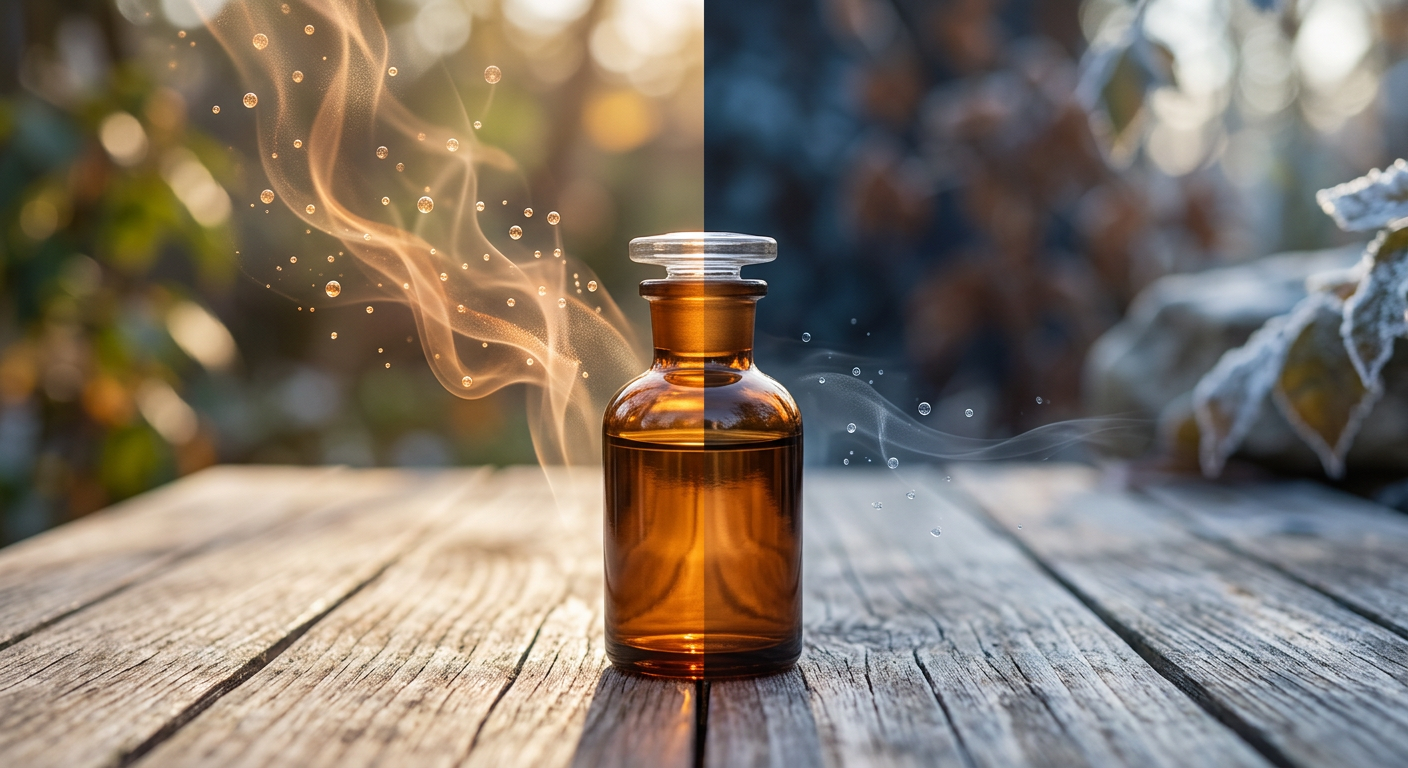
Fragrance isn’t static. Heat speeds up evaporation, so summer pushes a perfume’s top notes forward and can make heavy compositions feel like too much. Cold weather slows that process down. Richer, denser scents unfold more slowly and stay on the skin longer.
Most of this comes down to how your skin reacts to temperature. As the fragrance house Delacourte puts it, the choice of perfume “is primarily driven by how the skin interacts with temperature” (Delacourte). Warm, humid skin throws scent out aggressively. Cool, dry skin keeps it close.
A fragrance that feels balanced in December can read as heavy and headache-inducing in August. Rather than fighting that, work with it and rotate lighter and heavier compositions through the year.
Understanding Fragrance Families Before You Buy
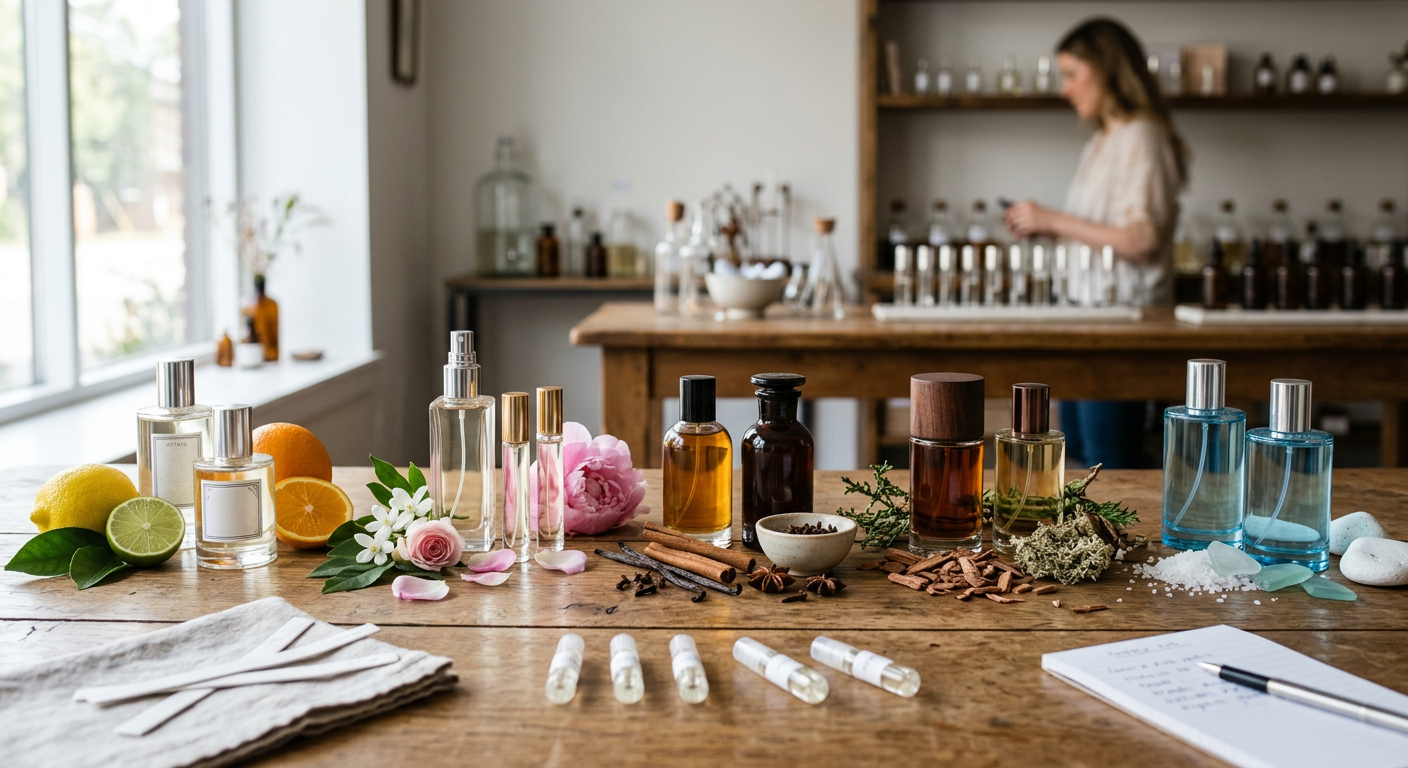
Before you match scents to seasons, figure out which fragrance families you gravitate toward. Perfumers increasingly talk about scent profiles, the overall character and emotional shape of a perfume, rather than isolated notes like rose or oud (Vogue Arabia).
The Core Fragrance Families
- Floral: Rose, jasmine, peony, and lily. Versatile and often season-adaptable.
- Citrus (Fresh): Bergamot, lemon, grapefruit. Bright, light, and short-lived.
- Aquatic: Marine and ozonic notes that evoke clean air and water.
- Woody: Cedar, sandalwood, vetiver. Grounded and long-lasting.
- Oriental/Amber: Vanilla, amber, resins, and spices. Warm and dense.
- Gourmand: Edible notes like caramel, chocolate, and coffee.
If you’d happily spend an hour in a bakery for the smell alone, gourmand fragrances probably suit you (Snif). Knowing your family cuts an overwhelming market down to a shortlist you can actually work with.
The Season-by-Season Fragrance Guide
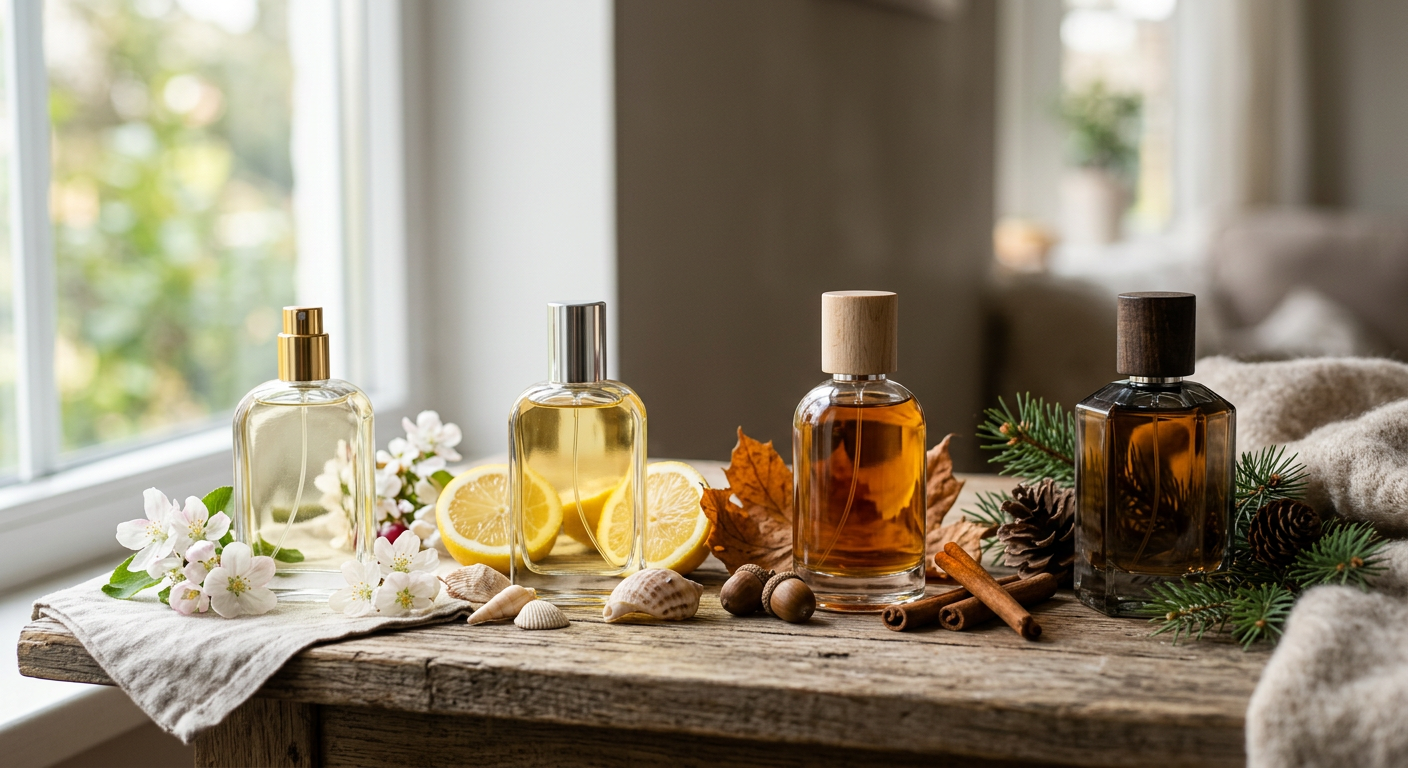
Warm weather calls for lighter, fresher scents; cold weather rewards depth and warmth (BellaVita Luxe). Use the table below as a quick reference when you’re building your rotation.
| Season | Best Scent Profiles | Key Notes | Why It Works |
|---|---|---|---|
| Spring | Fresh florals, green | Lily of the valley, peony, cut grass, citrus | Light notes match mild temperatures and blooming energy |
| Summer | Citrus, aquatic | Bergamot, marine notes, neroli | Bright, cooling scents that resist heat’s amplifying effect |
| Autumn | Woody, spicy | Cedar, cinnamon, incense, fig | Transitional warmth as temperatures drop |
| Winter | Oriental, gourmand | Vanilla, amber, oud, caramel | Rich notes bloom slowly and last in cold, dry air |
Spring and Summer: Go Lighter
In warmer months, reach for citrus, aquatic, and fresh floral compositions. These lighter concentrations sit well on warm skin and won’t turn overpowering as the temperature climbs. A lower oil concentration, like an eau de toilette, projects softly instead of clinging to you all day.
Autumn and Winter: Add Depth
Once the weather cools, richer woody, spicy, and gourmand scents come into their own. Cold air slows evaporation, so an eau de parfum or extrait built on amber, vanilla, or oud develops gradually and lasts for hours. This is the season for the bold compositions that would smother you in July.
How to Test a Fragrance Properly
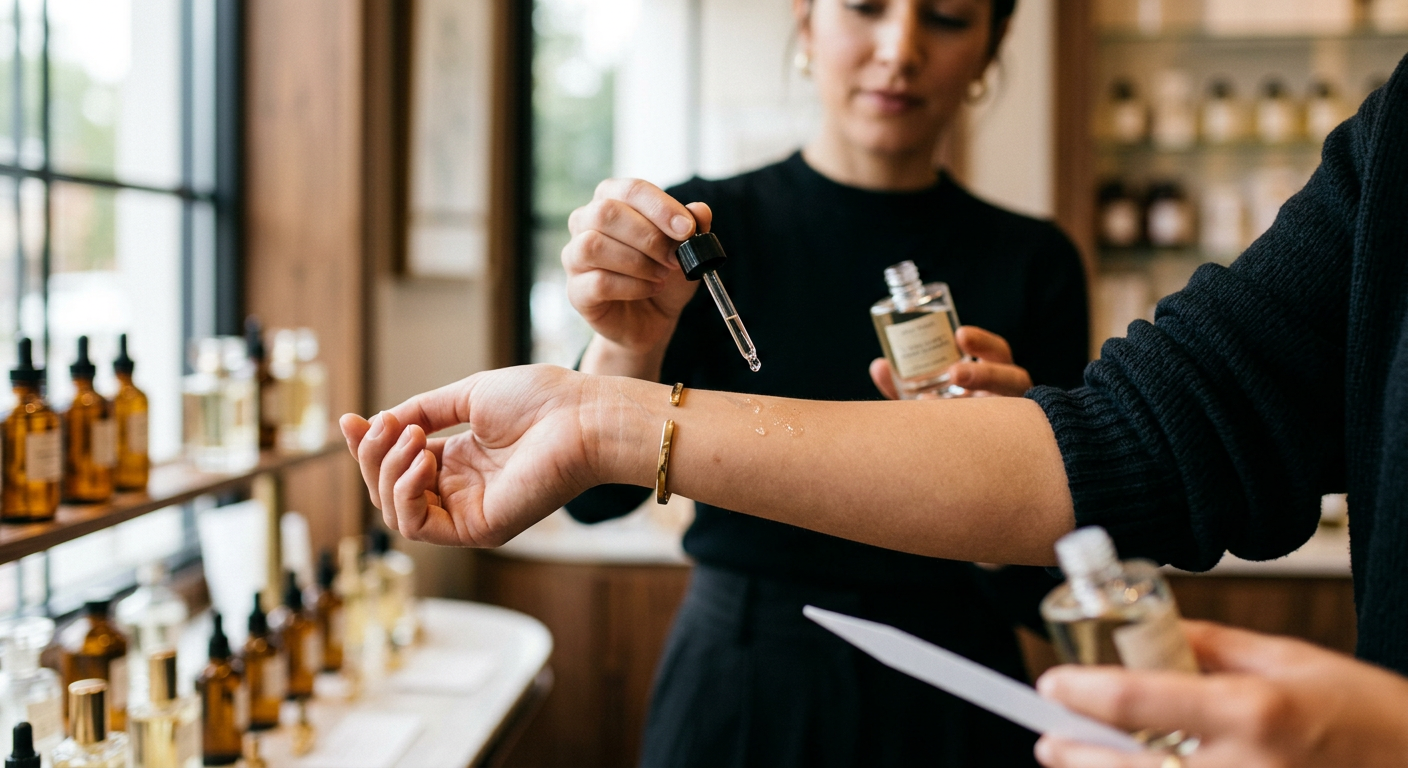
Don’t commit to a bottle based on a paper strip. Your skin chemistry changes how a perfume smells, and a scent that shines on a friend can sour on you. Apply it to your wrist and give it time.
Live With the Scent All Day
Wear a fragrance for several hours before you decide. The top notes you catch in the first few minutes aren’t the base notes that define your signature (ScentLab Fragrances). A perfume moves through three phases: the opening top notes, the heart notes, and the lasting base. Those base notes are what people will associate with you.
Start With Samples
There’s no need to blind-buy a full bottle. Some 78% of Gen Z buyers start with travel sizes rather than full bottles, testing several scents for a few dollars each before they commit (Scento). Sampling a handful of options across a few days trains your nose and saves you from expensive mistakes.
Understanding Concentration and Longevity
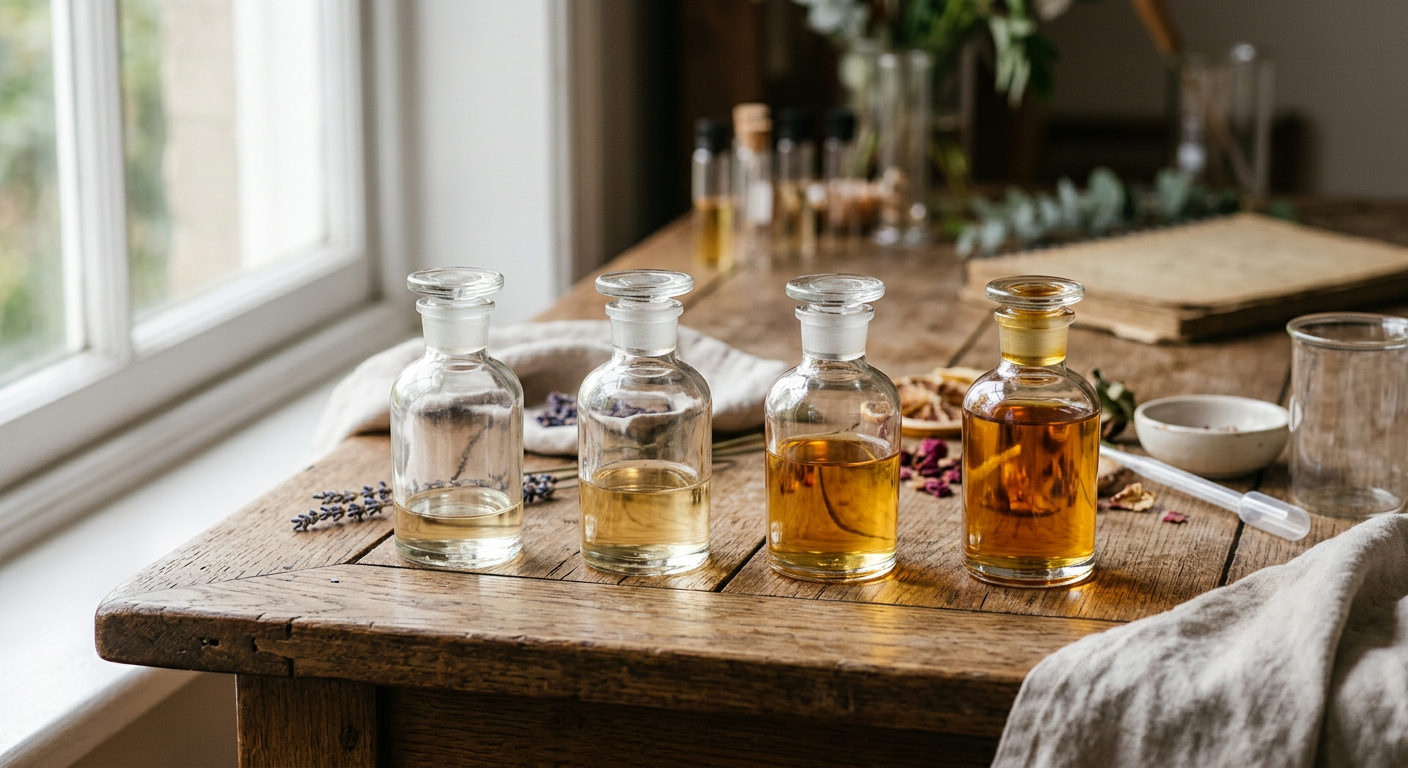
Fragrance concentration determines how long a scent lasts and how strongly it projects. Oil concentration is one of the biggest factors in choosing a signature scent (Snif). Match concentration to season and you improve both comfort and performance.
| Concentration | Oil % (approx.) | Longevity | Best Season |
|---|---|---|---|
| Eau de Cologne | 2–4% | 2–3 hours | Summer |
| Eau de Toilette | 5–15% | 3–5 hours | Spring/Summer |
| Eau de Parfum | 15–20% | 5–8 hours | Autumn/Winter |
| Extrait de Parfum | 20–30% | 8+ hours | Winter |
A lighter eau de toilette suits hot months when you want subtlety, while a concentrated eau de parfum delivers the staying power cold weather demands. Buying the same scent in two concentrations is one way to stretch a favorite across seasons.
Building a Year-Round Scent Wardrobe
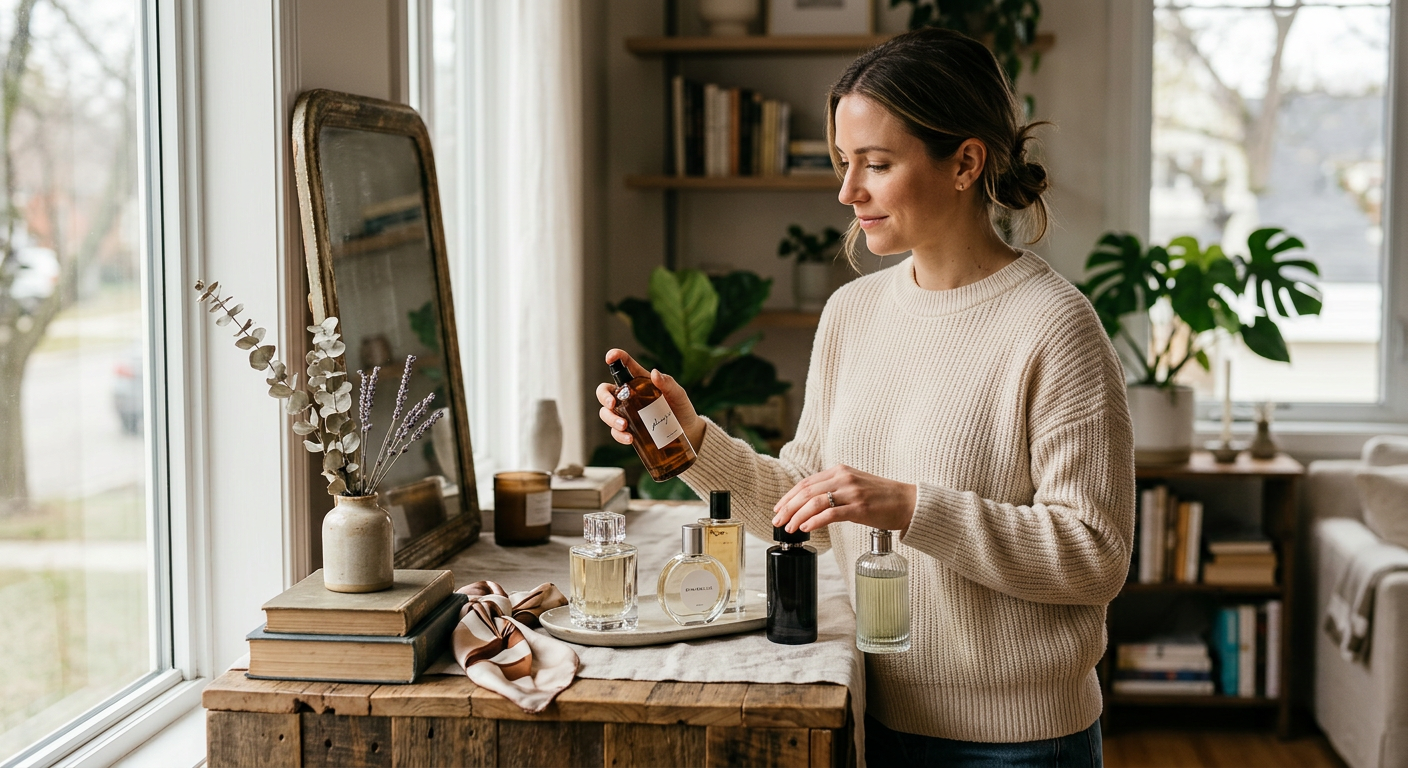
You don’t need dozens of bottles to cover the calendar. A rotation of three to five fragrances handles most climates and occasions. Aim for one fresh scent, one floral or versatile everyday option, one warm autumn choice, and one rich winter statement.
A signature scent can also mean loyalty to a single fragrance worn year-round, whatever the season (Delacourte). If that’s your goal, pick a well-balanced composition, usually a soft woody or floral, that adapts across temperatures instead of leaning to one extreme.
Whichever route you take, pay more attention to how a fragrance behaves on your skin than to the loudest new launch. The best fragrance choice is usually the instinctive one (Vogue Arabia).
Conclusion
Choosing a signature fragrance for every season comes down to a few clear principles: understand how temperature affects scent, identify your preferred fragrance families, match concentration to climate, and always test on skin before you buy. Lighter citrus and aquatic scents carry the warm months; woody, oriental, and gourmand compositions define autumn and winter.
Start small. Order a set of samples across two or three fragrance families, wear each for a full day, and note how they evolve on your skin. Build your rotation from there and you’ll have the right scent for every month of the year. Try travel-size decants before you buy full bottles. Your nose and your budget will both come out ahead.
Frequently Asked Questions
Q: Can one fragrance work for all four seasons?
Yes, though it takes a well-balanced composition rather than an extreme scent. Soft woody or versatile floral fragrances adapt best across temperatures, and adjusting how much you apply helps a single scent perform in both warm and cold weather.
Q: How many fragrances should I own for a full seasonal wardrobe?
Three to five fragrances usually cover every season and occasion. A practical rotation includes one fresh summer scent, one versatile everyday option, one warm autumn choice, and one rich winter statement.
Q: Why does my perfume smell different in summer than in winter?
Heat speeds up evaporation, amplifying top notes and making heavy scents feel overwhelming. Cold weather slows evaporation, so richer compositions unfold gradually and last longer on the skin.
Q: What fragrance concentration lasts the longest?
Extrait de parfum, at 20–30% oil concentration, offers the longest wear at eight or more hours. Eau de parfum follows at 15–20%, making both a good fit for autumn and winter.
Q: How long should I test a fragrance before buying?
Wear it on your skin for several hours, ideally a full day. The top notes you smell first differ from the lasting base notes, which are the ones people will associate with you.
Q: Are samples worth buying before a full bottle?
Yes. Testing travel sizes across several days trains your nose and heads off expensive mistakes, a strategy 78% of Gen Z fragrance buyers already use before committing to full bottles.