

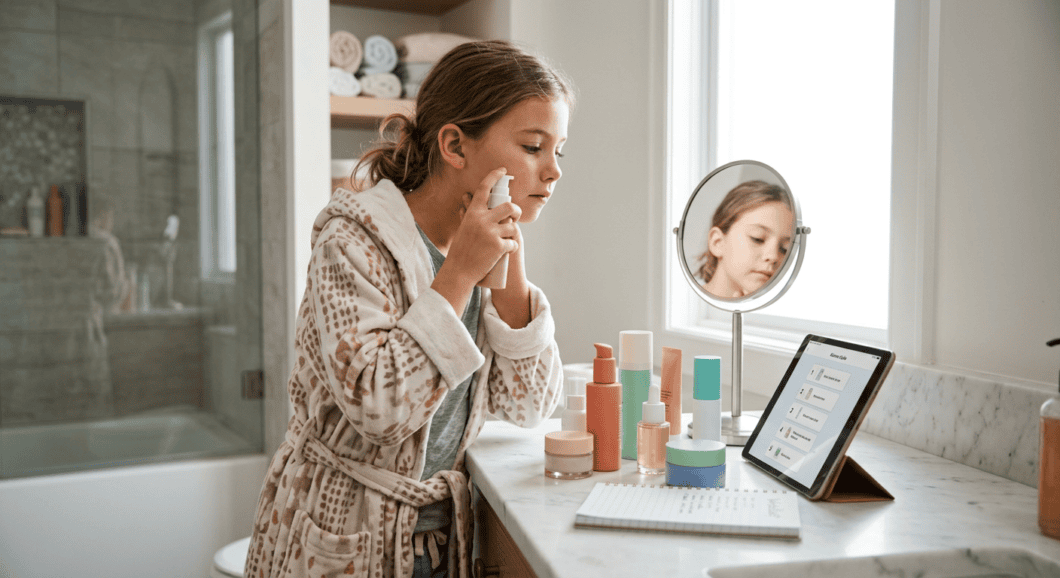
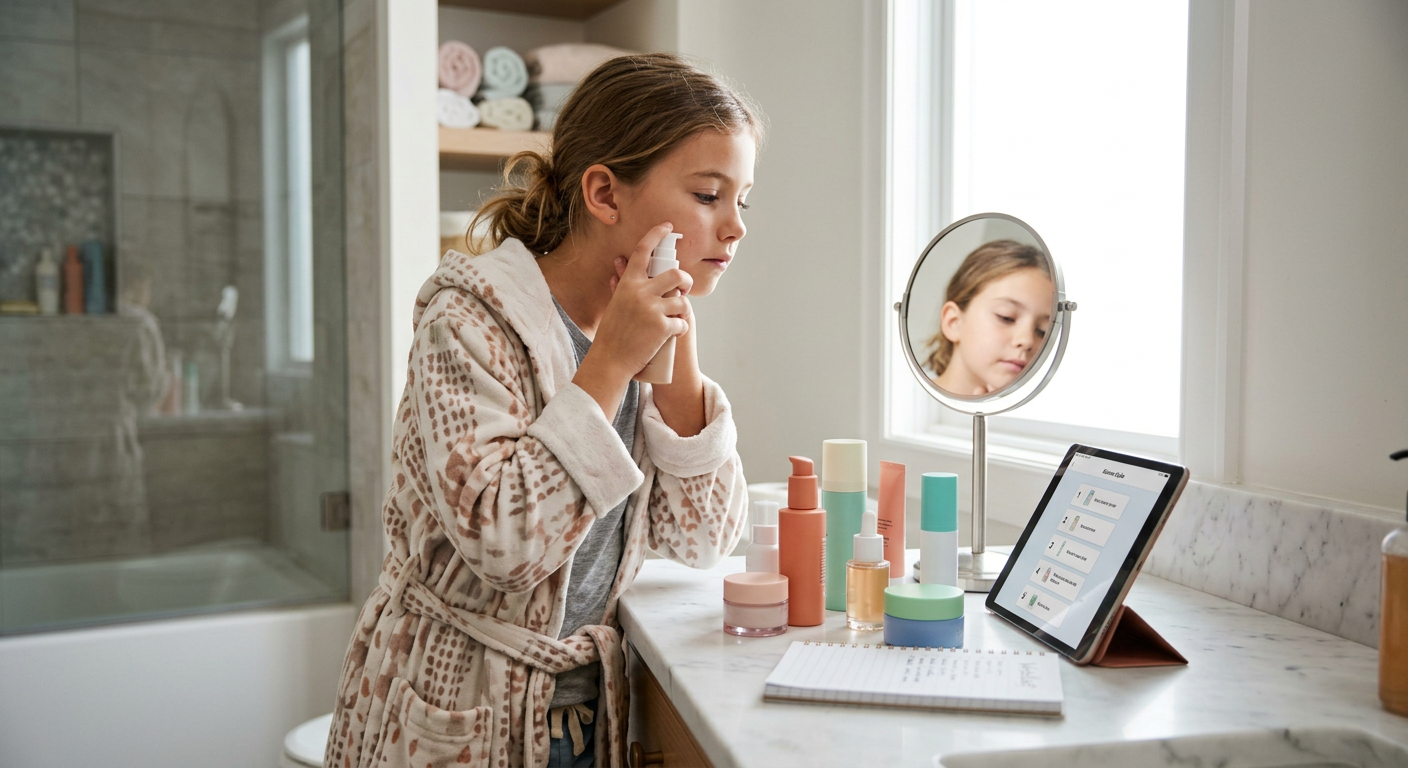
A nine-year-old with a 10-step skincare routine and a Sephora wishlist longer than yours isn’t a punchline. It’s a market signal. Gen Alpha — the cohort born between 2010 and 2024 — has already picked up the nickname “Sephora Kids,” and the beauty trends this generation is driving reach well past the store aisle into household budgets, product formulation, and the way people discover what they buy.
This is the first generation to learn beauty from influencers in real time, phone in one hand and a TikTok tutorial on the screen, moving at the same speed as the trend cycle. BeautyMatter puts Gen Alpha at a $95 billion consumer force in beauty. If you sell, market, or just follow the category, their preferences are already shaping your next purchase.
Skincare Before Makeup: The Tween Routine Revolution
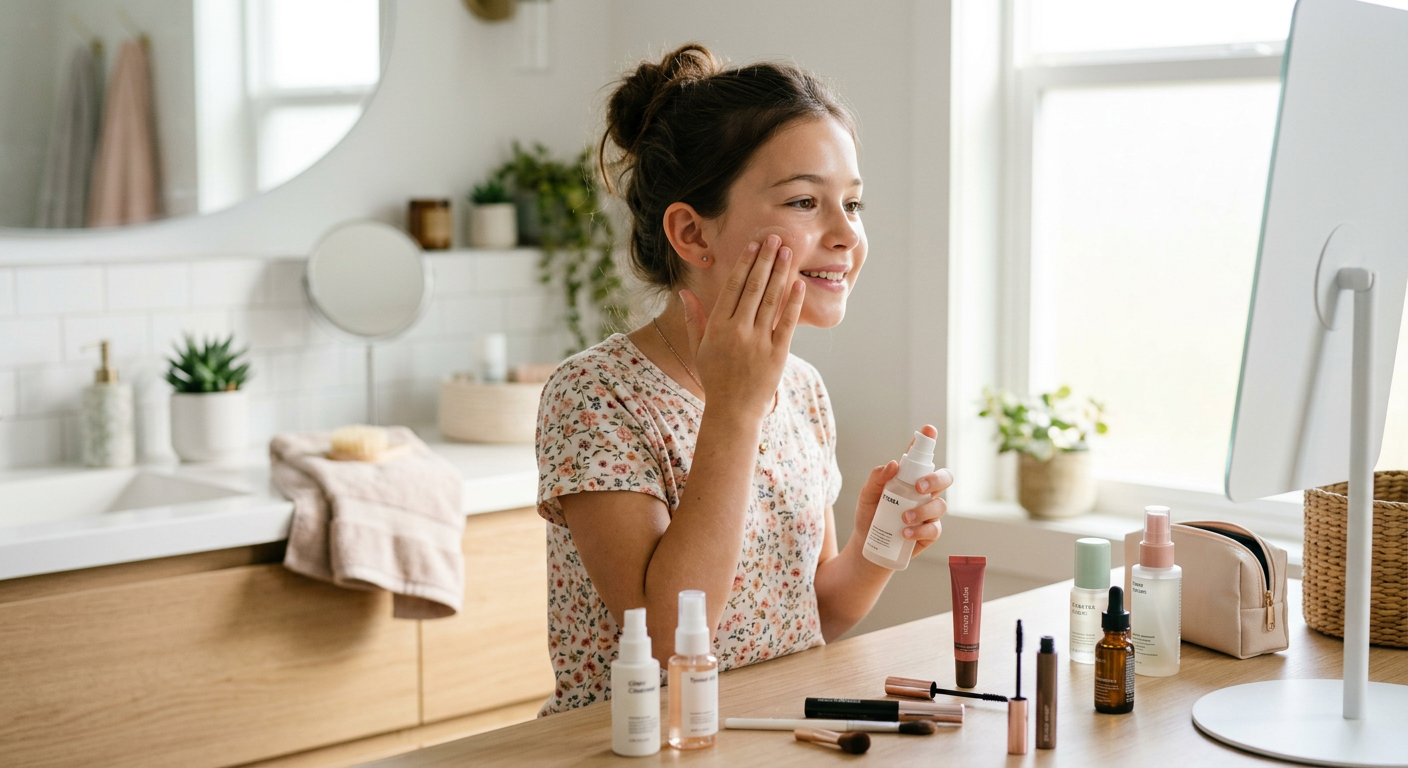
The most visible thing Gen Alpha is doing is treating skincare as the entry point, often ahead of makeup. Previous generations started with lip gloss and eyeshadow. This one goes straight to serums, moisturizers, and multi-step routines picked up from creators online.
Their obsession with brands like Drunk Elephant became a cultural moment. Glossy reported that Gen Alpha shoppers overwhelmed in-store displays at Sephora, which is where the “Sephora Kids” label came from. Demand ran strong enough to strain how brands merchandised their retail space.
A New Category: Tween-Focused Beauty
Brands responded by building products for the age group directly. Evereden launched in 2018 with baby products, moved into tween skincare in 2021, and hit Sephora shelves in October 2025. That same year, creator Salish Matter’s tween line Sincerely Yours debuted at Sephora, alongside newcomers Erly, Rile, and Saint Crewe.
These brands face an unusual problem. As one founder told Glossy, you have to sell to two generations at once: “the millennial parents who are purchasing, as well as the Gen Alphas who need to think you’re cool.”
AI-Native Shopping and Product Discovery
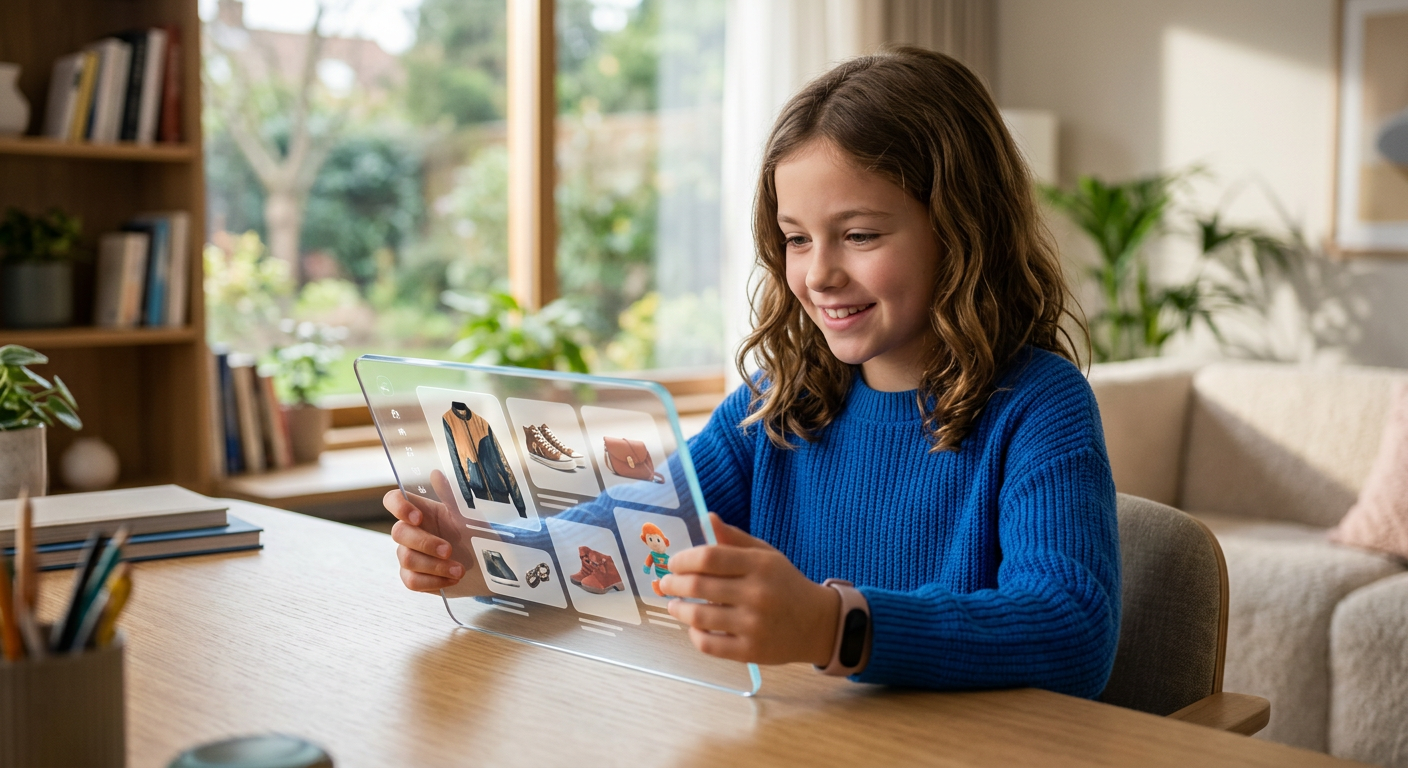
Gen Alpha grew up with artificial intelligence as a default tool, and that changes how they find products, weigh claims, and decide what to buy. It’s a real break from browsing shelves or reading magazine reviews.
Ulta Beauty and NielsenIQ ran a study called Smart Beauty: AI, Personalization and the Gen Alpha Consumer, surveying more than a thousand Gen Alpha respondents and their guardians. One finding, flagged by American Salon, stood out: 26% of teen boys use AI shopping assistants to find personal care products, nearly double the rate of every other Gen Alpha subgroup.
What AI-Native Habits Mean for Brands
For brands, discovery is shifting into conversational AI and social commerce rather than traditional search or advertising. When your product data, shade information, and ingredient claims aren’t machine-readable and consistent, AI assistants have a hard time recommending you at all.
AR try-ons and personalized shade matching are turning into baseline expectations rather than premium features. Arbelle reports that brands offering accurate shade matching and confidence-building tools see fewer product returns and build longer-term loyalty across generations.
Household Influence: The Real Purchasing Power
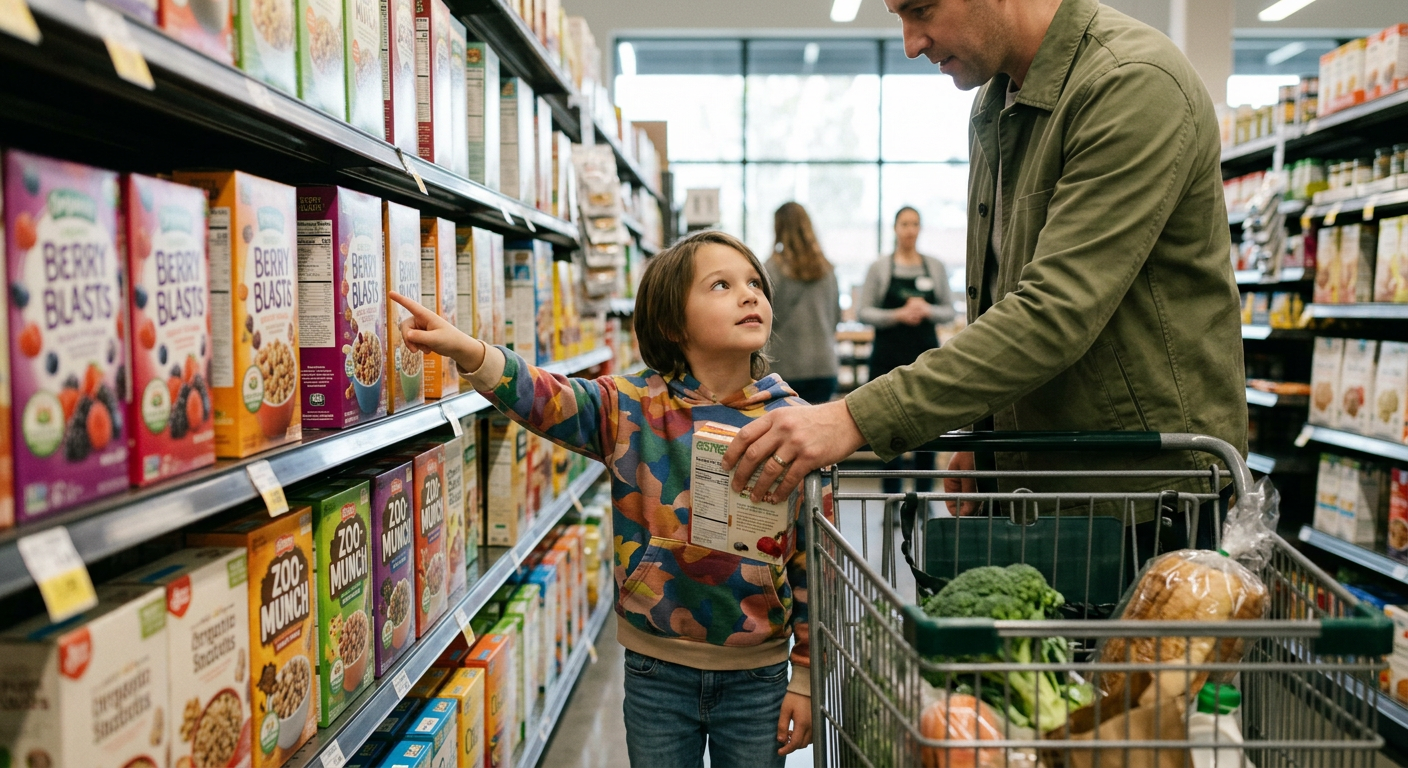
Gen Alpha doesn’t need a credit card to move markets. Their sway over what parents spend is the trend brands and retailers should watch most closely.
The numbers are blunt. BeautyMatter found that 90% of parents say their child’s preferences have changed their consumer behavior, and 41% report that all household spending decisions get affected by their Gen Alpha child. That’s not casual influence. It’s decision-making authority exercised by proxy.
Beauty Discovery Flows Both Ways
Parents pick up products through their kids, too. Thirty percent say they’re more likely to try new beauty products because of their child, and that figure rises to 43% among mothers. The tween who found a brand on TikTok ends up introducing it to the rest of the household.
Some of this Gen Alpha funds themselves. While 85% of parents provide an allowance, plenty of kids earn extra through chores, odd jobs, and online resale, which gives them independent buying power earlier than the generations before them.
How Gen Alpha Compares to Other Beauty Generations

To understand what makes Gen Alpha distinct, you need the context of the generations around it. Each living cohort approaches beauty with different values, digital habits, and spending drivers, laid out in Arbelle’s 2026 generational report.
| Generation | Primary Beauty Driver | Discovery Method | Defining Expectation |
|---|---|---|---|
| Gen Alpha (2010–2024) | Early digital exposure, skincare-first | TikTok, AI assistants, social commerce | Personalization and “cool” factor |
| Gen Z | Authenticity and inclusivity | Social platforms, peer reviews | Diverse representation |
| Millennials | Research-driven decisions | Hybrid online/in-store journeys | Ingredient transparency |
| Gen X | Efficacy and results | Reviews and expert sources | Products that work |
| Boomers | Comfort and well-aging | In-store and traditional media | Ease and reassurance |
The table shows why one marketing approach can’t cover the whole market. Gen Alpha’s appetite for personalization and social proof sits at one end of a spectrum that runs all the way to Boomers wanting comfort and simplicity.
Some expectations cross every cohort. Inclusivity, transparency, and smooth hybrid shopping matter to all of them. Gen Alpha just expects those things delivered through technology first.
Values-Driven Beauty: Safety, Sustainability, and Transparency
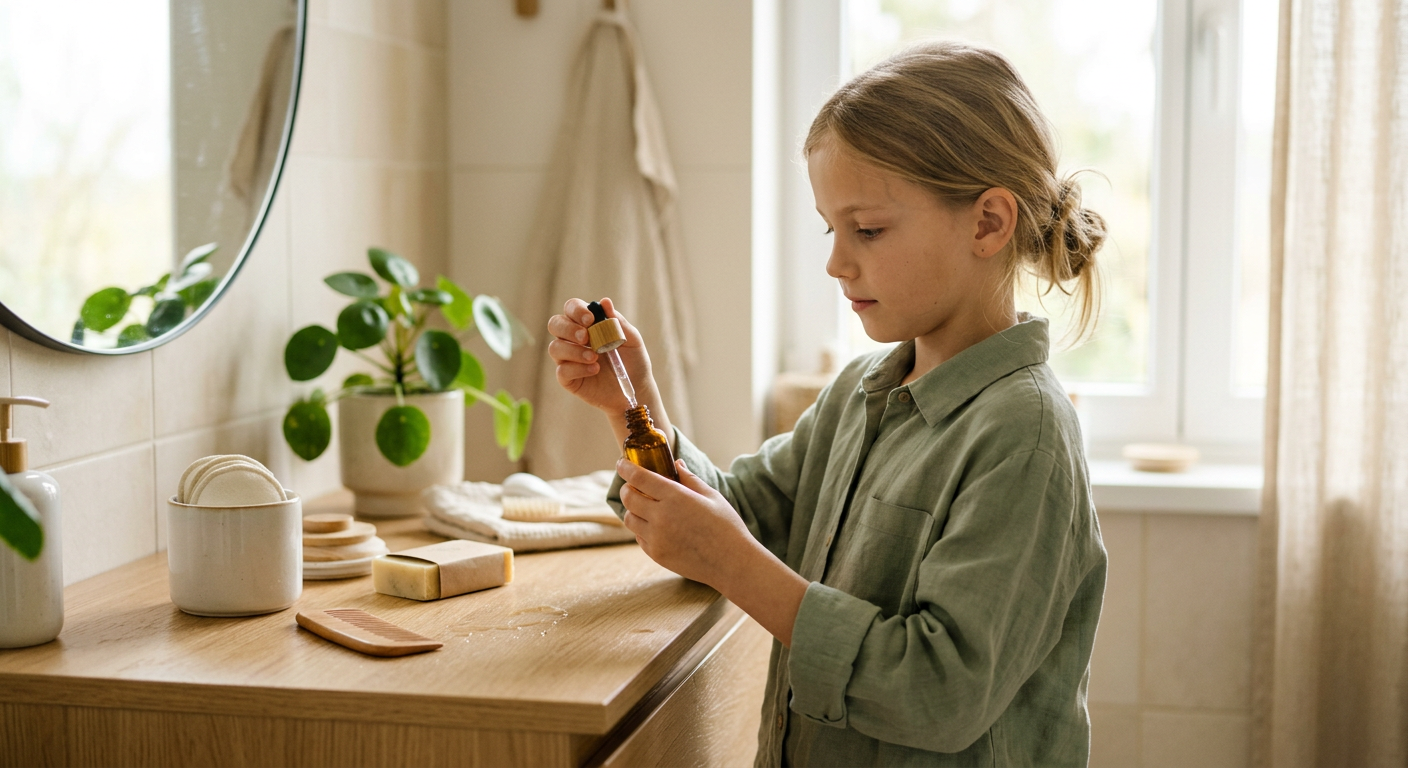
Gen Alpha’s preferences go beyond how things look. This generation carries a sharper social and environmental awareness, and that awareness shapes what they and their parents will accept.
Mintel frames Gen Alpha as both a responsibility and an opportunity. The viral rush toward potent adult skincare raised real concerns about age-appropriate formulations, which pushed brands like Erly to position themselves explicitly around safe beauty for younger consumers.
Diverse Cultural Influences Set the Standard
Gen Alpha is one of the most diverse cohorts in history, and it expects beauty to reflect that. Brands that treat inclusivity as a checkbox instead of a foundation will lose credibility with this audience fast.
Transparency holds the rest together. Clear ingredient labeling, honest claims, and age-appropriate messaging build the trust that turns a curious tween, and a cautious parent, into a repeat customer.
What This Means for Beauty Brands in 2026

The point isn’t that brands should chase children. It’s that Gen Alpha’s habits are becoming the industry’s default expectations, and they’re arriving faster than any prior generation set them.
Winning here means meeting two audiences at once: the Gen Alpha consumer who decides what’s desirable and the millennial parent who signs off on the purchase. Products have to feel current and credible to a tween while satisfying a parent’s demand for safety and value.
The infrastructure counts as much as the product. Machine-readable product data, AR try-on tools, accurate shade matching, and a presence in social commerce and AI discovery aren’t optional anymore. Brands that build them now will be ready when Gen Alpha’s spending power matures fully.
Conclusion
Gen Alpha has already moved from curiosity to influence. They’re driving skincare-first routines, forcing brands to build tween-specific lines, normalizing AI-powered discovery, and steering an estimated 41% of household spending decisions in the homes where they live. Their expectations around personalization, safety, and transparency are on track to become everyone’s expectations.
If you build, market, or invest in beauty, audit your product data, discovery channels, and inclusivity commitments now. A good place to start: test how an AI shopping assistant describes your products, then close the gaps before the next generation of shoppers does it for you.
FAQ
Q: Who is Gen Alpha in the beauty industry?
Gen Alpha refers to consumers born between 2010 and 2024, the first generation to grow up fully immersed in AI and social media. In beauty, they represent a $95 billion force that influences household purchasing decisions and product discovery.
Q: Why are Gen Alpha kids so interested in skincare?
Gen Alpha learns beauty from TikTok influencers in real time, which fuels an early fascination with skincare routines and brands like Drunk Elephant. That interest built a booming tween skincare market and raised concerns about age-appropriate formulations.
Q: How much influence does Gen Alpha have over family spending?
A lot. BeautyMatter found that 90% of parents say their child’s preferences have changed their consumer behavior, and 41% report that all household spending decisions are affected by their Gen Alpha child.
Q: How does Gen Alpha discover beauty products?
They lean on social commerce, TikTok, and AI shopping assistants over traditional search. One data point: 26% of Gen Alpha teen boys use AI shopping assistants to find personal care products, according to the Ulta Beauty and NielsenIQ study.
Q: What do beauty brands need to do to reach Gen Alpha?
Brands have to satisfy two audiences at once: the Gen Alpha consumer and the millennial parent who pays. That means safe, age-appropriate products, machine-readable data for AI discovery, AR try-ons, and inclusivity that goes past a checkbox.
Q: Are Gen Alpha beauty products safe for children?
It depends on the product. The rush toward potent adult skincare raised safety concerns, which is why tween-focused brands like Erly and Sincerely Yours now build around age-appropriate, gentler formulations.