

Cold air outside, dry heat inside, and humidity that drops the moment temperatures do. That combination pulls moisture from your skin faster than most people expect, and by mid-January the results show up as tightness, flaking, and a dull cast. If the routine that worked in October suddenly seems useless, blame the weather.
A few targeted changes can restore hydration, shore up your skin barrier, and bring back the glow. Skincare is now a daily habit for most consumers, according to Market.us, and adjusting that habit for the season is one of the higher-return moves you can make. Below is how to do it.
Why Winter Weather Drains Your Skin

Winter comes at your skin from three directions. Cold outdoor air holds almost no moisture, low indoor humidity reduces your skin’s ability to hold water, and forced-air heating strips away natural oils. Dermatologists at Waccamaw Dermatology call this combination a triple threat that dehydrates the barrier and leaves it exposed.
When the barrier weakens, water escapes through it more easily, a process called transepidermal water loss. That produces the standard winter symptoms: dryness, tightness, and a rough or dull surface. Ignore it long enough and the skin can turn irritated, inflamed, or flaky.
The cause shapes the fix. You’re not solving one problem; you’re managing three environmental stressors at once, which is why no single product tends to solve winter skin by itself.
Build a Hydration-First Winter Routine
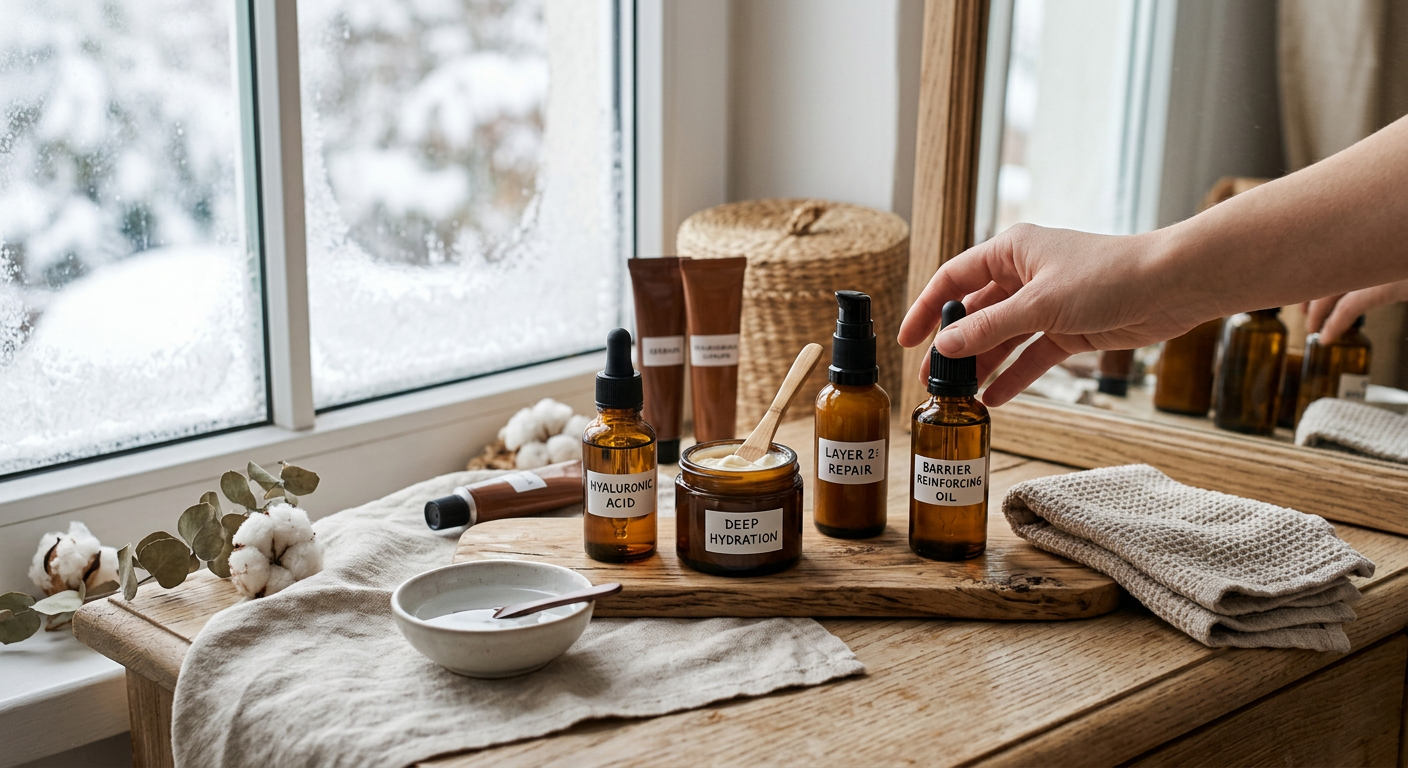
The principle behind any good cold-weather regimen is layering: add water-attracting ingredients, then lock them in with a richer, sealing formula so the moisture stays put.
Switch to a Richer Moisturizer
The lightweight lotion that served you in July won’t hold up in December. Perricone MD recommends trading thin, lotion-based products for a thicker cream or balm during colder months. Look for a rich cream with ceramides and hyaluronic acid, which support elasticity and deliver longer-lasting hydration.
Timing counts as much as the product. Apply moisturizer while your skin is still slightly damp, within a minute of cleansing or showering, so you trap surface water before it evaporates.
Cleanse Gently, Not Aggressively
Harsh foaming cleansers strip the natural oils your skin needs most in winter. Switch to a gentle, hydrating cleanser or a cleansing balm that clears dirt and makeup without leaving your face tight. Use lukewarm water rather than hot, since heat speeds up moisture loss.
Key Winter Skincare Ingredients That Work

Not every product earns a spot in a winter lineup. Prioritize ingredients with proven barrier-supporting and hydrating benefits. The table below sorts out what to reach for.
| Ingredient | What It Does | Best For |
|---|---|---|
| Hyaluronic acid | Attracts and binds water to the skin | All skin types, dehydration |
| Ceramides | Rebuild and reinforce the skin barrier | Dry, compromised skin |
| Vitamin C | Brightens tone and supports collagen | Dullness, uneven texture |
| Vitamin A (retinol) | Smooths fine lines, boosts renewal | Aging concerns, texture |
| Glycerin | Draws moisture into the skin | Everyday hydration |
| Vitamin E | Antioxidant that supports repair | Irritated, stressed skin |
According to IMAGE Skincare, combining hyaluronic acid with vitamins A and C helps minimize the look of fine lines while reviving tired winter skin. Used together, these ingredients hydrate, protect, and brighten in one routine.
The eye area shows dehydration first and tends to look tired and puffy in winter. A serum that pairs hyaluronic acid with vitamin C helps refresh and hydrate that thinner skin.
Do Not Skip Sunscreen in Winter

Sunscreen is the most overlooked winter skin essential. Plenty of people assume UV protection is a summer concern, and that assumption costs them in both skin health and appearance.
Year-round sunscreen is one of the most important steps you can take, because sun exposure drives fine lines, wrinkles, and discoloration even on cloudy or cold days. UVA rays pass through clouds and windows, and snow reflects up to 80 percent of UV radiation back onto your skin.
Apply a broad-spectrum SPF 30 or higher every morning as the last step in your routine. Dermatology practices, including Southeast Dermatology, list daily SPF as a non-negotiable habit for healthy skin, winter included.
Exfoliate and Protect Before You Step Outside

Dead skin cells pile up faster in winter, dulling your complexion and blocking moisturizers from absorbing. Gentle exfoliation clears that layer and helps your hydrating products reach the skin underneath.
Exfoliate With Care
Hold exfoliation to once or twice a week, and pick a mild chemical exfoliant over a rough physical scrub. Over-exfoliating strips an already fragile barrier, so restraint pays off in the coldest months.
Prep Skin for the Cold
Before you head outside, add a protective layer of moisturizer to shield your skin from wind and freezing air. A richer cream or balm works as a barrier against harsh conditions, the same logic you use when you layer clothing for warmth.
Nourish Your Glow From the Inside

Topical products do most of the work, but diet supports your skin from within. Winter is a good time to add nutrient-dense foods that help with repair and hydration.
Almonds, walnuts, sunflower seeds, and chia seeds supply vitamin E, zinc, and healthy fats, all of which matter for skin repair, according to Columbia Skin MD. These nutrients help keep the barrier strong and the complexion resilient.
Hydration works from the inside too. Drink water steadily through the day, and run a humidifier at home to offset the drying effect of indoor heating. Those habits reinforce whatever your topical routine is doing on the surface.
Conclusion: Your Winter Glow Checklist
Winter doesn’t have to leave your skin dry and dull. Once you understand how cold air, low humidity, and indoor heat drain it, you can build a routine that pushes back with hydration, barrier support, and protection.
Keep these essentials in view:
- Cleanse gently with a hydrating, non-stripping formula
- Layer hydration using hyaluronic acid and ceramides
- Switch to a richer moisturizer and apply on damp skin
- Wear broad-spectrum SPF 30+ every single morning
- Exfoliate lightly once or twice a week
- Nourish from within with vitamin E-rich foods and plenty of water
Start with one or two changes this week and build from there. Skin responds to consistency, so give a new routine at least four weeks before you judge it. Look at your current products today and swap out the first one that’s no longer earning its place.
Frequently Asked Questions
Q: How often should I moisturize in winter?
Moisturize at least twice a day, once in the morning and once at night, applying to slightly damp skin for the best absorption. If your skin still feels tight, add a midday application or move to a richer cream or balm.
Q: Do I really need sunscreen in the winter?
Yes. UVA rays pass through clouds and windows year-round, and snow reflects up to 80 percent of UV radiation onto your skin. A daily broad-spectrum SPF 30 or higher prevents fine lines, discoloration, and long-term damage.
Q: What ingredients are best for dry winter skin?
Prioritize hyaluronic acid and glycerin to attract moisture, plus ceramides to rebuild the barrier. Vitamin C and vitamin A add brightening and renewal benefits.
Q: Should I still exfoliate when my skin is dry?
Yes, but sparingly. Exfoliate once or twice a week with a gentle chemical exfoliant to clear dead cells that block hydration, and skip harsh scrubs that damage an already fragile barrier.
Q: Can my diet affect my winter skin?
It can. Foods rich in vitamin E, zinc, and healthy fats, such as almonds, walnuts, and chia seeds, support skin repair and hydration from the inside out. Drinking enough water strengthens the barrier further.
Q: How long before I see results from a new winter routine?
Give any new routine at least four weeks, since skin cells turn over roughly every 28 days. Consistency matters more than the number of products you use.