

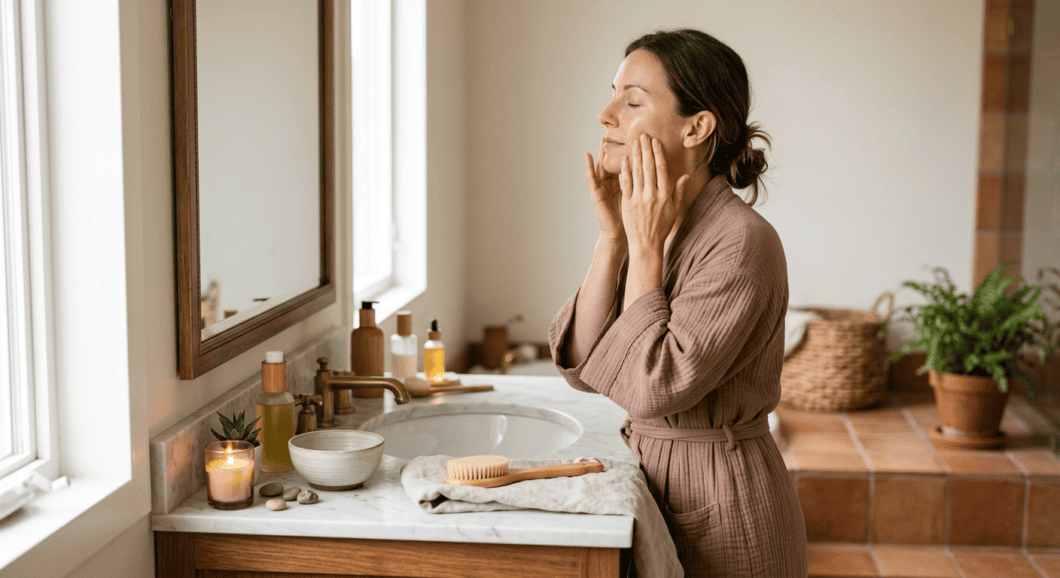
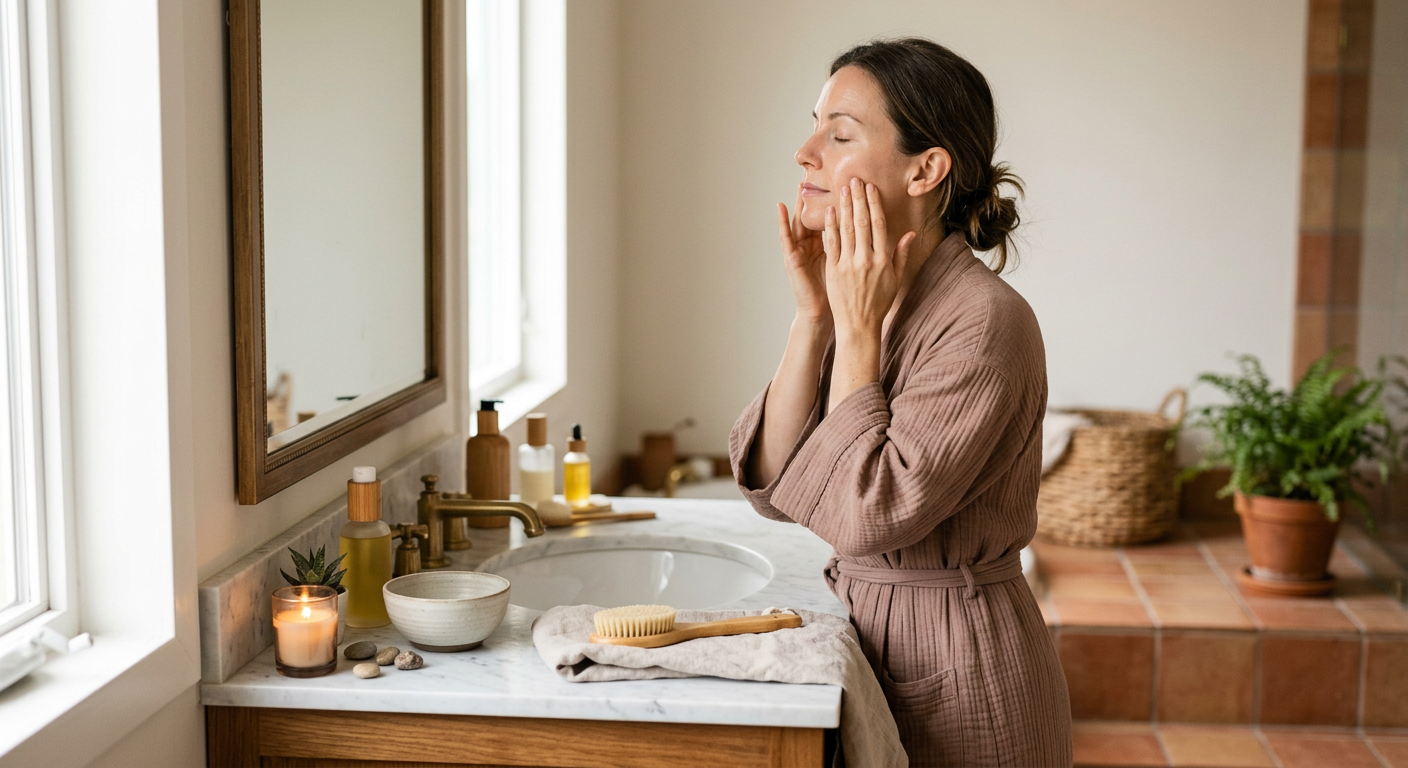
Could two minutes at the bathroom sink lower your stress more than they help your skin? A growing number of people treat washing their face exactly that way: a daily anchor that settles the nervous system while it cleans and moisturizes. There’s a market behind the shift, too. The global self-care products sector is forecast to grow from $15.5 billion in 2024 to $24.0 billion by 2030, according to WifiTalents. Mindful beauty makes up a large slice of that, turning ordinary routines into something more deliberate.
Below you’ll find what makes a beauty ritual “mindful,” which techniques do the most work, and how to build a routine you’ll actually keep.
What Makes a Beauty Ritual “Mindful”
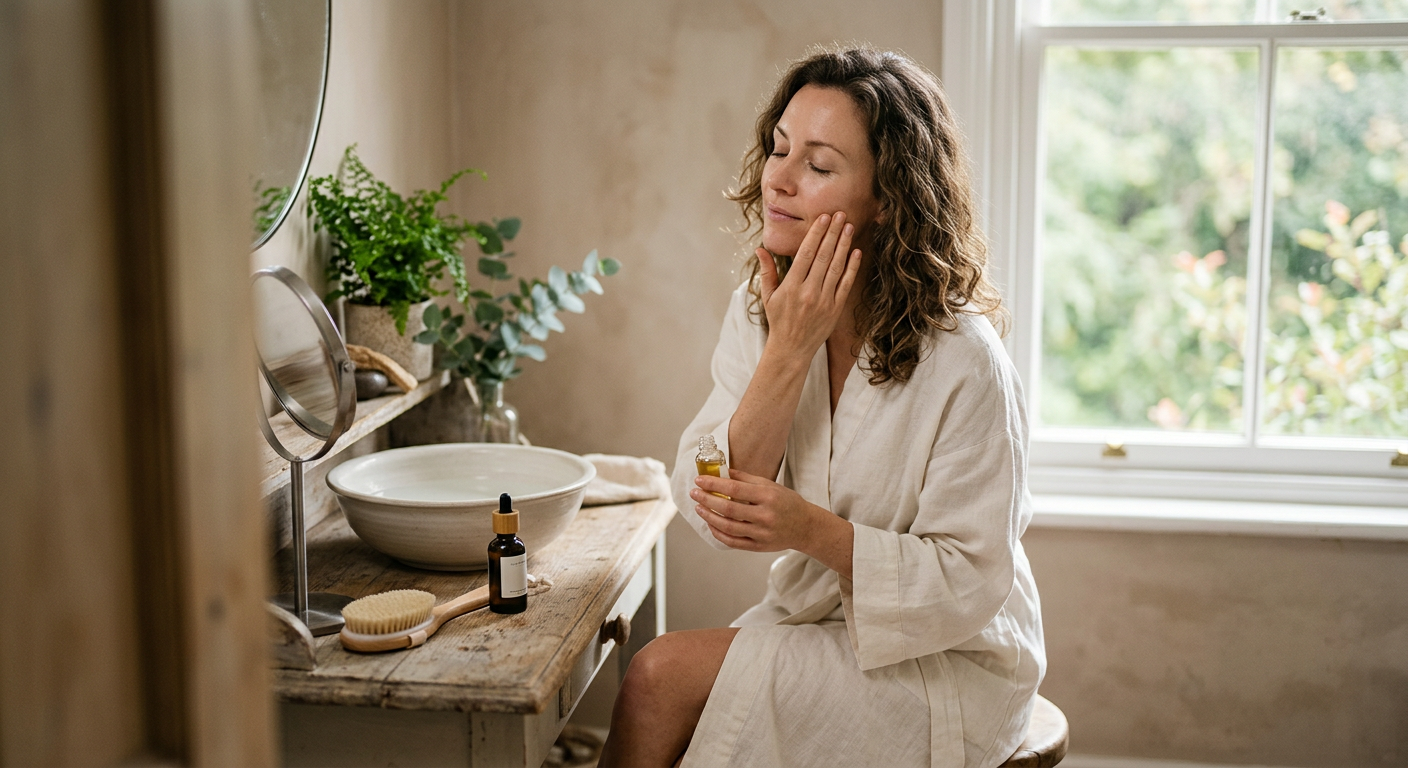
A mindful beauty ritual has nothing to do with how many products you use. It’s about attention. A routine is something you rush through; a ritual is something you notice. That’s the whole distinction.
The building blocks stay fairly consistent across the people who write about this. Pure Light Botanical Beauty breaks a mindful ritual into three parts: breath awareness, sensory engagement with your products, and intentional movement as you apply them. Each one gives your mind a single place to land, which quiets the mental chatter that feeds stress.
That’s also why rituals work at all. Strike Magazine notes that rituals build mindfulness and a sense of control by engaging mind and body together through structured, intentional actions. The mix of predictability and sensory input settles an overstimulated system.
The Science of Skincare and Stress Relief
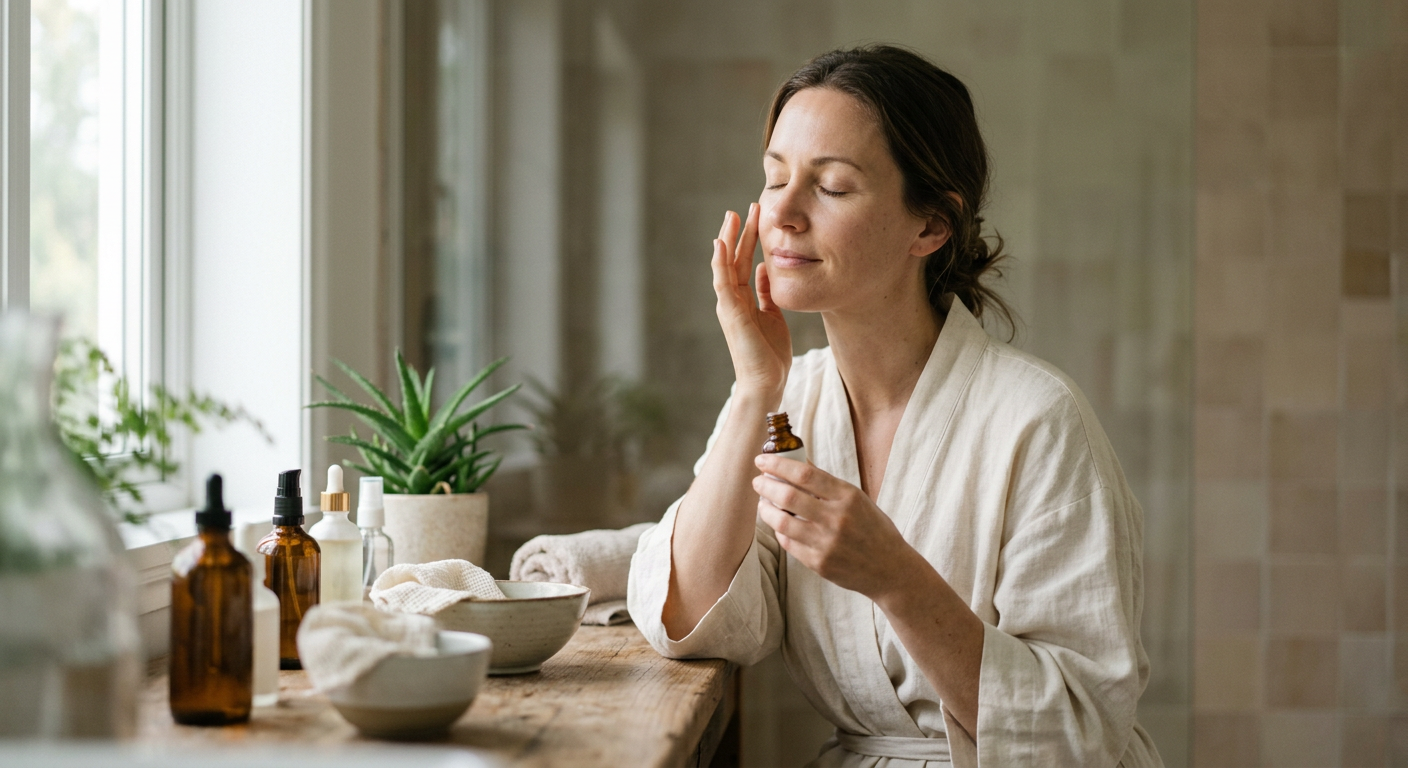
The calm you get from a good beauty ritual has a physiological basis. It comes down to how your nervous system responds to touch, temperature, and rhythm.
Graydon Skincare describes how small tactile moments regulate the nervous system: warm water on your hands, a slow exhale, the familiar rhythm of a step you repeat every day. Massaging a cleanser or oil into your skin, feeling its texture and warmth, creates a pause that lets the body ease off. That’s your parasympathetic nervous system, the “rest and digest” state, stepping in for the stress response.
Buyers also expect more from their products now. WifiTalents reports that 73% of consumers say they’ll pay more for clinically proven ingredients. Mindful beauty isn’t about buying more, though. It pairs well-chosen products with the attention that makes them feel restorative.
Simple Mindful Beauty Rituals You Can Start Today
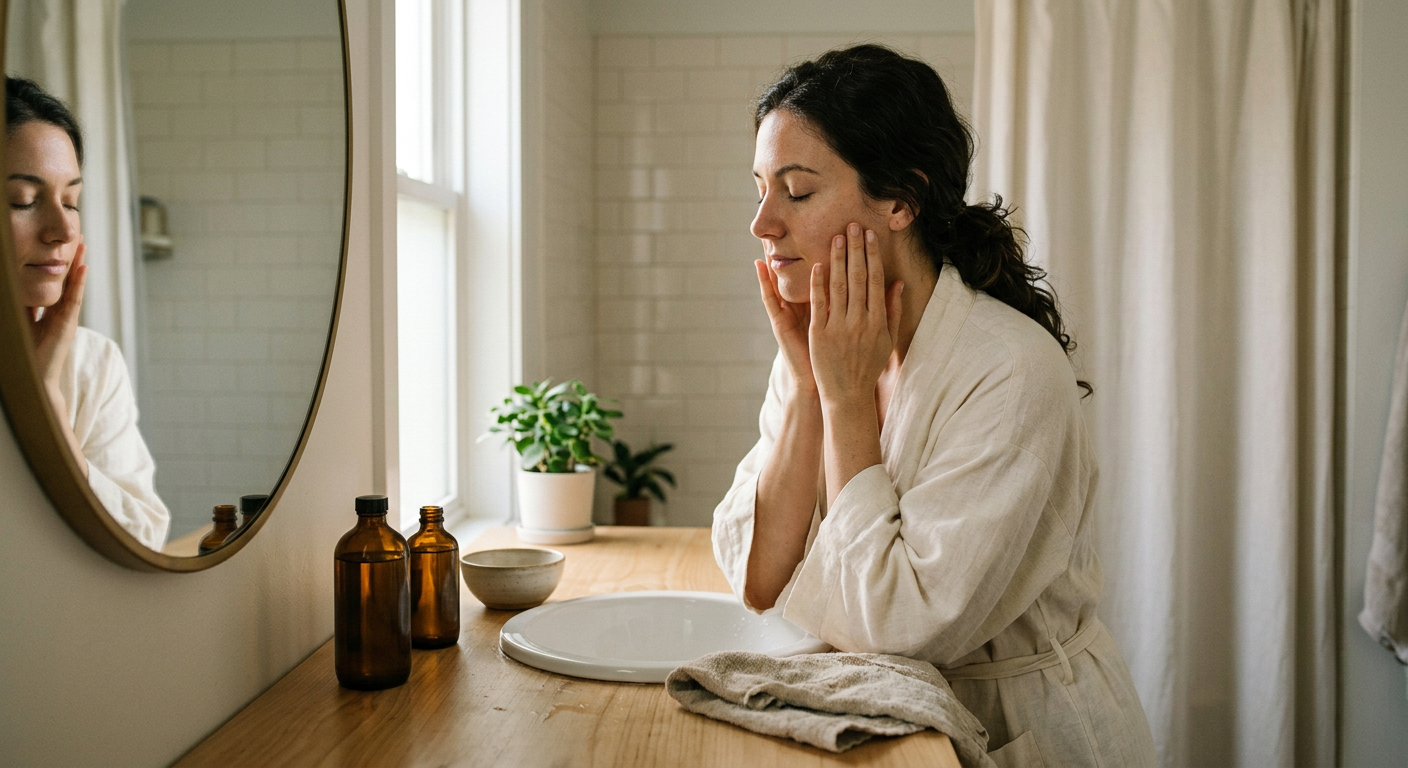
New products and extra time aren’t required to start. What you need is a shift in how you approach the steps you already take. Add presence, not tasks.
Morning Rituals to Ground Your Day
Pick one deliberate action. As you cleanse, notice the water temperature and the way your hands move. Take three slow breaths before your moisturizer or serum, and use that moment to set one intention for the day.
The ieró Beauty blog puts it well: a once-rushed step becomes a deliberate ritual, whether that’s a few deep breaths while you massage in a serum or a moment of gratitude while you cleanse. These micro-pauses cost nothing and take seconds.
Evening Rituals to Unwind
Evenings suit slower, more sensory rituals that tell your body the day is winding down. A warm cloth pressed to the face, a facial massage with an oil, or a gua sha session all stretch out the transition to sleep.
In Rituals for Every Day, wellness writer Katia Narain Phillips and her co-authors make the case for simple daily routines that help you slow down and reconnect with yourself. Choose one evening step and give it your full attention instead of scrolling while you apply it.
Routine vs. Ritual: A Quick Comparison
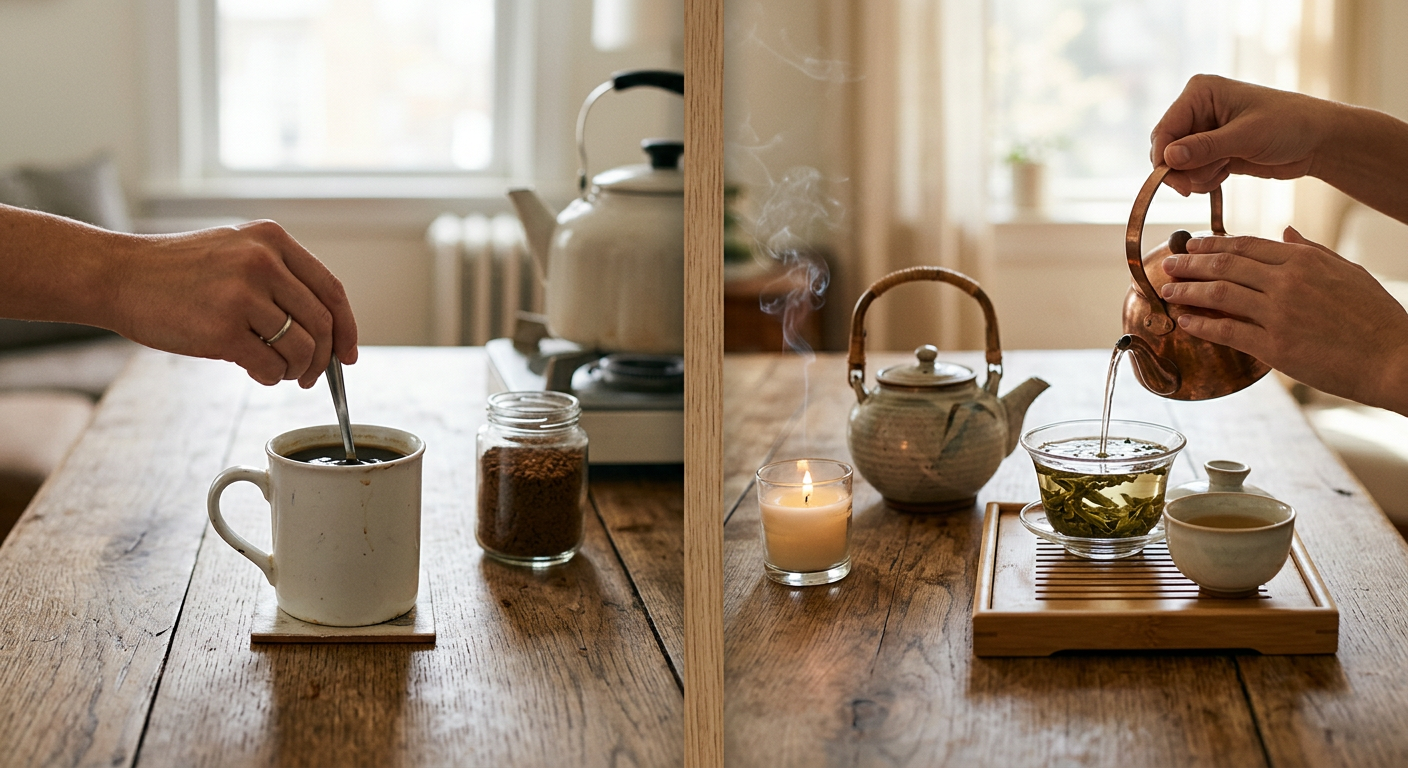
Seeing the practical differences side by side helps you upgrade what you already do. The table shows how the same steps change when you approach them mindfully.
| Element | Ordinary Routine | Mindful Ritual |
|---|---|---|
| Pace | Rushed, on autopilot | Slow and deliberate |
| Focus | Distracted, multitasking | Single point of attention |
| Breath | Shallow, unnoticed | Slow, intentional exhales |
| Touch | Quick application | Massage, notice texture and temperature |
| Mindset | “Get it done” | Gratitude or intention setting |
| Outcome | Clean skin | Calmer nervous system and clean skin |
The steps stay the same. What changes is how you engage with them, and that’s where the benefit lives.
Building a Ritual That Actually Lasts

The pressure to do it perfectly every single day is what derails most self-care practices. Graydon Skincare frames 2026 self-care as self-attunement rather than self-reinvention: care is something you practice again and again in small ways, as life keeps shifting around you.
That reframe matters. One of Graydon’s five practices for the year is to let go of the need to be consistent. Missing a day doesn’t undo your progress. A ritual you come back to when you can will outlast a strict regimen you abandon after two weeks.
Start Small and Feed Your Senses
Begin with one step, not ten. Pick the moment you like most, cleansing, moisturizing, or a nightly facial massage, and make that your anchor.
Graydon also suggests feeding your senses each day. Pay attention to the scent of a product, the temperature of the water, the texture of a cream. Those details pull you into the present and turn a task into an actual break.
Common Mistakes to Avoid
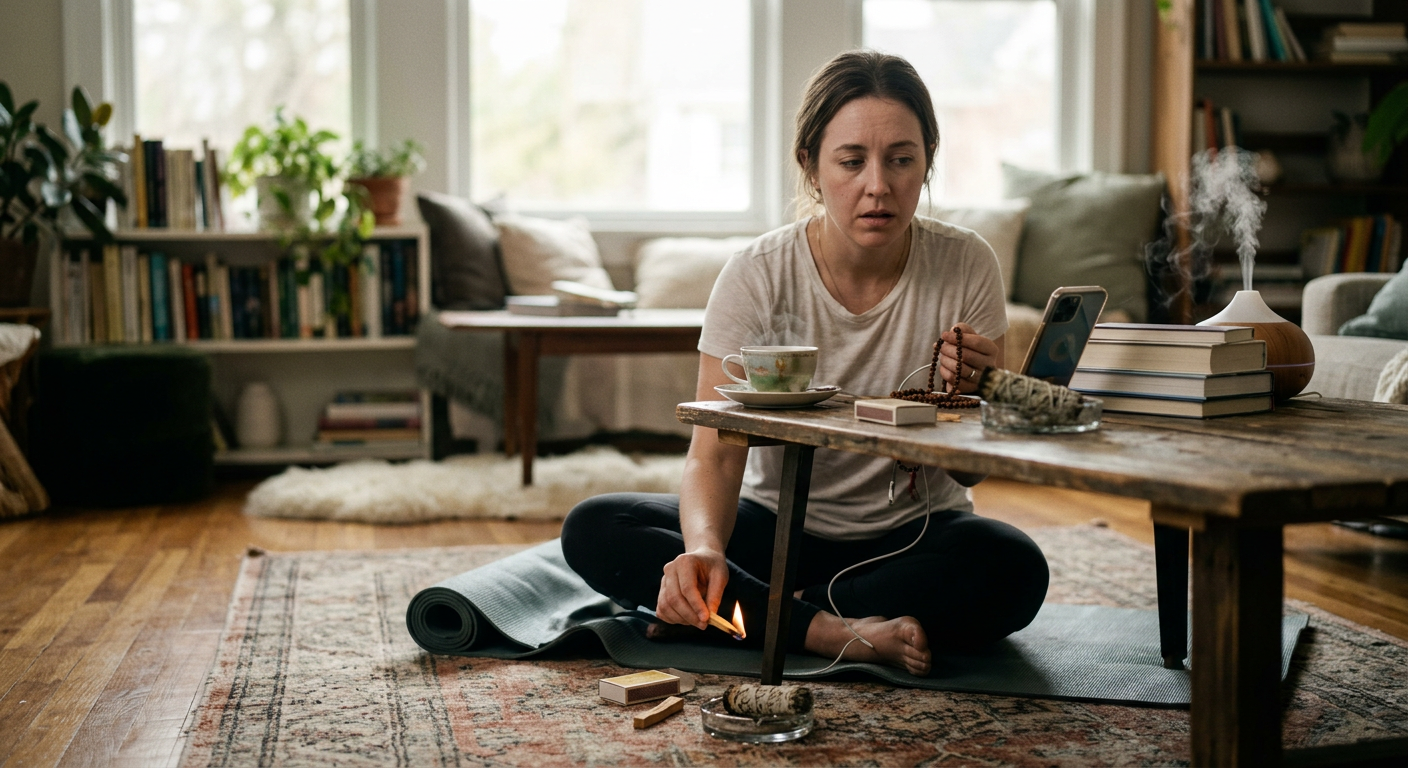
Even well-meaning rituals can lose their calming effect if you go about them the wrong way. Three pitfalls to watch for:
- Multitasking through your routine. Scrolling your phone while you apply skincare cancels out the mindfulness. Give the ritual your attention, even when it’s brief.
- Treating it as another obligation. As Laura Loukola writes in her self-care beauty ritual guide, self-care isn’t about “deserving” it or ticking boxes on a to-do list. It’s maintenance, not a reward.
- Over-buying instead of engaging. More products don’t mean more mindfulness. The presence you bring matters more than the number of steps.
Honest defines self-care as any action you take to preserve and improve your own health, well-being, and happiness. Keep that definition simple and your rituals will stay sustainable.
Conclusion
Mindful beauty rituals take the routines you already do and turn them into daily moments of calm. The formula is short: slow down, breathe with intention, engage your senses, and drop the pressure to be perfect. Those small shifts regulate your nervous system, get more out of good products, and give you something reliable to return to on busy days.
A longer routine or a bigger budget won’t get you there. A few seconds of real attention will. Tonight, pick one step from your morning or evening routine, put your phone down, take three slow breaths, and see what changes. Start there and let the ritual grow at its own pace.
Frequently Asked Questions
Q: What is a mindful beauty ritual?
A mindful beauty ritual is a skincare or grooming routine done with full attention, breath awareness, and intentional movement. It turns an ordinary task into a moment of presence that helps both your skin and your nervous system.
Q: How long does a mindful beauty ritual take?
As little as one to two minutes. The value comes from your attention, not the length, so even a single deliberate step during cleansing or moisturizing counts.
Q: Do I need special products for mindful beauty?
No. You can practice mindful beauty with what you already own. Research shows 73% of consumers value clinically proven ingredients, but presence and intention matter more than the number of items in your routine.
Q: How does skincare help reduce stress?
Tactile actions like warm water, slow exhales, and facial massage activate the parasympathetic nervous system, which calms the body. The predictable rhythm of a daily ritual adds a sense of control that eases stress further.
Q: What if I can’t keep my ritual consistent every day?
Consistency helps but isn’t required. The advice from people who write about this is to drop the pressure to be perfect and come back to your ritual whenever you can, which makes it far easier to sustain.
Q: Should I do my ritual in the morning or evening?
Both work, and each does a different job. Morning rituals help ground your day and set an intention, while evening rituals with warm cloths, oils, or massage help you unwind before sleep.