



Weather is harder on your skin than it used to be. Stronger UV exposure, swings in humidity, more airborne pollution, and unpredictable temperatures all change how skin behaves and looks over time. The beauty industry’s response is a wave of climate-conscious ingredients, and shoppers are buying in. The market for climate-responsive beauty products was valued at USD 225.6 million in 2024 and is projected to reach USD 2,138.5 billion by 2034, a 25.5% compound annual growth rate, according to InsightAce Analytic.
What Climate-Conscious Beauty Actually Means

Climate-conscious beauty works on two fronts at once. One is environmental: ingredients sourced and formulated to do less damage to the planet. The other is adaptive: formulas built to defend skin against the same environmental stressors that a changing climate makes worse.
These two goals tend to reinforce each other. A product built around upcycled botanicals cuts agricultural waste while delivering antioxidants that fight pollution. The category ends up asking the same question of every ingredient: does it help both the skin and the planet?
This is a real change in how the industry measures whether a product works. Croda Beauty notes that skincare has shifted from anti-ageing toward resilience, with no sign of shifting back.
The Market Forces Driving the Shift
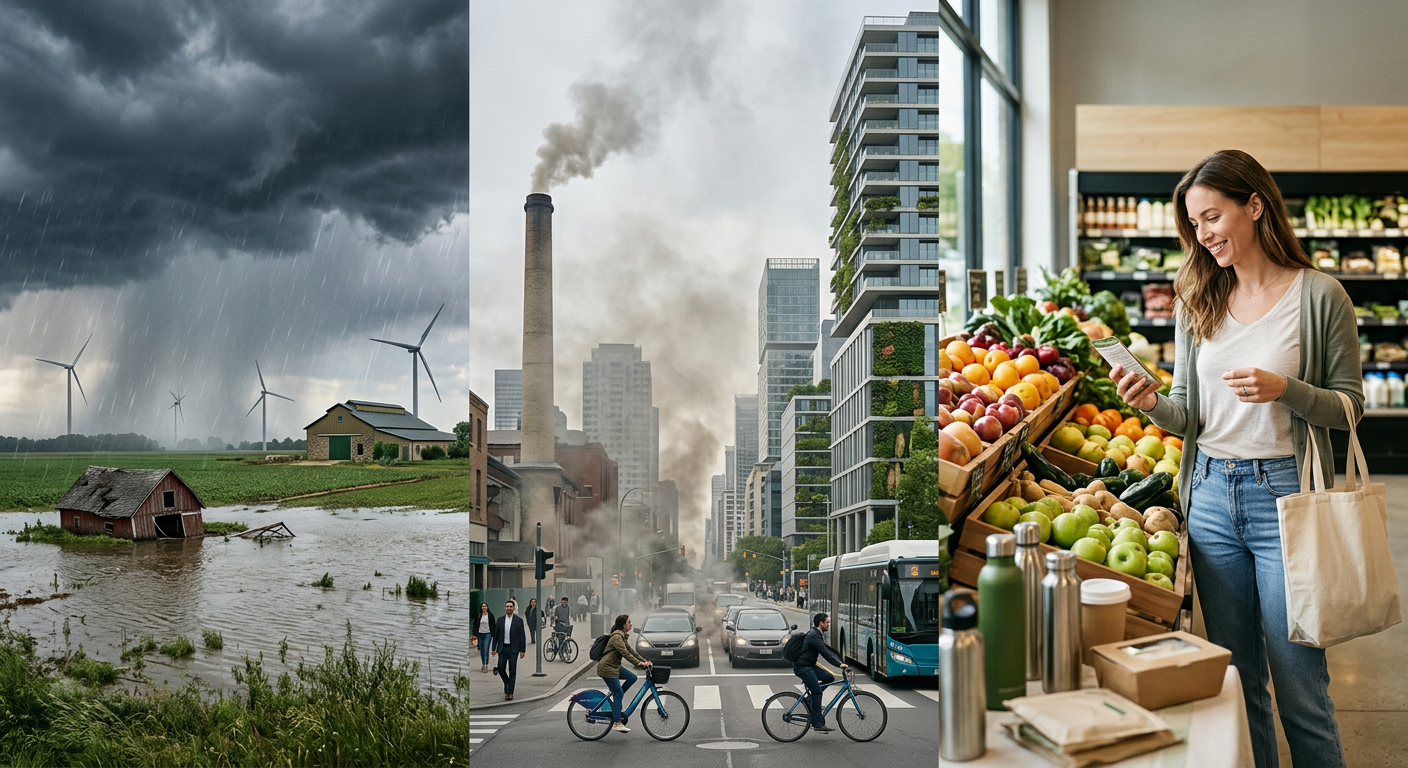
Three things are pushing demand: extreme weather, urban pollution, and a more informed customer base. Shoppers now research ingredients and supply chains before they spend.
The numbers back this up. The market for natural cosmetic ingredients is projected to grow from USD 642 million in 2022 to USD 1,095 million by 2030, according to CAS. Climate-adaptive skincare specifically is expected to grow at a 14.3% CAGR through 2034, with hot and humid market segments leading the way.
Geography plays a role too. Travel and city living expose skin to conditions that change fast, which drives demand for products that hold up across seasons and climates. People want one formula that keeps pace with a moving target.
Key Climate-Conscious Ingredients to Know

This is where the category stops being abstract. Brands are rebuilding their formulas around materials that lower environmental impact without giving up performance.
Upcycled and By-Product Ingredients
Upcycled ingredients turn agricultural by-products into active compounds, so material that would have been waste ends up doing work. Coffee grounds, fruit pits, and grape skins now show up in exfoliants and antioxidant serums. The approach, covered by SpecialChem, reduces waste and adds measurable value.
Plant-Based Emollients and Preservatives
Natural emollients like shea butter and coconut oil are taking over from petroleum-derived alternatives. Natural preservatives extend shelf life without synthetic additives. Used together, they make for cleaner formulas that still hold up over time.
Protective Actives for Environmental Stress
Antioxidants, niacinamide, and barrier-supporting lipids defend skin against pollution and UV damage. These are the actives that anchor climate-adaptive formulas aimed at polluted cities and high-UV regions.
Ingredients to Avoid Versus Greener Alternatives

Knowing what to skip matters as much as knowing what to seek out. The table below maps common problem ingredients to more responsible swaps.
| Ingredient to Avoid | Why It’s a Problem | Greener Alternative |
|---|---|---|
| Conventional palm oil | Drives deforestation and habitat loss | RSPO-certified palm or shea/coconut oil |
| PFAS | Persistent pollutants linked to health risks | Plant-derived emollients |
| Microplastics | Pollute waterways, don’t biodegrade | Upcycled fruit-pit exfoliants |
| Petroleum-derived ingredients | High carbon footprint | Bio-based botanicals |
| Synthetic VOCs | Contribute to air pollution | Water-based or natural formulas |
For palm oil, COSH! recommends RSPO-certified products or brands using alternative plant oils like coconut or shea butter. A certification gives you something you can verify, rather than a marketing line you have to take on faith.
Why Packaging and Footprint Matter Too

Ingredients are only part of the sustainability picture. The largest emissions often sit where shoppers don’t think to look. Beauty transport emissions make up 10% of the industry’s carbon footprint, and the water people use to wash products off accounts for 25% of a product’s climate impact, according to WifiTalents.
Packaging makes it worse. An estimated 95% of beauty packaging gets thrown out after a single use, and recycling rates trail behind kitchen waste. Manufacturing one lipstick produces roughly 200g of CO2.
A few practical changes can cut emissions by as much as 90%. Rinse-free formulas, concentrated products, and refillable packaging all shrink the footprint without hurting results. A product that takes climate seriously accounts for its full life cycle, not just its ingredient list.
How to Choose Climate-Conscious Products

It comes down to verification. “Clean,” “green,” and “sustainable” get used interchangeably and defined inconsistently from one market to the next. In the US, with no government standard in place, brands write their own definitions, as Mintel points out.
This checklist helps cut through the marketing:
- Look for third-party certifications such as RSPO, cruelty-free, and vegan marks.
- Check for supply chain transparency, including ingredient sourcing details.
- Favor refillable or recyclable packaging over single-use plastic.
- Prioritize upcycled or bio-based ingredients listed clearly on the label.
- Match products to your climate, choosing formulas built for your humidity, UV, and pollution levels.
A brand that publishes specific data instead of broad promises is giving you a reason to trust it. Vague claims like “naturally derived” with nothing behind them earn the opposite.
Conclusion
Climate-conscious beauty ingredients have moved well past niche status. The category is growing at double-digit rates because people want products that protect their skin and the planet at once. The most credible options pair upcycled and plant-based ingredients with environmental-stress actives, low-footprint manufacturing, and responsible packaging.
Your next purchase is a place to start. Read the ingredient list, look for certifications you can verify, and pick formulas suited to your climate. Audit one product in your current routine and swap it for a more transparent, climate-conscious alternative.
Frequently Asked Questions
Q: What are climate-conscious beauty ingredients?
They’re ingredients sourced and formulated to reduce environmental harm while also protecting skin against climate-driven stressors like UV exposure, pollution, and humidity shifts. Common examples include upcycled botanicals, plant-based emollients, and antioxidant actives.
Q: Is climate-conscious beauty the same as clean beauty?
Not quite. Clean beauty focuses mainly on non-toxic, “free-from” formulations, while climate-conscious beauty adds environmental footprint and climate adaptability to the mix. The terms overlap but aren’t identical, and definitions vary by region.
Q: How big is the climate-responsive beauty market?
It was valued at USD 225.6 million in 2024 and is projected to reach over USD 2.1 billion by 2034, growing at a 25.5% CAGR. Hot and humid climate segments currently dominate the category.
Q: Which beauty ingredients should I avoid for environmental reasons?
Avoid conventional palm oil, PFAS, microplastics, and petroleum-derived ingredients. Look for RSPO-certified palm oil or alternatives like shea and coconut oil, plus upcycled or bio-based options.
Q: Does packaging affect a product’s climate impact?
Yes, significantly. Around 95% of beauty packaging is thrown out after one use, and the water used to wash products off accounts for 25% of a product’s climate impact. Refillable packaging and rinse-free formulas can cut emissions by up to 90%.
Q: How can I verify a brand’s sustainability claims?
Look for third-party certifications, transparent ingredient sourcing, and specific published data rather than vague terms like “natural.” Because regulation is inconsistent, certifications and supply chain transparency are your most reliable signals.