

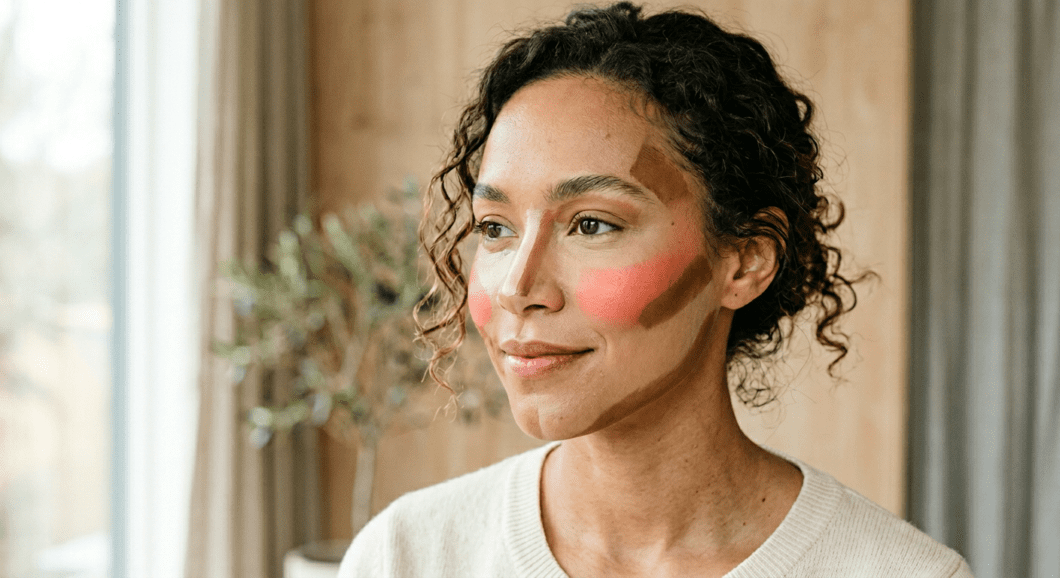
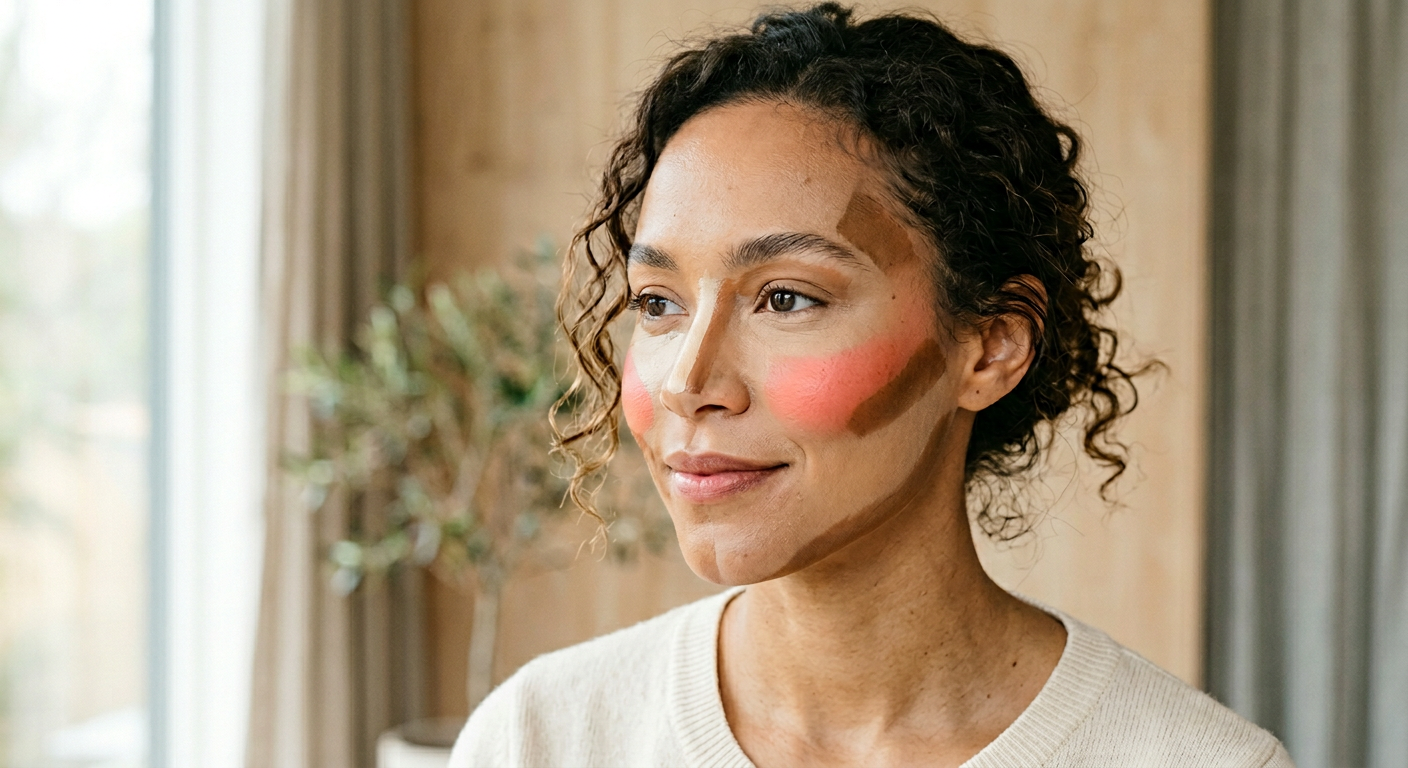
What if foundation belongs last, not first? That’s the logic behind underpainting makeup — a method that reverses the traditional base routine, and one that’s picked up serious momentum in 2026.
The term has surpassed 60 million views on TikTok. Celebrity makeup artist Mary Phillips — whose clients include Hailey Bieber, Kendall Jenner, and Jennifer Lopez — popularized the approach by applying contour and bronzer before foundation, not after. The result is a sculpted, lit-from-within finish that traditional contouring tends to flatten rather than achieve.
What Is Underpainting Makeup?
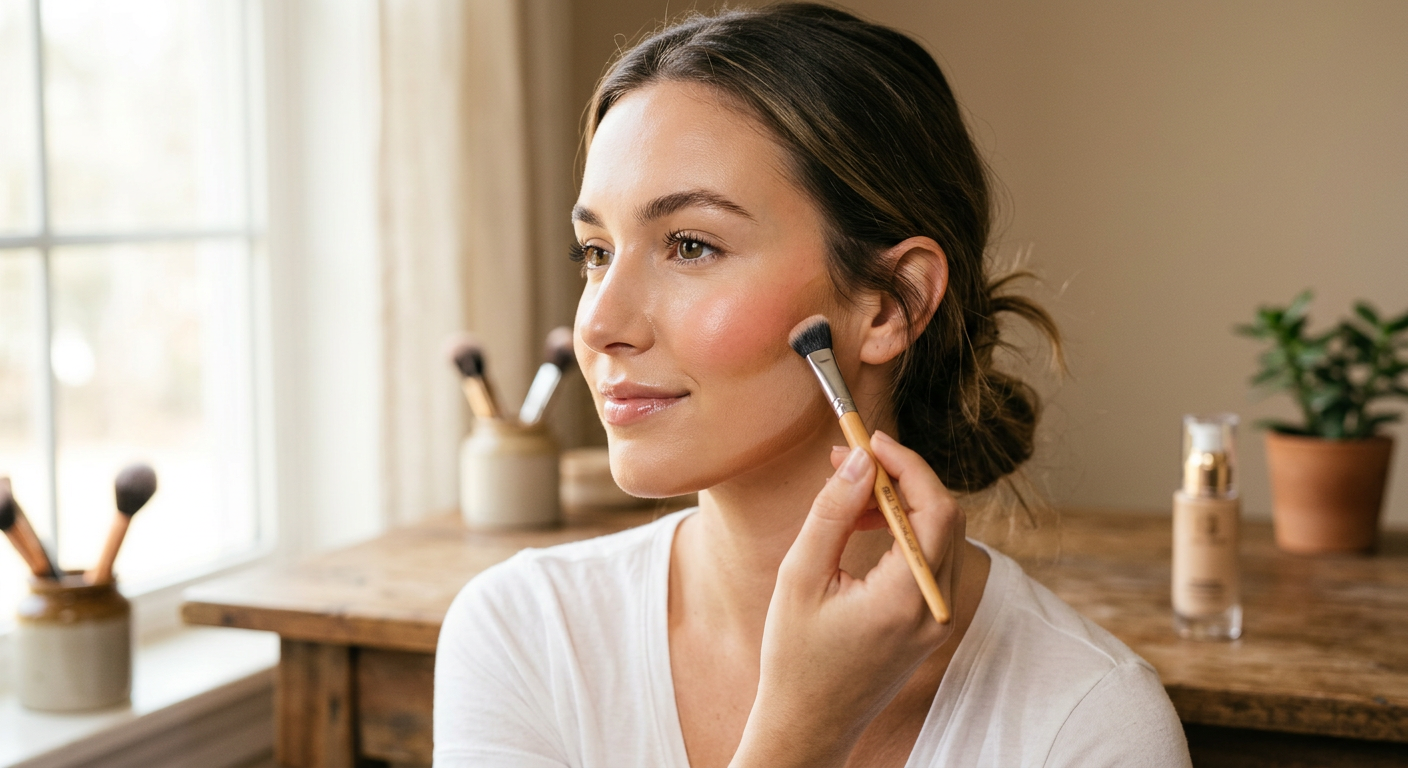
Underpainting makeup means applying your color products — contour, bronzer, blush, highlight — beneath your foundation rather than on top of it. According to Beauty World News, the method builds depth and structure under the base, so the finish reads as dimensional without looking applied.
The name comes from fine art. In painting, an underpainting is an initial layer that establishes color values before the final layers go on. The makeup version works the same way: structure first, then foundation as the unifying layer over everything.
It’s not a new invention. Phillips traces her inspiration back to Kevyn Aucoin’s 1990s books, Making Faces and Face Forward. What’s changed is the context — a 2026 beauty landscape that prizes skin-like, hydrated finishes over the heavy coverage that defined a decade of contouring tutorials.
Why the Technique Is Resurging in 2026
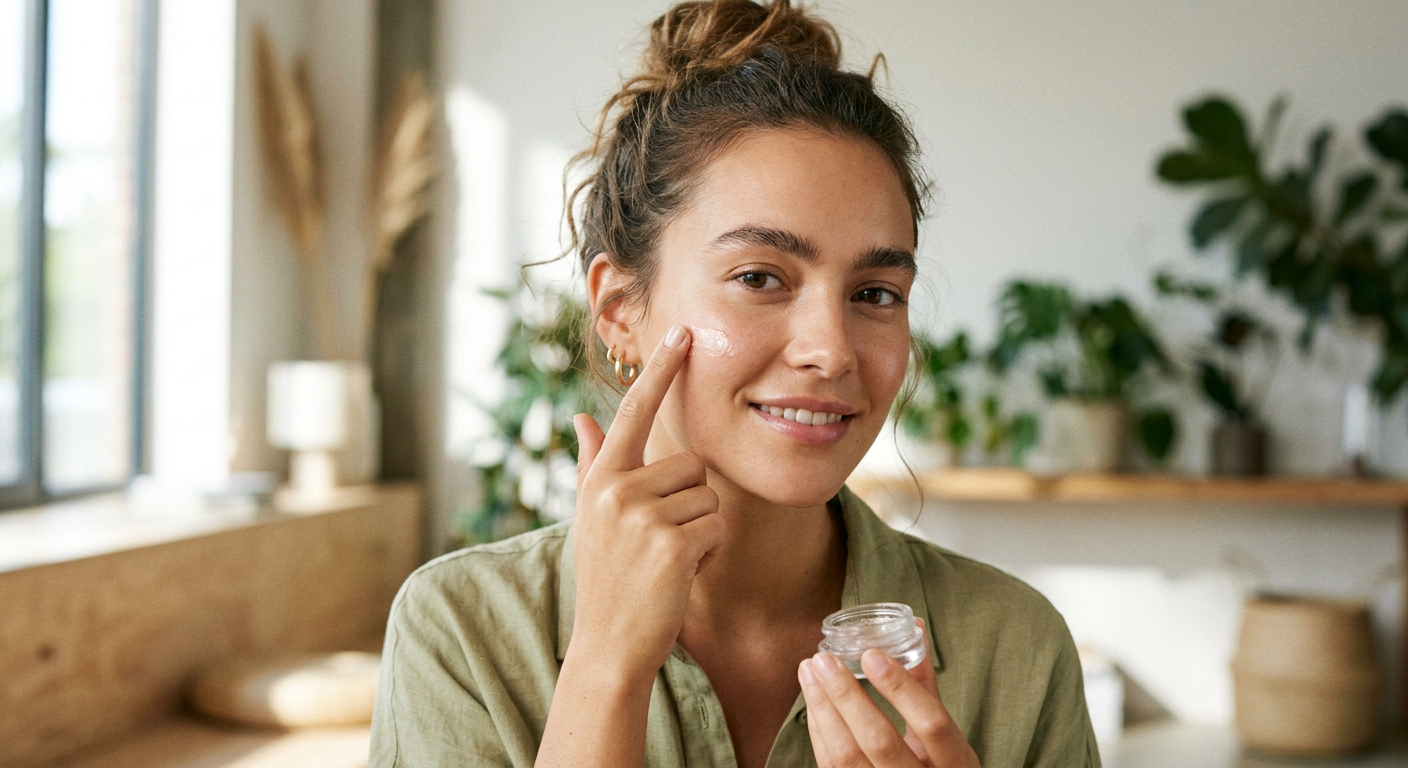
The industry has moved away from the layered, sculpted look that dominated the mid-2010s. As a TikTok trend breakdown by InStyle notes, the 2026 approach leans toward effortless skin — and underpainting fits that shift because the foundation sitting on top of the contour diffuses it rather than sharpening it.
Newsable by AsianNET News describes it as “redefining base makeup,” and the technique’s traction is backed by results that hold up both on camera and in person. Makeup that photographs without looking overdone has become the benchmark for professional and everyday looks alike — underpainting delivers that more reliably than most approaches.
Phillips also demonstrated the method live using DEZI SKIN products in a YouTube masterclass that drew significant viewership, giving consumers a direct window into a technique previously confined to professional kit bags.
How Underpainting Works: A Step-by-Step Breakdown
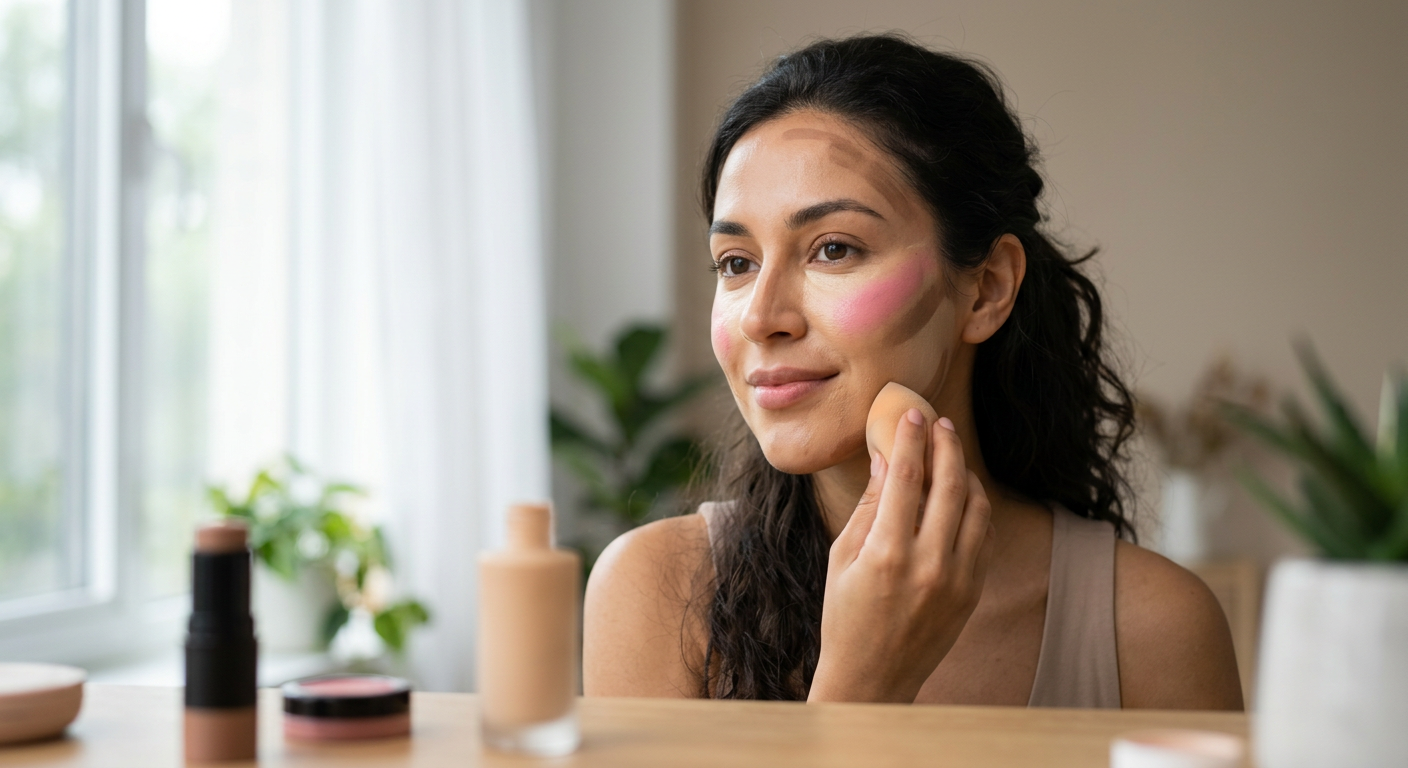
The process doesn’t require advanced skills. The non-negotiable rule, as Lulus.com’s beauty guide makes clear: cream and liquid products only. Powder formulas won’t blend under foundation — they’ll create patchy, uneven texture.
The Core Steps
- Start with a clean, moisturized face. Hydrated skin helps cream products blend without dragging.
- Apply contour first. Use a cream bronzer or contour stick in the hollows of the cheeks, along the temples, and under the jawline. Go heavier than you think you need to — the foundation will knock back the intensity.
- Add blush and highlight. Cream blush on the apples of the cheeks, liquid highlighter on the high points of the face.
- Layer foundation on top. Light hand, fluffy brush. The goal is to unify tones, not bury the underpainting.
- Set and finish. Setting powder or setting spray to lock everything in place.
Product Compatibility
Underpainting vs. Traditional Contouring
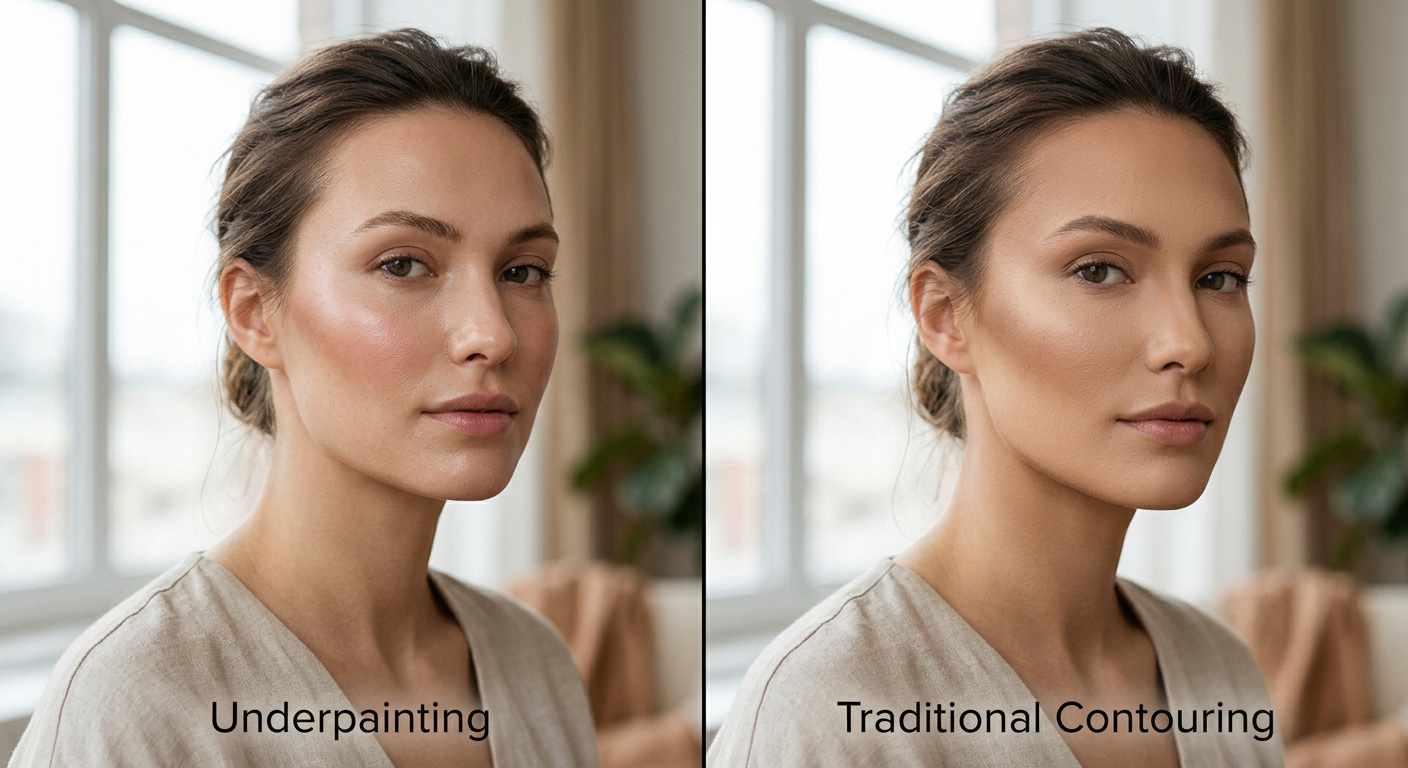
The difference comes down to placement, finish, and how product interacts with light.
Traditional contouring sits on top of foundation. It allows for precision, but under direct light or on camera, the edges between contour and skin are often visible — the makeup reads as applied rather than inherent.
Underpainting integrates color beneath the foundation. Shadows and highlights appear to come from within the skin rather than sitting on the surface. Beauty World News describes this as “a softer, natural effect” — features are enhanced without being overdrawn.
For everyday wear, underpainting is also more forgiving. Because the foundation blurs whatever’s beneath it, a heavy-handed contour application isn’t the disaster it would be with traditional placement. That makes it accessible for anyone who wants structure without the precision work that traditional contouring demands.
Choosing the Right Products for Underpainting
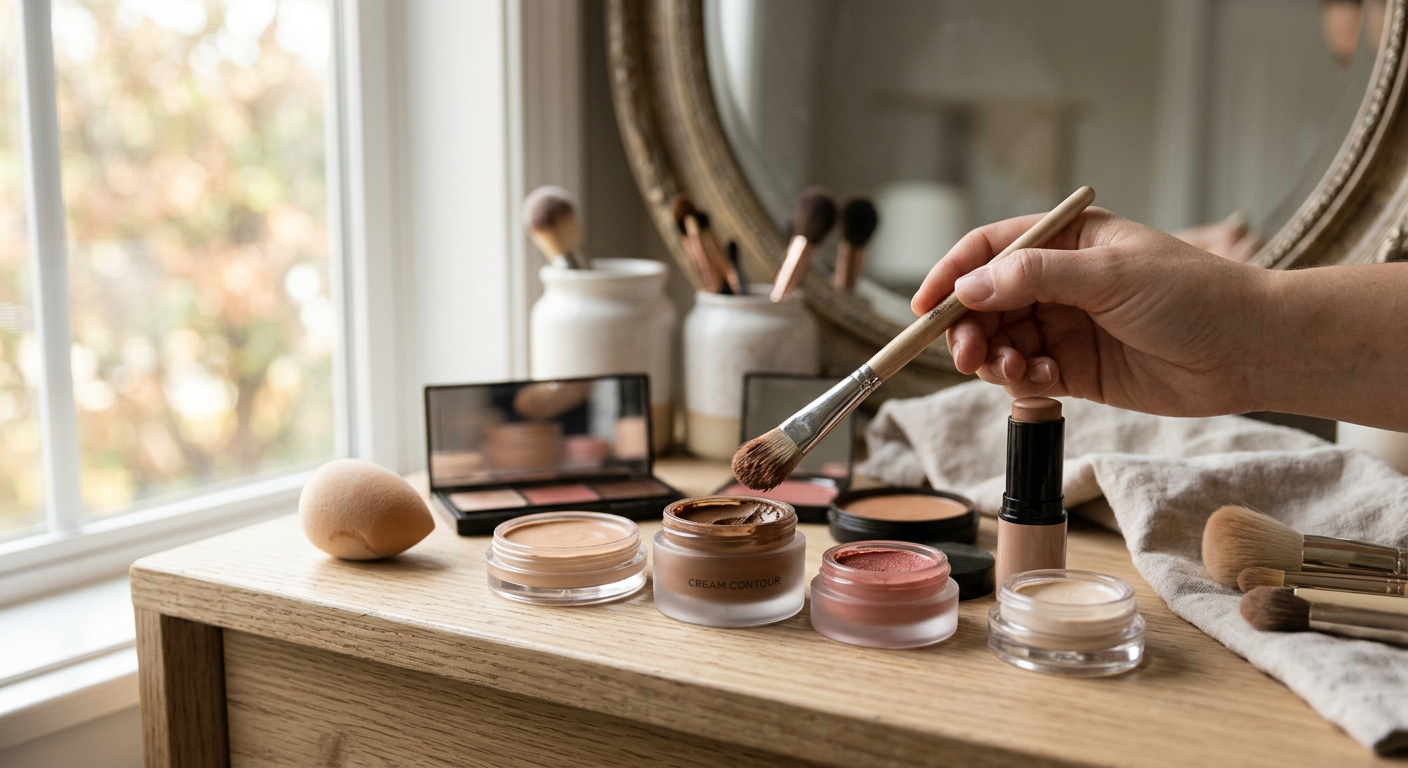
Product selection is where the technique either works or doesn’t. Mary Phillips launched her own MPH Beauty Deep Underpainting Palette specifically for this method — coordinated cream shades for contour, blush, and highlight in a single compact.
Building your own kit is straightforward: prioritize cream and liquid formulas with a skin-like texture. Anything too waxy or thick will pill when foundation goes on top. A buildable, lightweight foundation — or a tinted moisturizer — works best as the finishing layer because it lets the underpainting show through without being obliterated.
Recommended Product Types
- Contour: Cream contour stick or liquid bronzer, 2–3 shades deeper than your skin tone
- Blush: Cream blush in warm peach, coral, or berry depending on your undertone
- Highlight: Liquid or cream illuminator on the brow bone, bridge of the nose, and cupid’s bow
- Foundation: Sheer-to-medium coverage liquid or tinted moisturizer
- Setting: Light translucent powder or setting spray
Who Should Try Underpainting
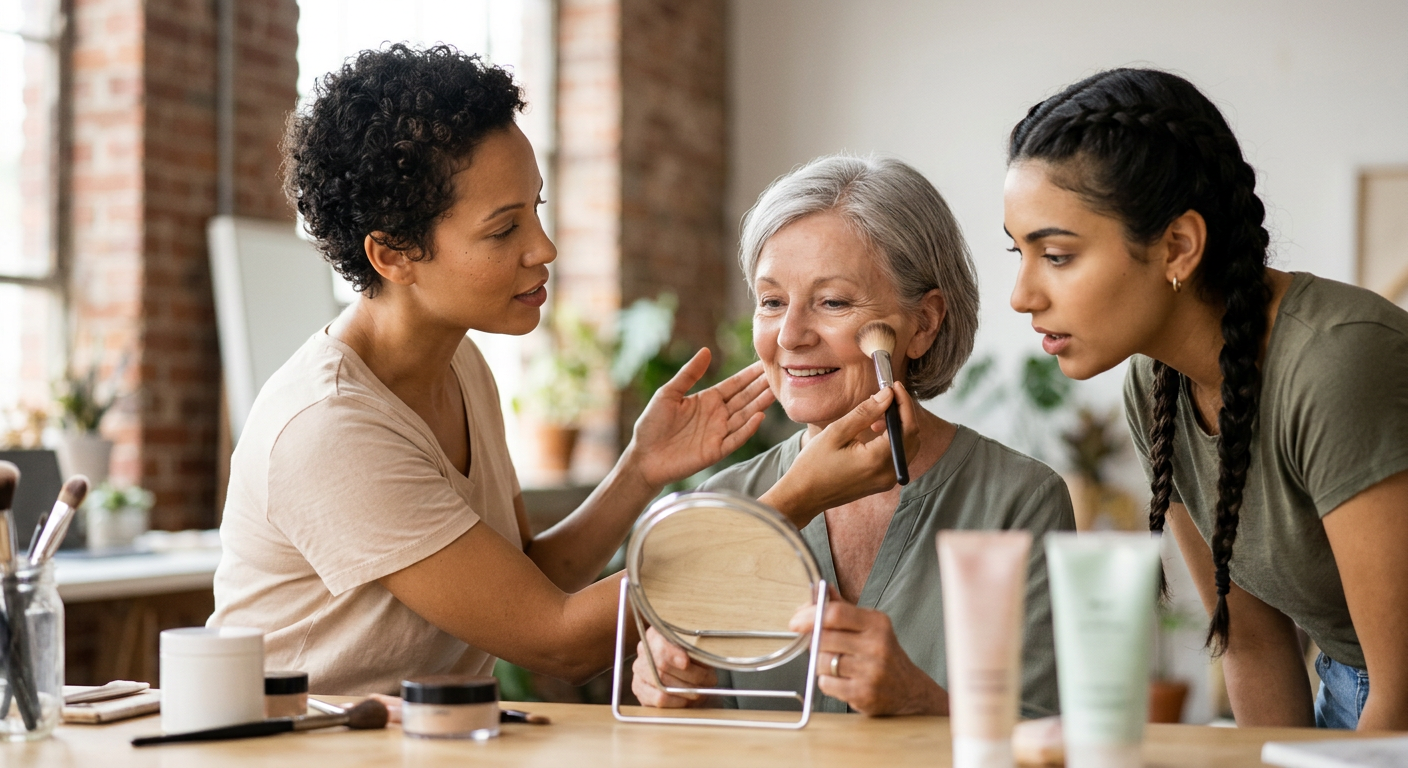
Underpainting works across skin types and face shapes, but it’s particularly effective for anyone who finds traditional contouring too heavy or difficult to blend out. The Cool Hour describes the result as “a natural glow as close as you can get to an airbrushed effect” — which translates well for both daily wear and photography.
Dry and mature skin types tend to respond especially well. Because foundation sits over the contour rather than being applied directly to bare skin, there’s less risk of product settling into fine lines or dry patches.
For anyone new to contouring, the learning curve is gentler than it looks. Blending mistakes get corrected when foundation goes on top — which is not something you can say for contour placed on finished skin.
Conclusion
Underpainting makeup is a technique with a professional track record that’s finally reached a mainstream audience. Applying contour, blush, and highlight beneath foundation produces a natural, dimensional finish that traditional layering rarely achieves — the structure looks like it belongs to the skin rather than sitting on it.
The principles are simple: cream and liquid products only, a generous contour application, and a light-coverage foundation to pull everything together. Whether you’re after Mary Phillips’ signature soft-glam finish or just want your everyday base to look less like makeup, underpainting is a practical approach with a visible payoff.
To start: grab a cream contour stick and your lightest foundation. Apply the contour first, blend it out, then layer the foundation over the top with a fluffy brush. The difference in finish shows up immediately.
Frequently Asked Questions
Q: What is underpainting makeup?
Underpainting makeup is a technique where contour, bronzer, blush, and highlight are applied beneath foundation rather than on top of it. The foundation acts as a diffusing layer, softening the color underneath for a natural, skin-like finish.
Q: Can beginners do the underpainting technique?
Yes. Because the foundation blends and softens whatever’s underneath, underpainting is more forgiving than traditional contouring. Start light and build depth gradually as you get comfortable with the method.
Q: What products do you need for underpainting?
Cream and liquid products only — powder formulas won’t blend correctly under foundation. A cream contour stick, liquid bronzer, cream blush, liquid highlighter, and a sheer-to-medium coverage foundation cover the essentials.
Q: Who popularized underpainting makeup?
Celebrity makeup artist Mary Phillips is widely credited with bringing the technique to mainstream attention. She uses it on clients including Hailey Bieber, Kendall Jenner, and Jennifer Lopez, and her TikTok tutorials drove much of the technique’s viral spread.
Q: Does underpainting work for all skin types?
Yes, though dry and mature skin types tend to benefit most — cream products beneath the foundation reduce the risk of settling into fine lines. Oily skin types should use a lightweight, oil-free foundation on top and set well with translucent powder.
Q: Why is underpainting trending again in 2026?
The 2026 beauty aesthetic has shifted toward natural, hydrated, skin-like finishes. Underpainting fits that direction because the structure it creates reads as coming from within the skin rather than sitting on top of it.