

Cold air outside and dry heat indoors make a punishing combination for skin. By midwinter, your arms feel tight, your shins flake, and no amount of water seems to help. The fix isn’t more water. It’s rebuilding the barrier that cold weather strips away, and the right botanical ingredients do that job well.
Dry skin, or xerosis as dermatologists call it, gets worse in winter. Research in the Journal of Cosmetic Dermatology documents higher prevalence and severity in cold months, driven by low humidity and environmental dryness. A good plant-based formula can make a measurable difference. This guide covers which ingredients to look for and how to use them.
Why Winter Skin Feels Dry in the First Place

Your skin holds onto water through the stratum corneum, the outermost layer that works as a barrier. When it functions well, it keeps moisture in and irritants out.
Winter attacks that barrier from two sides. Cold outdoor air and dry indoor heat both deplete the skin of its natural oils, so water escapes and skin dehydrates, explains dermatologist Alexandra Coromilas, MD, in a guide from Columbia University. The result is roughness, scaling, itching, and in bad cases, cracking.
Age makes it worse. Skin produces fewer natural oils over time, grows thinner, and loses water more readily. Your winter routine often has to work a little harder each year.
The Botanical Ingredients That Actually Work
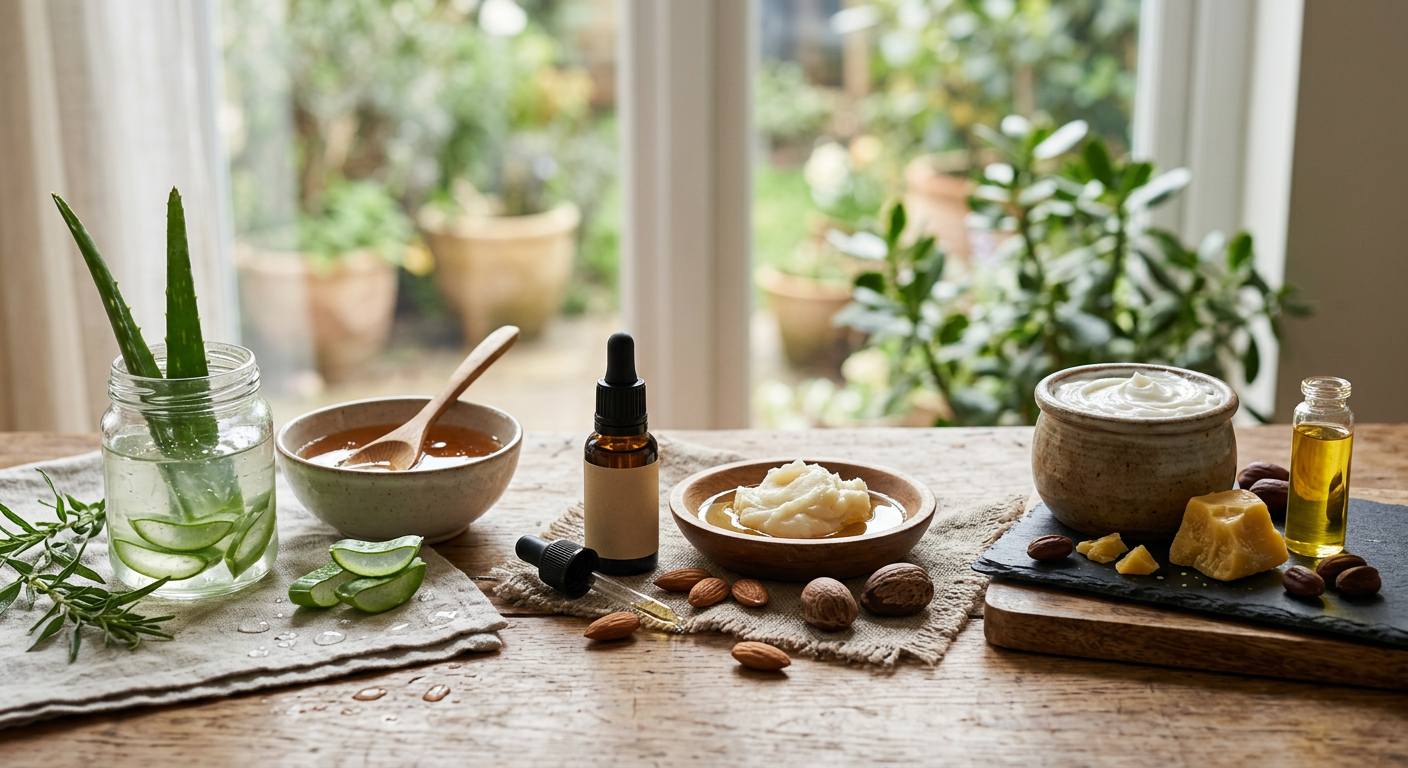
Effective moisturizers lean on three types of ingredients. Humectants pull water in, emollients soften rough skin, and occlusives seal moisture against the surface. The best winter formulas use all three.
On the label, look for emollients built from lipids: squalane and plant oils, butters, and waxes such as shea, jojoba, cocoa, argan, sweet almond, and sunflower, according to Consumer Reports. Dermatologists interviewed for that report singled out shea butter, which doubles as an occlusive.
Winter Skin Ingredient Cheat Sheet
| Ingredient | Type | Best For |
|---|---|---|
| Shea butter | Emollient + occlusive | Rich, cushioned feel on very dry skin |
| Cocoa butter | Emollient + occlusive | Heavy-duty barrier support |
| Glycerin | Humectant | Drawing water into the skin |
| Colloidal oat | Emollient + soothing | Itchy, reactive winter patches |
| Squalane | Emollient | Lightweight hydration |
| Jojoba oil | Emollient | Fast absorption, lighter finish |
| Aloe | Humectant | Calming dry, tight areas |
| Calendula | Botanical soother | Flaky, irritated skin |
These ingredients fit botanical routines because they deliver softness without unnecessary complication, as Kure Organic notes. Most of them sit near the top of ingredient lists on well-made organic products.
Does “Organic” Actually Perform Better?

The organic label is worth taking seriously, but it’s not the whole story. A 2026 randomized controlled trial compared organic and synthetic emollient moisturizers across 100 participants over 28 days.
The organic moisturizer raised skin hydration from 26.86 to 50.49 arbitrary units and cut transepidermal water loss more than the synthetic group, according to the study results. Both products were safe and well tolerated, but the organic emollient produced better barrier function.
The catch: “organic” describes how something is sourced and produced. It doesn’t guarantee better hydration or fewer reactions, as Glimmer Goddess points out. A familiar plant oil isn’t automatically gentle, so read the full label if you have known allergies.
Choose organic for cleaner sourcing and fewer synthetic additives, then judge each product on its complete formula and how it feels on your skin.
Choosing the Right Texture for Cold Weather
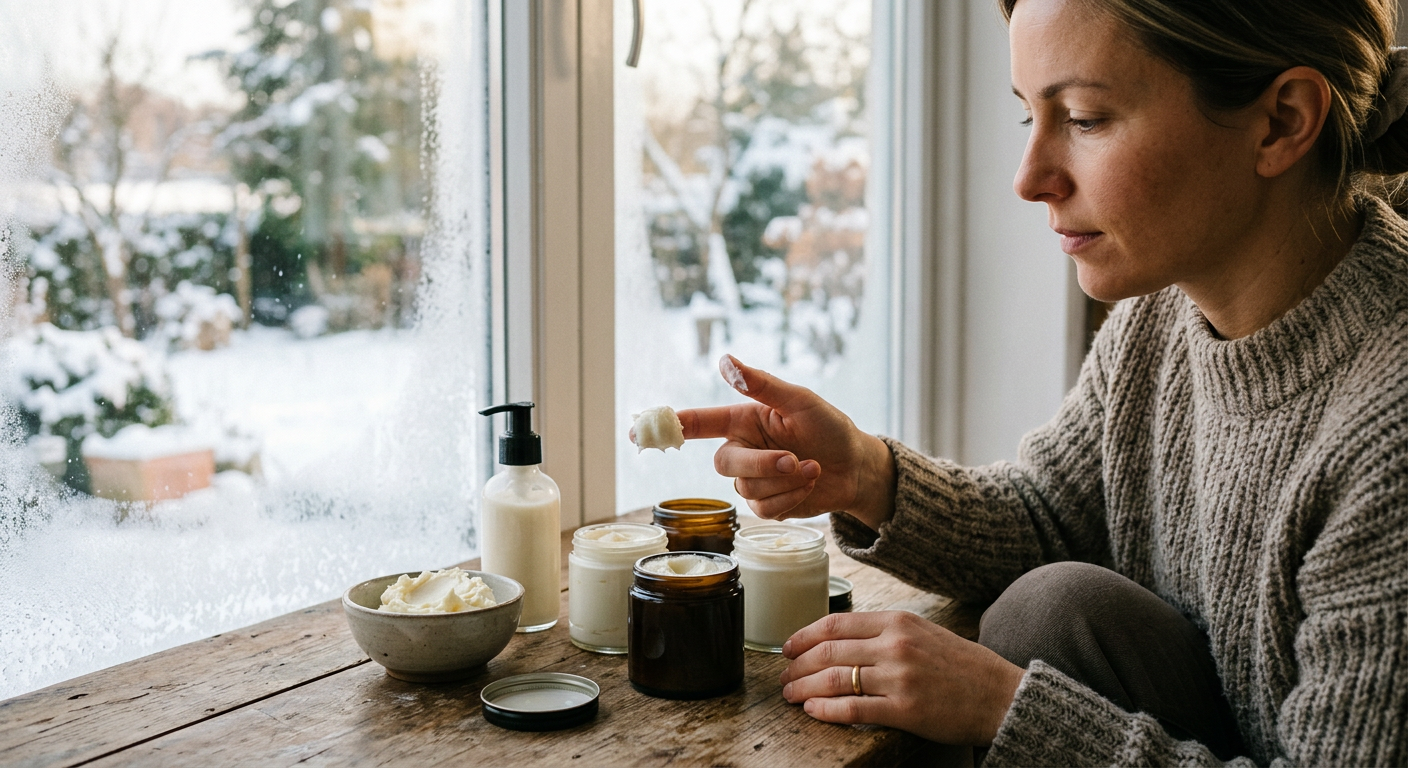
In winter, texture matters as much as the ingredient list. A lotion usually falls short because lotions are mostly water.
Creams hold more oil and less water than lotions, which makes them more moisturizing, according to Columbia University’s dermatology guide. For hands and feet, an ointment applied before bed and covered with cotton gloves and socks does more than any daytime lotion.
Butters vs. Oils vs. Gels
Each format answers a different need:
- Body butters are the richest option. Shea, kokum, and similar botanical fats absorb slowly and leave a cushioned feel. A good butter melts in without stiffness or residue, notes HT Botanicals.
- Body oils like meadowfoam seed, jojoba, and hemp seed sink in faster and suit anyone who wants a lighter finish.
- Skin gels are the lightest and layer well under clothing, which makes them a fit for milder days or skin that needs botanical support without heavy moisture.
For deep winter dryness, dermatologists tend to recommend thicker creams, ointments, or butters over thin lotions, as Arganier reinforces. Match the format to how dry your skin feels, not to the date on the calendar.
Building a Winter Body Care Routine
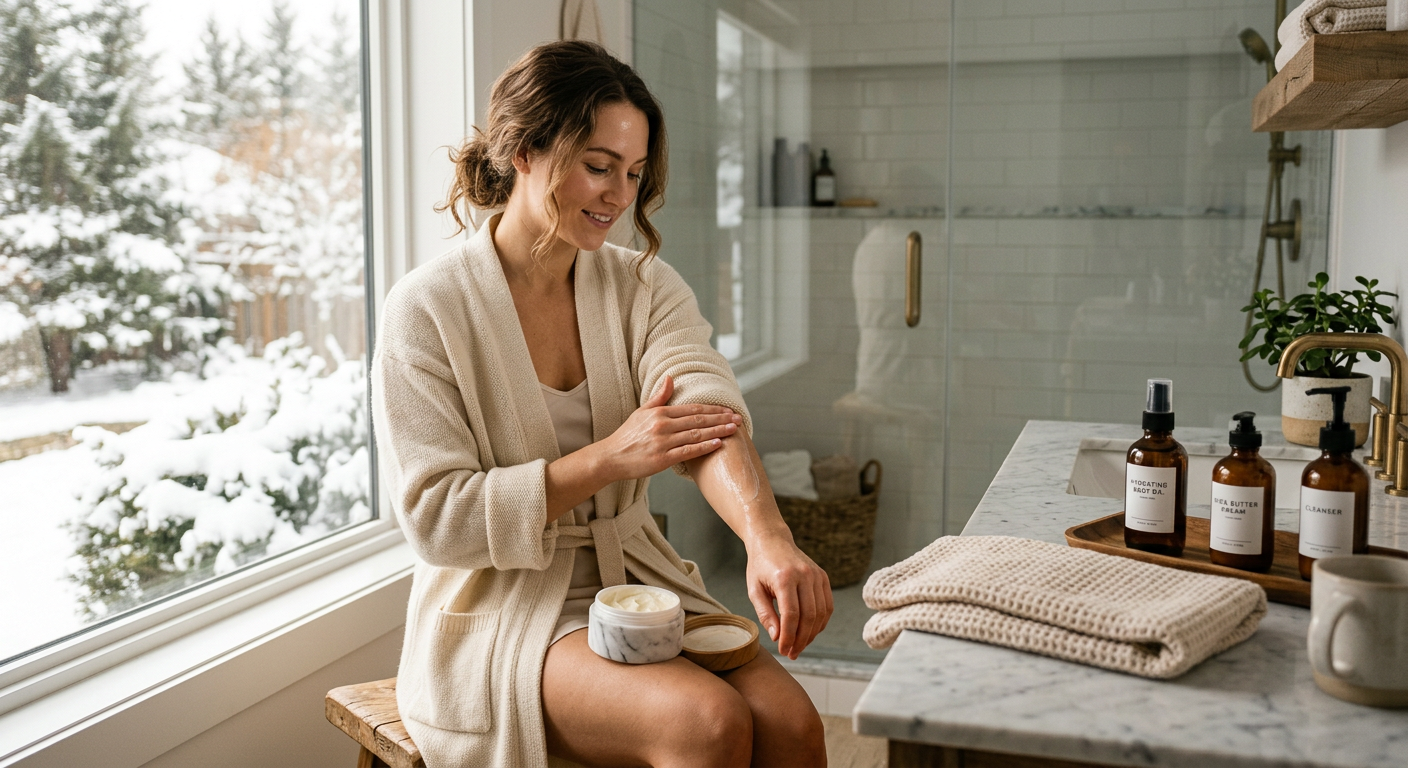
Good ingredients only pay off when you apply them well. A few evidence-based habits make everything else in your routine work harder.
It starts in the shower. Keep showers short and use lukewarm water instead of hot, since hot water strips natural oils, advises Columbia University. Trade sulfate cleansers for gentle, plant-based washes with cream, milk, or oil textures.
Then move fast. Moisturize within three minutes of getting out, while your skin is still damp, so a rich cream or body oil can seal the water in, according to Arganier. Wait too long and the water evaporates before you reach for the jar.
A Simple Winter Sequence
- Cleanse with a gentle, cream- or oil-based body wash, only where you need it.
- Exfoliate rough areas like knees, elbows, and heels sparingly.
- Apply a body oil to damp skin to lock in moisture.
- Layer a thick butter or cream over the oil for lasting barrier support.
- Treat hands and feet with ointment and cotton gloves or socks overnight.
Consistency beats intensity. In the xerosis study, daily use of a well-formulated botanical lotion improved hydration, radiance, and smoothness over four weeks.
What to Avoid on the Label

A clean formula is defined as much by what it leaves out as what it includes. The main offenders are easy to catch once you know the names.
Watch for synthetic fragrances and hormone-disrupting chemicals like phthalates and parabens, and skip them where you can, advises The Good Trade. Synthetic ingredients tend to irritate dry skin more than natural alternatives, particularly if you deal with persistent dryness or eczema, according to Glimmer Goddess.
That adds up over a season, given how much product the average person applies. Women use around 12 personal care products a day, according to the Environmental Working Group as cited by Consumer Reports. Small ingredient choices compound quickly across a winter.
Key Takeaways and Next Steps

Winter dryness is a barrier problem, and botanical ingredients offer a proven solution. Prioritize emollients and occlusives like shea butter, cocoa butter, and squalane, paired with humectants like glycerin and aloe.
Choose richer textures like creams, butters, and ointments over thin lotions in cold weather, and apply them to damp skin within three minutes of showering. Favor organic formulas for cleaner sourcing, but judge the complete ingredient list, not the label alone.
Start by auditing your current products for synthetic fragrance, phthalates, and parabens. Then upgrade one step at a time: swap your cleanser, add a body oil, and finish with a botanical butter. Give it a few weeks of consistent use before you decide whether it’s working.
Frequently Asked Questions
What is the best botanical ingredient for very dry winter skin?
Shea butter is one of the strongest choices because it works as both an emollient and an occlusive, softening skin while sealing moisture in. Dermatologists interviewed by Consumer Reports favor it for dry, rough skin.
Is organic body care really more effective than synthetic products?
In a 2026 randomized controlled trial, an organic emollient raised hydration and reduced water loss more than a synthetic one over 28 days. That said, “organic” refers to sourcing, so you should still evaluate the full formula and texture.
Should I use a lotion or a body butter in winter?
Body butters and creams work better in winter because they hold more oil and give richer barrier support. Lotions are mostly water and usually aren’t enough for deep cold-weather dryness.
When should I apply moisturizer for the best results?
Apply it within three minutes of showering, while your skin is still damp. That traps water against the skin before it evaporates, which maximizes hydration.
What ingredients should I avoid in winter body products?
Avoid synthetic fragrances, phthalates, and parabens, which can irritate dry skin. These additives are especially problematic if you have persistent dryness or eczema.
How long before I see results from a new routine?
Research on daily body lotion use showed measurable improvements in hydration, smoothness, and scaling over four weeks. Consistent daily application matters more than any single product.