



The routine that kept your skin comfortable in August was built for a climate you’re about to leave behind. Once the mornings turn crisp and the heating kicks on, that lightweight gel moisturizer stops pulling its weight. A seasonal transition is about getting ahead of the shift before your skin starts cracking, tightening, or flaking. None of this requires scrapping what you already own. A handful of targeted swaps between September and December will get you through winter with your complexion intact.
Plenty of people plan ahead. Accio reports that searches for “fall skincare products” start climbing in August and peak toward year’s end, which suggests most people prepare their skin before the weather forces the issue.
Why Your Skin Changes When Temperatures Drop

Your skin’s outermost layer is a barrier that holds moisture in and keeps environmental stressors out. When temperature and humidity drop, the air holds less moisture, and your skin loses water faster than it did in warmer months. Indoor heating makes it worse, and the effect compounds as the season drags on.
Kosmatology points out that you may find yourself reaching for moisturizer more often even though nothing else has changed. Research cited by CV Skinlabs found lower skin hydration and sebum production in winter, with winter skin showing greater water loss, more redness, and more scaliness than autumn skin.
The measurements back it up. Dermatology News reports on a Chinese study of 140 adults that measured transepidermal water loss (TEWL, the rate at which water escapes through the skin), pH, and blood flow. All three differed significantly between winter and summer in every group tested. Starting barrier care as the air dries out is a reasonable, evidence-backed move.
Upgrade to a Richer, Barrier-Loving Moisturizer
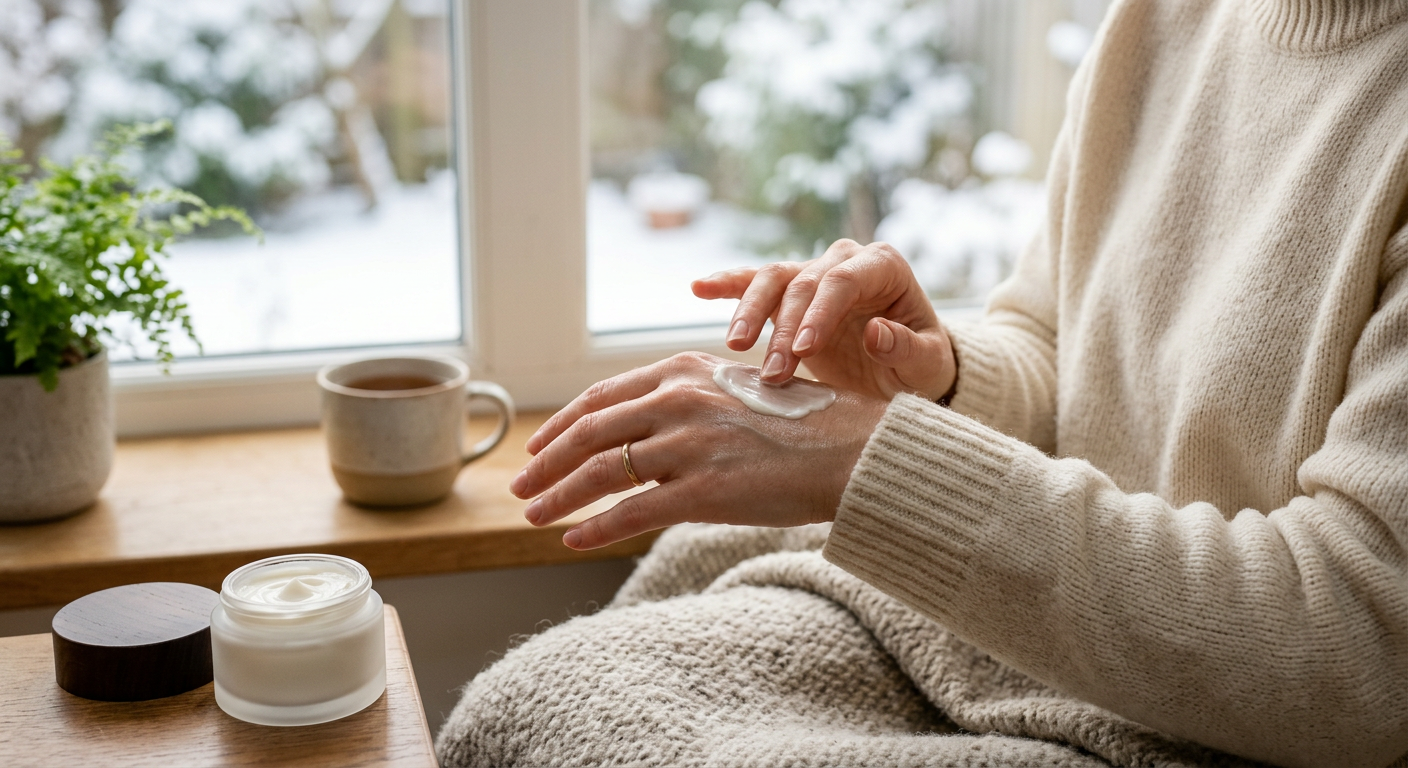
If you change one thing, change your moisturizer. In cold weather, the water in your skin evaporates into the dry air faster, which is why Fashion and Style Police recommends trading lightweight summer gel lotions for a thicker, lipid-rich cream.
Look for ingredients that actively seal in hydration:
- Ceramides — reinforce the skin barrier
- Fatty acids — replenish natural lipids
- Squalane — a lightweight emollient that locks in moisture
- Shea butter and hyaluronic acid — for deep, plumping hydration
Apply to Damp Skin
Timing matters as much as the product. Put your moisturizer on right after cleansing, while your skin is still slightly damp, to trap the surface moisture. NEOVA notes that layering a hyaluronic acid serum on damp skin and immediately following with a creamy, occlusive moisturizer solves a common problem: a hydrating serum that worked all summer suddenly feeling like it does nothing.
Match Products to What Your Skin Actually Needs
Don’t over-correct. Kosmatology’s advice is to watch your skin rather than the calendar. If it feels drier, add moisture. If it’s still oily in September, there’s no reason to reach for heavy products just because the weather turned.
Switch to a Gentler Cleansing Routine

Skin that feels tight, burning, or squeaky clean after washing is telling you the cleanser is too harsh for the season. Fashion and Style Police recommends swapping foaming or salicylic acid washes for a gentle, non-stripping cream or oil-based cleanser that removes grime without taking your natural oils with it.
Kosmatology makes the same point: very hot water and harsh cleansers leave skin tight and dry, so use gentle cleansers and warm water instead of hot. Skin Pharmacy adds a useful caveat: if your current products aren’t leaving you tight, you may not need to change anything. Small adjustments beat wholesale overhauls.
Skip the Scalding Hot Shower
A steaming shower feels great on a cold morning, but it works against your barrier. Fashion and Style Police warns that hot water strips your skin of protective oils. Turning the temperature down to warm helps preserve the lipids your skin worked to produce.
Don’t Drop Your SPF

The most common cold-weather mistake is quietly abandoning sunscreen. UV damage doesn’t take the winter off, and daily protection still matters. Fashion and Style Police recommends making a broad-spectrum SPF 30 or higher the last step of your morning routine, every day.
For long stretches outdoors like cold hikes, holiday markets, and winter sports, step the protection up. Bonjout Beauty notes that formulation matters: mineral sunscreens work well for sensitive skin, while chemical formulas tend to feel lighter for everyday wear.
Your Summer-to-Winter Swap Guide

Use this as a quick reference for adjusting each step as you move from September into deep winter.
| Routine Step | Summer / Early September | Winter |
|---|---|---|
| Cleanser | Foaming or gel wash | Cream or oil-based, non-stripping |
| Moisturizer | Lightweight gel or lotion | Rich cream with ceramides, squalane |
| Serum | Hydrating mist | Hyaluronic acid on damp skin |
| Water temperature | Cool to warm | Warm, never scalding |
| SPF | Broad-spectrum SPF 30+ daily | SPF 30+ daily, SPF 50 for outdoor time |
| Exfoliation | Regular | Gentle, reduced frequency |
| Body care | As needed | Rich lotion for hands, elbows, knees |
Don’t Forget Body, Hands, and Lips
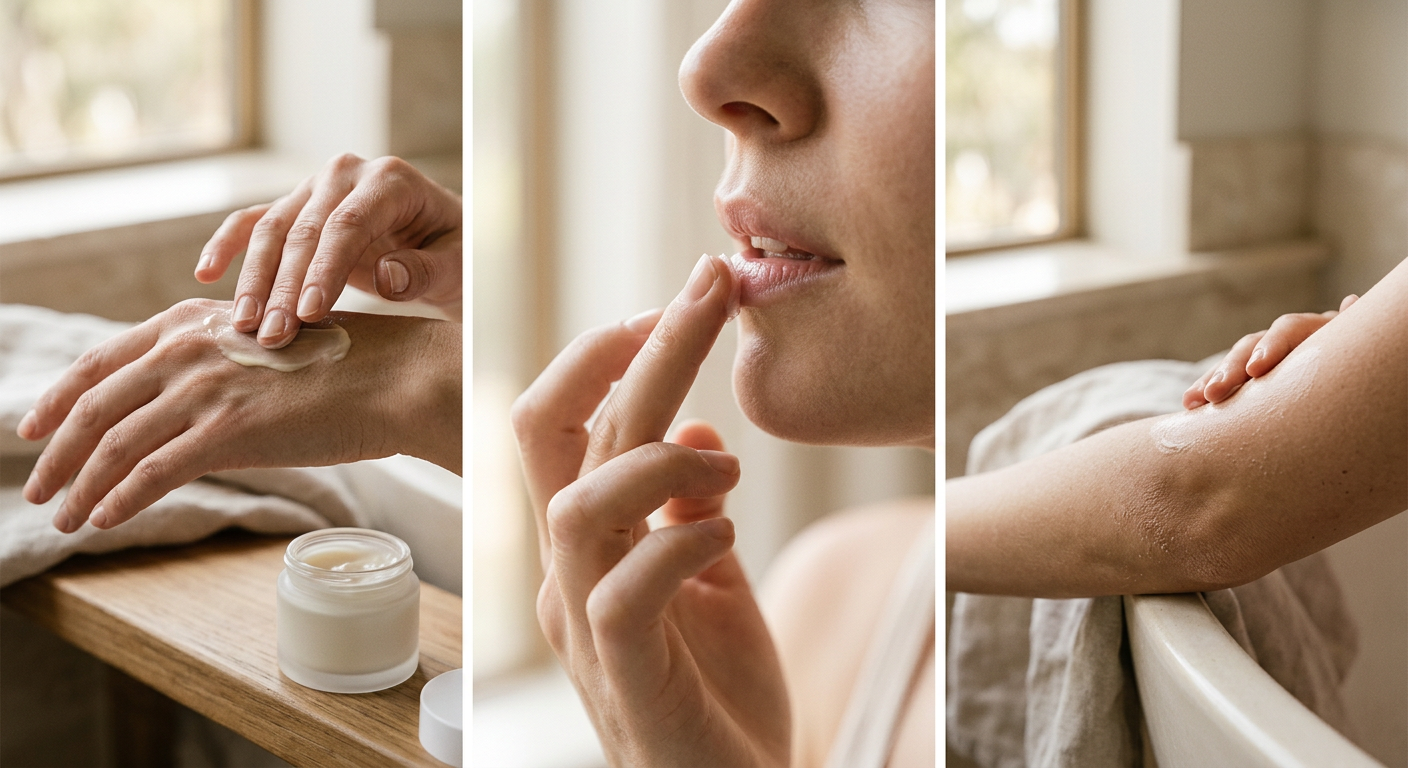
Your face gets all the attention, but seasonal dryness usually shows up somewhere else first. Kosmatology names hands, elbows, knees, and legs as some of the earliest places you’ll feel tightness and rough texture. Lips chap early too.
Keep a rich body lotion within reach and use it on hands, arms, and legs the moment they feel rough. CV Skinlabs recommends applying body moisturizer while the skin is still damp to trap water, the same principle that works on your face.
Build a Cozy Season Ritual
Seasonal skincare isn’t only about products. Consistency does most of the work, and comfort makes consistency easier. BiblioLifestyle suggests pairing the skincare shift with grounding autumn habits like slow mornings and warm rituals. Folding your richer routine into a calm evening wind-down makes it easier to keep up, and keeping up is what delivers results.
Key Takeaways and Your Next Step

Moving your routine from September into winter comes down to a few deliberate swaps: a richer, barrier-loving moisturizer, a gentler cleanser, cooler shower water, and a daily SPF you don’t skip. Watch your skin instead of the calendar, and add moisture where and when you actually need it.
Start with one change this week, whether that’s swapping your cleanser or applying your moisturizer to damp skin, then layer in the rest as it gets colder. Your skin barrier does its hardest work of the year in winter. A proactive routine keeps it comfortable through the coldest months.
Frequently Asked Questions
When should I start transitioning my skincare for winter?
Start when you notice cooler mornings and lower humidity, usually in September. Search interest in fall skincare climbs in August because early care prevents the dryness and irritation that peak in deep winter.
Do I need to replace my entire routine for cold weather?
No. Skin Pharmacy and Kosmatology both favor small, targeted adjustments over full overhauls. Swap your moisturizer and cleanser first, and only go further if your skin shows signs of dryness or tightness.
Should I still wear sunscreen in winter?
Yes. UV exposure continues year-round, so keep a broad-spectrum SPF 30 or higher as the last step of your morning routine. Go up to SPF 50 for long outdoor activities like winter sports.
Why does my skin feel tight after washing in winter?
Tight, burning, or squeaky-clean skin means your cleanser is too harsh or your water is too hot. Switch to a gentle cream or oil-based cleanser and use warm rather than scalding water to preserve your natural oils.
What ingredients should a winter moisturizer contain?
Look for ceramides, fatty acids, squalane, and shea butter to seal in hydration and reinforce the barrier. Apply the cream to slightly damp skin right after cleansing to trap surface moisture.
Why does my body get dry before my face does?
Hands, elbows, knees, and legs have fewer oil glands and take more friction from clothing, so they lose moisture faster. Keep a rich body lotion nearby and apply it while the skin is still damp to lock in hydration.