

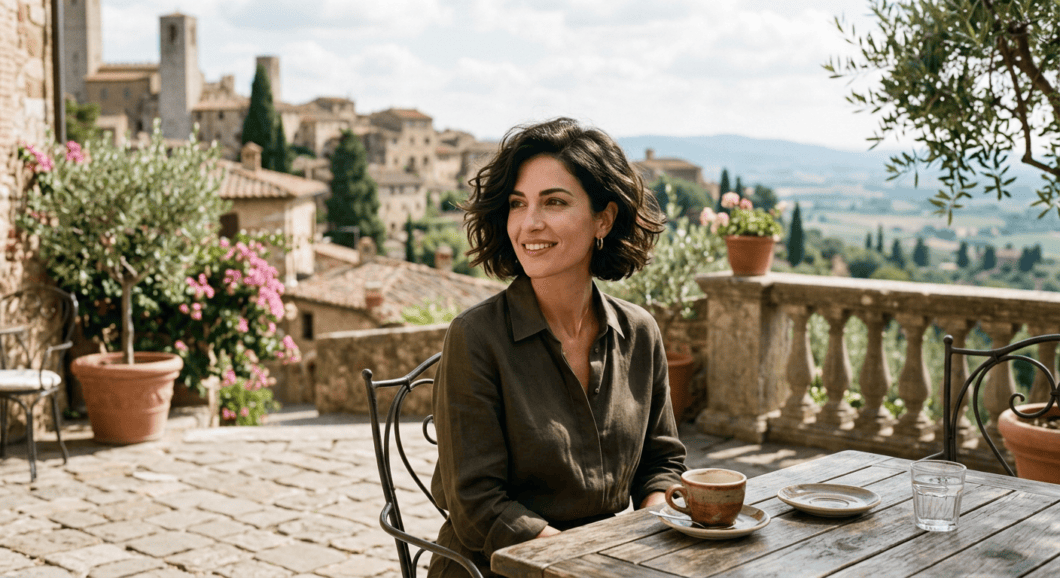

Sophia Loren and Monica Bellucci built careers on hair that looked polished without looking fussy. That’s the reference point for the Italian bob, and it’s the short cut salons are booking most going into 2026. It sits between the chin and jawline, with blunt, rounded ends and a good deal of body. The result is glossy and full, and it’s pulling ahead of sleeker options like the French bob.
Below is what the cut actually is, how it stacks up against other bobs, why it’s having a moment, and how to style it yourself.
What Is the Italian Bob?

The Italian bob is a short haircut that skims the jawline or sits just above the shoulders, finished with soft ends and plenty of body. Amelia Evans, artistic director at Hare & Bone, describes it as “glossy, voluminous, and unapologetically sophisticated,” inspired directly by Italian screen icons Monica Bellucci and Sophia Loren.
The difference from an ultra-precise blunt cut comes down to priorities. This one is built for fullness and movement rather than razor-sharp geometry. It usually lands between chin and jawline length, and the blunt, rounded ends are what give it that bounce.
Key Attributes of the Cut
- Length: Chin to jawline, occasionally grazing the shoulders
- Ends: Blunt but softly rounded, not razored or heavily textured
- Volume: Full, bouncy body throughout, especially at the roots
- Finish: Glossy and healthy-looking, with a lived-in movement
Kenra Professional credits the cut’s staying power to its mix of tradition and modernity: clean lines paired with understated beauty that has kept it in rotation for decades.
Italian Bob vs. French Bob vs. Graduated Bob

The right bob depends on the shape, volume, and upkeep you’re after. The Italian bob sets itself apart with fullness; the French bob runs sleeker and shorter. Here’s how the three compare.
| Feature | Italian Bob | French Bob | Graduated Bob |
|---|---|---|---|
| Length | Chin to jawline | Chin, often with fringe | Shorter at back, longer at front |
| Volume | High, bouncy | Moderate, sleek | Stacked at the back |
| Ends | Blunt, rounded | Blunt, sometimes textured | Angled, layered |
| Vibe | Dolce Vita glamour | Parisian minimalism | Sharp, modern polish |
| Maintenance | Moderate (blow-dry focused) | Low | Moderate to high |
The summary: choose the Italian bob for volume and old-world glamour, the French bob for low-effort minimalism, the graduated bob for structured, angular polish.
Why the Italian Bob Is Trending for 2026

Bobs across the board are climbing into 2026, with salons reporting more clients cutting shorter for a fuller finish, per Sam Villa Pros. The Italian bob sits at the center of that shift.
Part of the pull is aspirational. Adam Heasman told Who What Wear that “the Italian bob pays homage to the Dolce Vita lifestyle, mixing the Milanese aesthetic with your classic big, bouncy blow-dry.” That combination of glamour and playfulness makes it one of the more versatile short cuts on offer this year.
The rest is practicality. A voluminous finish reads as full and healthy, flatters most face shapes, and hides fine or thinning strands. It photographs well, comes together quickly once the technique clicks, and looks polished at the office or out to dinner.
How to Make the Italian Bob Work for You

The cut is adaptable, but small adjustments matter depending on your hair type and face shape. Raise these variables with your stylist before the first snip.
For Different Face Shapes
- Round faces: Ask for a length that hits just below the jaw to elongate the face.
- Square faces: Softer, rounded ends and added waves soften a strong jawline.
- Oval faces: Most lengths work; a true chin-length cut showcases the shape.
- Heart-shaped faces: A jawline-grazing length balances a narrower chin.
For Different Hair Types
Fine hair benefits most from the blunt cut, since removing tapered ends creates the illusion of density. On thick or wavy hair, ask your stylist to remove weight internally so the shape doesn’t turn bulky. Naturally curly hair works too, but cut it slightly longer to account for shrinkage.
How to Style an Italian Bob at Home
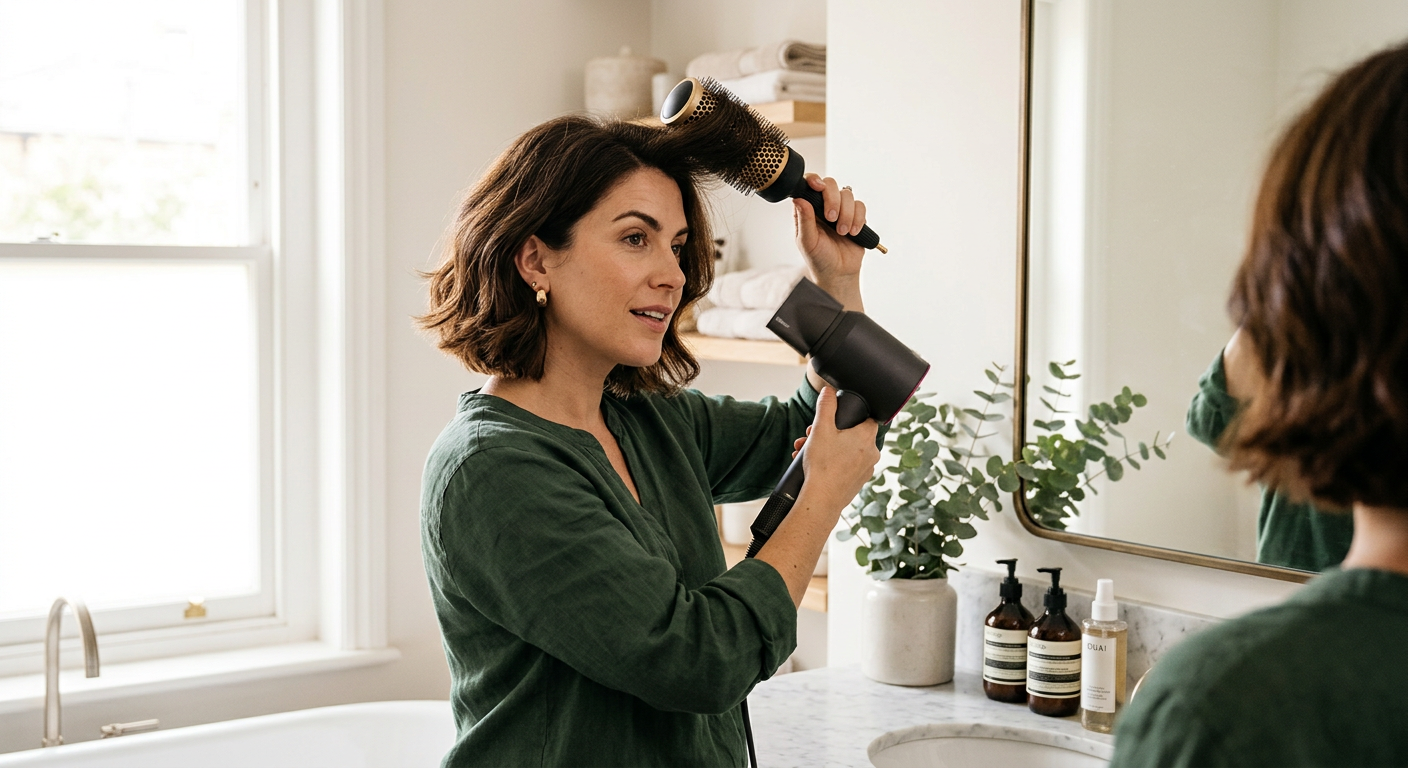
Volume is the whole point, so styling comes down to a proper blow-dry. A round brush does the heavy lifting, lifting the roots and rounding the ends inward.
The Blow-Dry Method
- Apply a volumizing mousse or root-lift spray to damp hair.
- Rough-dry until hair is about 80 percent dry.
- Section the hair and blow-dry with a large round brush, rolling the ends under.
- Lift each section at the root and direct heat upward for maximum volume.
- Finish with a cool-air blast to set the shape.
Adding Movement
For that lived-in texture, stylists suggest a light wave after the blow-dry. One told Harper’s Bazaar: “After blow-drying with a round brush, I add some soft bends or waves with a curling iron to create that lived-in movement.”
Hot rollers get you similar body with less arm work than a manual blow-dry. Finish with a lightweight shine serum to lock in the gloss. Skip heavy waxes and pastes, which flatten the volume you just built.
Maintenance and Longevity
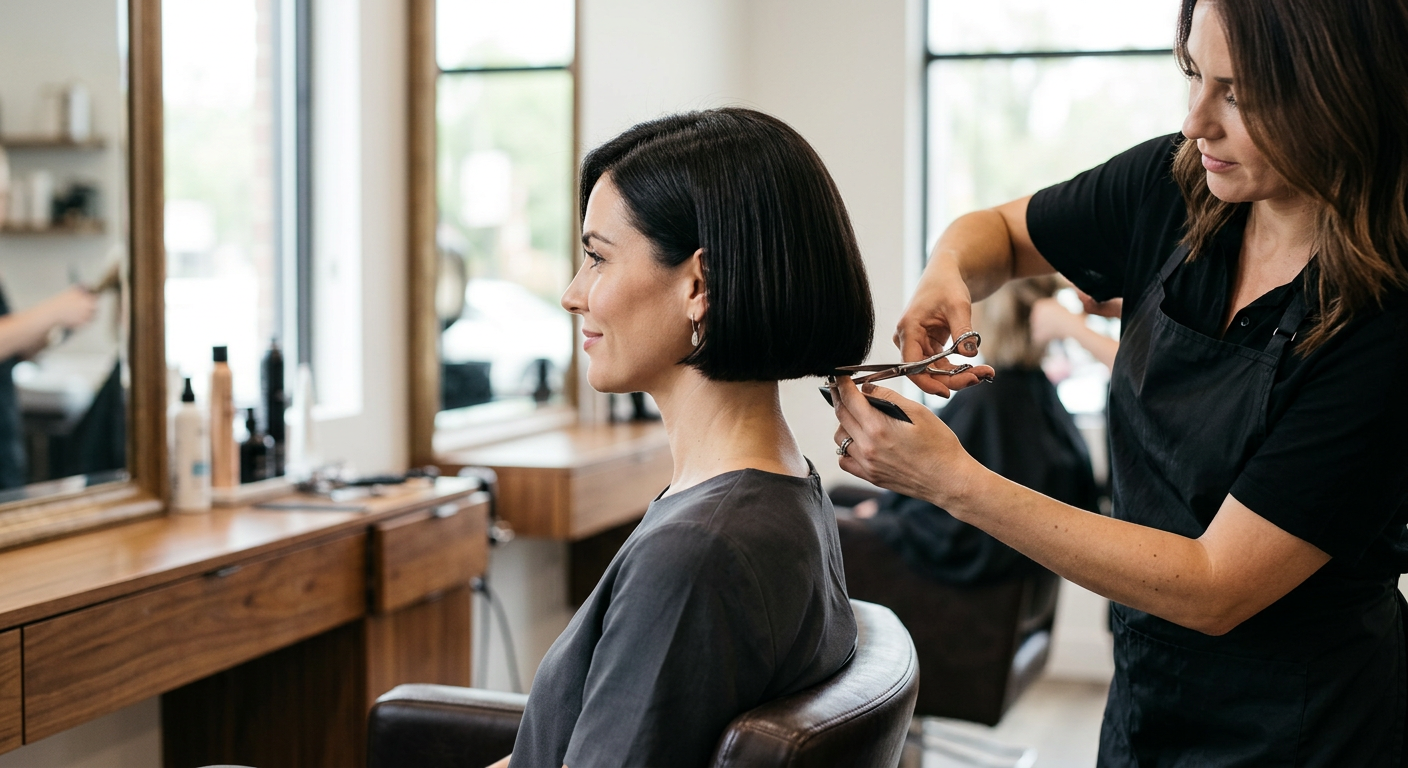
The Italian bob holds its shape, but the blunt ends need attention. Book a trim every six to eight weeks to keep the perimeter clean and the ends from going wispy.
Gloss treatments stretch the polished finish between salon visits, and they earn a spot in your routine given how much this look leans on shine. A good heat protectant isn’t optional here, since the style depends on regular heat.
Growing it out is painless. The Italian bob eases into a lob (long bob), so you’re never stranded between lengths. That flexibility is a big reason stylists rate it one of the smarter short-hair investments for 2026.
Conclusion
The Italian bob earned its spot as 2026’s most-requested short cut by pairing Dolce Vita glamour with everyday practicality. The jawline-skimming length, blunt rounded ends, and built-in volume flatter a wide range of face shapes and hair types, and the cut styles up fast once the round-brush blow-dry becomes second nature.
If sleek minimalism is your thing, the French bob has it; if you want structure, the graduated bob delivers. For volume and polish, the Italian bob is the one to beat. Bring reference photos of Monica Bellucci or Sophia Loren to your appointment, talk length and weight with your stylist, and pick up a decent round brush and shine serum to keep it salon-fresh at home.
FAQ
Q: How long is an Italian bob?
The Italian bob typically falls between chin and jawline length, though some versions graze just above the shoulders. The exact length can be adjusted to suit your face shape and hair texture.
Q: What is the difference between an Italian bob and a French bob?
The Italian bob emphasizes fullness and bouncy volume for a glamorous finish, while the French bob is sleeker, often shorter, and frequently paired with a fringe. The Italian bob channels Dolce Vita glamour, whereas the French bob leans toward Parisian minimalism.
Q: Does the Italian bob work on fine hair?
Yes. The blunt, rounded ends create the illusion of thickness, making the Italian bob especially flattering on fine hair. A volumizing blow-dry enhances that fullness further.
Q: How often does an Italian bob need a trim?
Plan for a trim every six to eight weeks to maintain the blunt perimeter and keep the ends from looking wispy. Regular trims preserve the clean, polished shape the cut is known for.
Q: Can I style an Italian bob without heat?
While the signature volume relies on a blow-dry or hot rollers, you can achieve softer results with heatless methods like foam rollers on damp hair. Expect a more relaxed, less voluminous finish than heat styling delivers.
Q: Is the Italian bob good for curly hair?
Yes, but ask your stylist to cut it slightly longer to account for shrinkage. Curly hair can wear the shape beautifully with the right length and product balance.