



You buy two fragrances you love, spray them on together, and walk out the door smelling like two scented candles had a falling-out. It happens a lot, and it’s usually fixable. Layering can build a scent that’s yours alone, but a handful of predictable errors turn that idea into a problem for you and everyone in the elevator. Below are the mistakes people make most, why they happen, and how to correct each one so the finished blend smells like a decision rather than an accident.
Stacking Two Heavy Scents on Top of Each Other
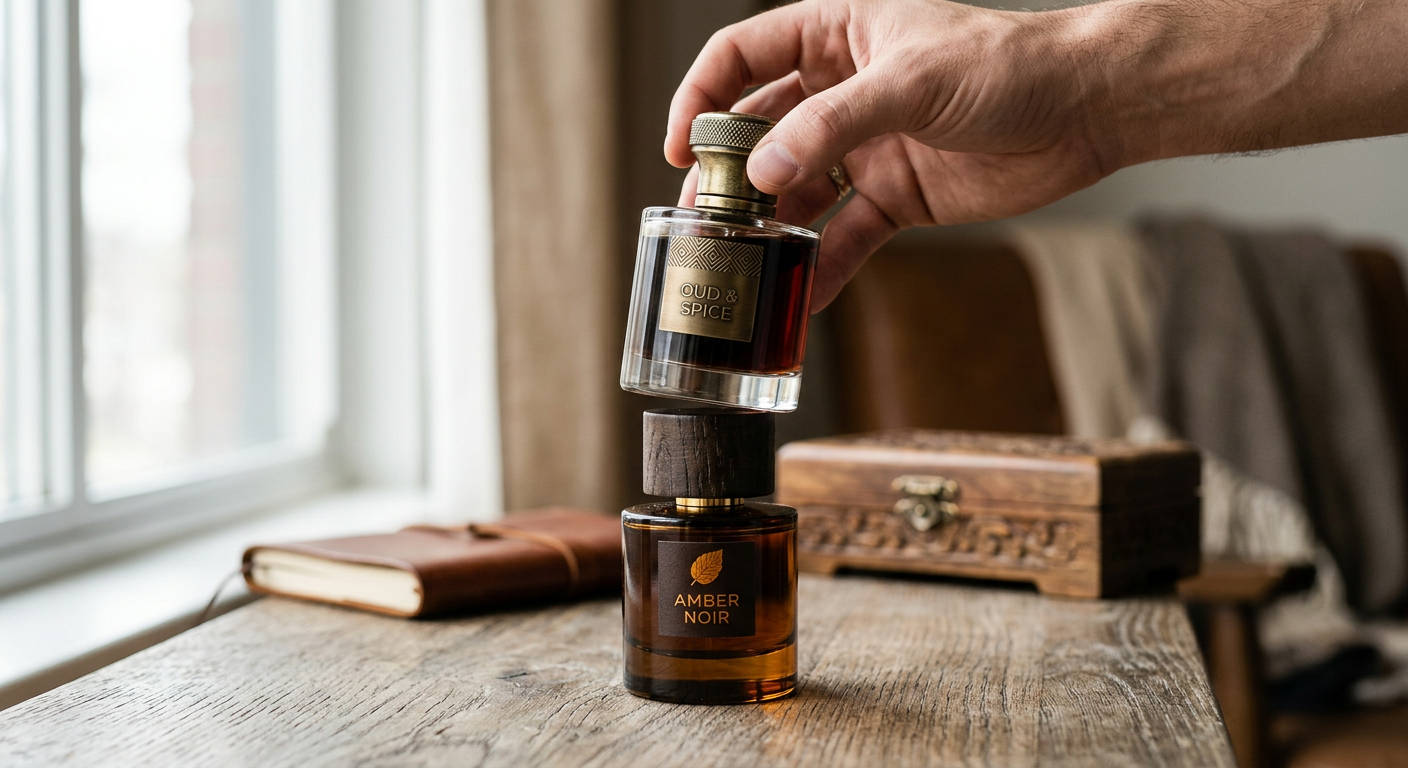
The most common layering error is combining two powerful fragrances that both lead with dominant base notes. Two loud perfumes don’t blend. They fight, and the winner is a dense, airless cloud that wears out your nose and your coworkers by mid-morning.
Layering has more in common with mixing a cocktail than pouring two full glasses into one. Harmony comes from the contrast between soft and bold accords, not from turning everything up to maximum, as Felisa Fragrances points out.
The Fix: Pair a Base with an Accent
Let one fragrance be the foundation and the other a highlight. Fragrance specialists tend to anchor with something heavy and grounded — amber, oud, musk — and lift it with a lighter, more volatile note like citrus or a soft floral. Both scents get room to breathe, and neither smothers the other.
Ignoring the Balance Between Fragrance Families
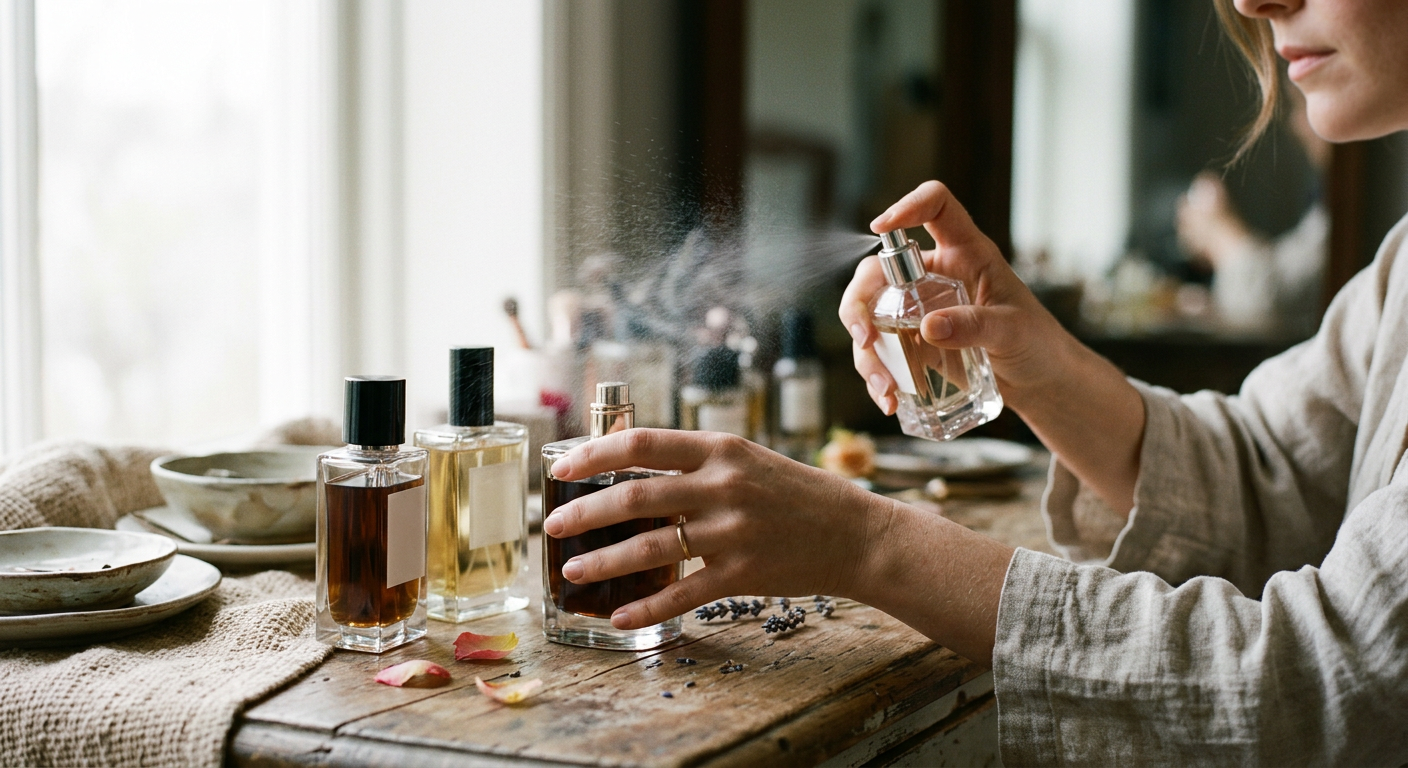
Layering works when scent families either complement each other or contrast on purpose. Throw a gourmand vanilla against a sharp aquatic and you usually get mud, because the notes pull in opposite directions. Think of an outfit where nothing matches and nothing was meant to.
Some families reward you every time. Woody notes ground florals and citrus, and spice adds warmth to sweet gourmands. Once you know these relationships, layering becomes closer to a system than a gamble.
Reliable Pairings vs. Risky Combinations
| Pairing | Result | Recommendation |
|---|---|---|
| Citrus + Woody | Fresh, grounded | Safe for beginners |
| Vanilla + Amber | Warm, cozy | Excellent in cold weather |
| Floral + Musk | Soft, elegant | Highly wearable |
| Aquatic + Gourmand | Clashing, confused | Avoid |
| Oud + Heavy Oud | Overwhelming | Avoid |
| Rose + Oud | Rich, luxurious | Classic combination |
Test any new pairing before you commit to wearing it all day. Even combinations that look safe on paper can misbehave on skin.
Over-Spraying and Applying Too Many Layers
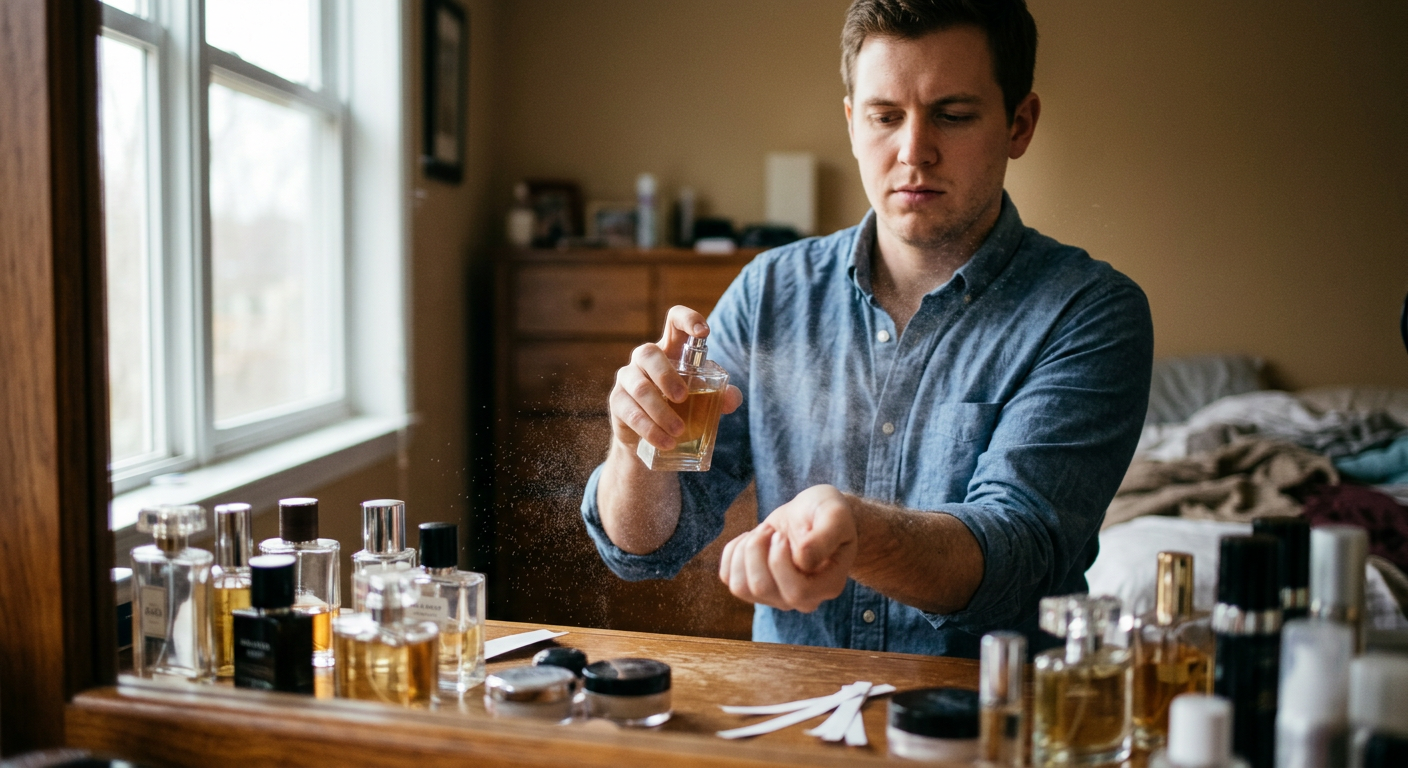
More sprays don’t buy you more longevity. Over-application is one of the fastest ways to wreck a layered scent, and people do it far more often than they under-apply. Saturate your skin and the individual notes disappear entirely, plus you become the reason someone changes seats on the train.
A common rule of thumb caps total application at two to five sprays across the whole combination, not per bottle. Layering two scents means splitting that budget, not doubling it.
Keep Your Layer Count Low
Two or three fragrances is the ceiling. Every extra layer multiplies the odds of an unbalanced mess. If you’re new to this, start with two and only add a third once you know how the first pair develops.
- One to two scents: Ideal for learning and daily wear
- Three scents: For experienced layerers who understand note interaction
- Four or more: Rarely produces a coherent result
Applying Fragrances in the Wrong Order
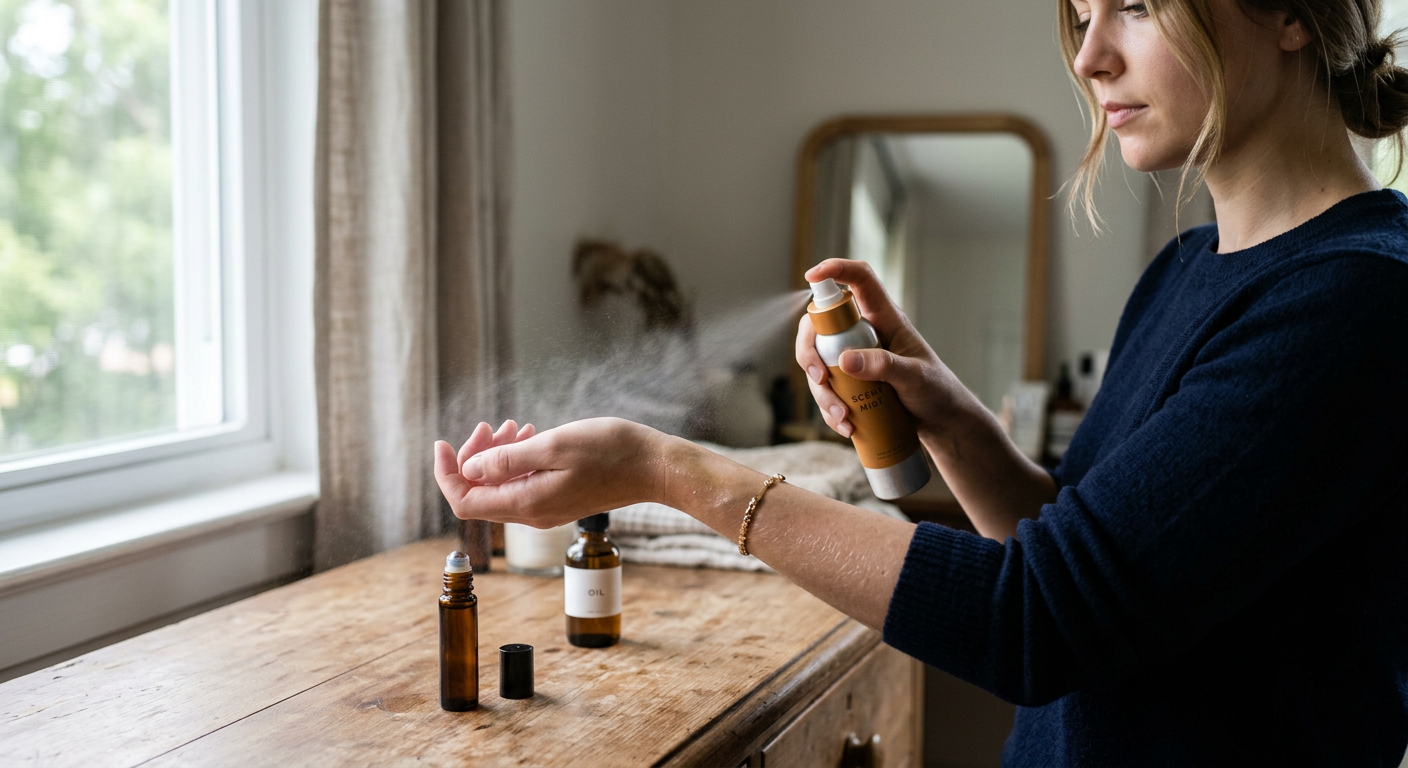
Order matters more than most people assume. Heavier, oil-rich fragrances go on first, closest to the skin, with lighter scents on top. Flip that and the lighter scent burns off too fast while the heavy one takes over completely.
Concentration feeds into the sequence too. An eau de parfum carries more oil and lasts longer than an eau de toilette, so it usually belongs on the base layer. Concentration levels shape how a layered combination performs across the day, as Scento notes.
Concentration Quick Reference
| Concentration | Oil Content | Layering Role |
|---|---|---|
| Parfum / Extrait | 20–30% | Base layer |
| Eau de Parfum (EDP) | 15–20% | Base or middle |
| Eau de Toilette (EDT) | 5–15% | Top layer |
| Eau de Cologne (EDC) | 2–4% | Refreshing top accent |
Rubbing Your Wrists Together After Application

Everyone does it, and it’s the wrong move. Friction and heat break down the fragile top notes that give a scent its opening. Rubbing crushes those molecules, distorts the development you paid for, and shortens how long the whole thing lasts.
Spray and let it settle on its own instead. If you’re hitting multiple pulse points, spray each one directly rather than pressing product from one wrist onto another.
Give Each Layer Time to Develop
Fragrances change on the skin. After the first layer, wait a beat before adding the next, and give the full combination 10 to 15 minutes before you decide whether it works. What you smell in the first thirty seconds is almost never what you’ll wear for the rest of the afternoon.
Forgetting the Role of Skin and Environment

Your skin chemistry, how hydrated you are, and the season all change how a layered fragrance behaves. A combination that smells warm and rich on dry winter skin can turn sharp and aggressive in July. People overlook this constantly, and it quietly ruins otherwise good pairings.
Heat amplifies projection, so cut your spray count in summer and lean toward lighter, fresher pairings. When it’s cold, richer combinations like amber and vanilla hold up better and simply feel right.
Test on Skin, Not on Paper
Blotter paper can’t reproduce the way a fragrance meets your skin’s oils and warmth. Test layering combinations on your own skin, ideally with small decants so you can experiment without buying full bottles you might hate. Moisturized skin holds scent longer, since dry skin lets fragrance off faster.
Conclusion: Layer With Intention, Not Guesswork
Good layering runs on restraint. Don’t stack two heavy scents, respect the families, keep your total between two and five sprays, put the heavier concentration down first, leave your wrists alone, and factor in your skin and the weather. Each fix takes a coin-flip experiment and turns it into something you can repeat.
Begin with one base and one accent. Test the pair on your skin and give it time before you judge it. Once you know how two fragrances behave together, a real layering wardrobe follows. Grab two scents you already own and try one balanced combination this week.
Frequently Asked Questions
Q: How many perfumes should I layer at once?
Two or three at most. Start with two if you’re new, since every additional layer raises the risk of a muddled result. Add a third only after you know how the first pair develops on your skin.
Q: Which perfume goes on first when layering?
Apply the heavier, higher-concentration fragrance first, closest to the skin, then layer lighter scents on top. Parfum and eau de parfum work best as base layers, while eau de toilette and cologne suit the top layer.
Q: How many total sprays should I use when layering?
Keep total application between two and five sprays across the entire combination, not per fragrance. Over-spraying overwhelms the blend and the people around you, and it does nothing for longevity.
Q: Why does my layered fragrance smell bad after a few minutes?
You’re probably judging it too early or pairing clashing families. Give the combination 10 to 15 minutes to develop before evaluating, and steer clear of opposing families like aquatic and gourmand.
Q: Should I rub my wrists together after applying perfume?
No. Rubbing crushes the top-note molecules with friction and heat, distorting the scent and cutting its lifespan. Spray and let each layer settle on its own.
Q: Does skin type affect how layered perfume smells?
Yes. Dry skin releases fragrance faster, while moisturized skin helps scents last longer. Skin chemistry, hydration, and temperature all change how a combination projects, so always test on skin rather than paper.