



Catch your reflection after a bad night and the evidence is right there: dull skin, puffy eyes, and fine lines that weren’t so obvious the day before. That’s not a trick of the mirror. The link between sleep and skin has real research behind it, which is why “beauty sleep” turns out to be a fairly literal term. Creams and serums do their part, but sleep does a surprising amount of the heavy lifting. Overnight, skin switches into repair mode, rebuilding collagen and restoring the barrier that keeps it firm and bright. This article covers what happens to your skin while you sleep, and how to get more out of those hours.
Why Your Skin Repairs Itself While You Sleep

Skin runs on its own internal clock. Research published in MDPI’s Dermato journal confirms that skin has an independent circadian system governing when it defends, repairs, and regenerates. Daytime is about protection: UV rays, pollution, the general assault of being exposed to the world. At night, the priority flips to recovery.
That shift is what makes the nighttime hours count. Associated Dermatologists reports that skin’s repair mechanisms speed up during sleep, which puts rest at the center of skin health rather than at the edges. Blood flow to the skin rises, and cellular turnover picks up.
The payoff is a complexion that reads as rested instead of worn out. Disrupt the cycle often enough and you interrupt the processes that keep skin smooth and even in the first place.
The Science of Overnight Skin Renewal

Deep sleep sets off a chain of restorative activity. The lead actor is human growth hormone, which the body releases in its largest amounts during the deeper stages of the sleep cycle.
Collagen Production and Cell Regeneration
During deep sleep, growth hormone drives collagen production and speeds up skin cell regeneration, according to the Skin and Cancer Institute. Collagen is the structural protein that keeps skin firm, thick, and elastic. More of it means fewer visible fine lines and a plumper, more resilient surface.
This matters more with age. Codex Labs notes that skin loses some of its repair capacity over time, especially from the late 20s onward, which makes good sleep an increasingly useful tool.
Barrier Function and Moisture Balance
The skin barrier recovers overnight too. Skin temperature rises during sleep, which makes the barrier more permeable and speeds up water loss, per Codex Labs. That’s one reason a nighttime moisturizer earns its place on the shelf.
NIOD adds that sleep gives skin a window to strengthen its barrier and repair the day’s stress. When the circadian rhythm gets thrown off, both hydration and recovery take a hit.
The Visible Effects of Poor Sleep on Your Skin
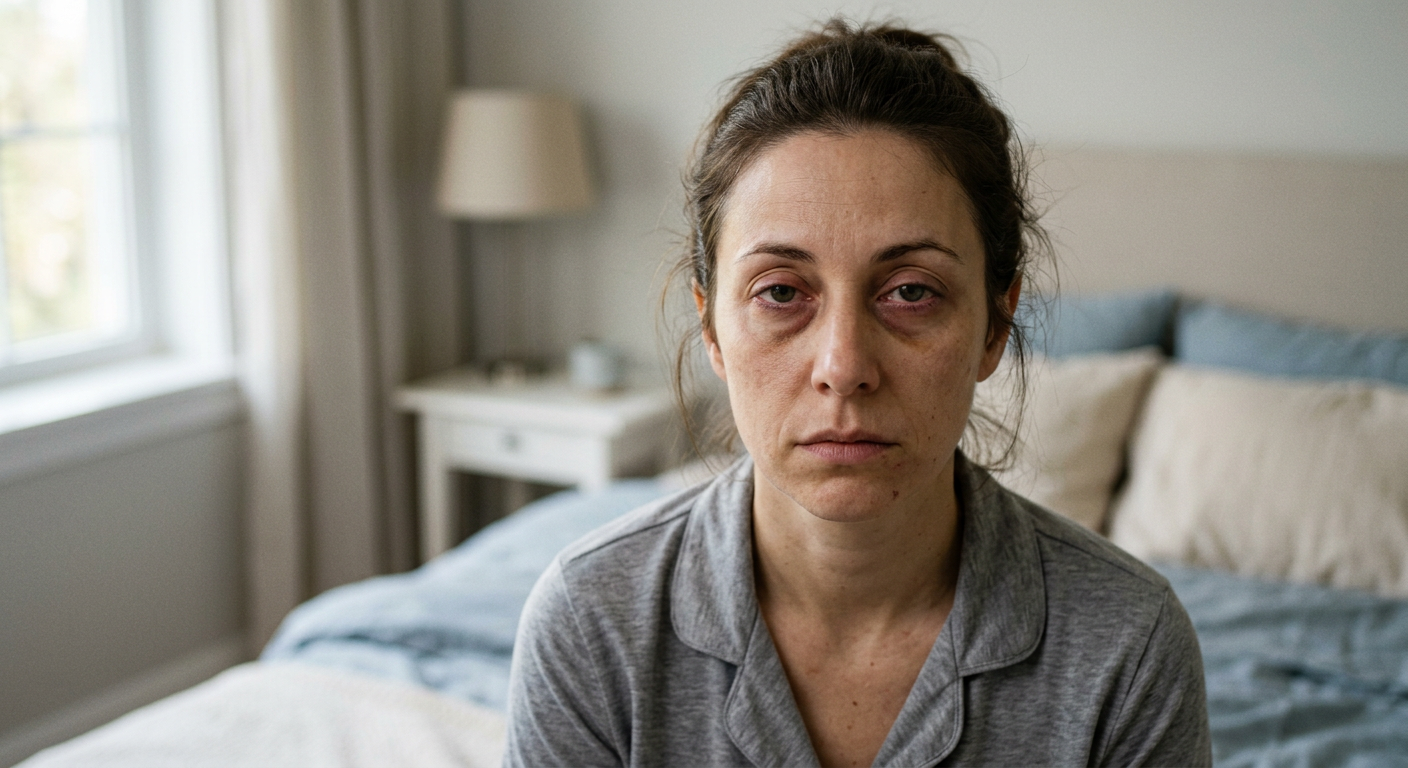
Skimp on sleep and your face tells on you fast. The consequences go deeper than cosmetics, though, because they trace back to real biological changes.
The main offender is cortisol, the stress hormone. Associated Dermatologists explains that elevated cortisol from poor sleep triggers inflammation and breaks down collagen, the protein responsible for firmness and elasticity. Over time, that accelerates the signs of aging.
Sleep deprivation also undercuts hydration and elasticity by disrupting collagen synthesis, according to NIOD. What you actually see:
- Dullness and uneven tone as cell turnover slows
- Dryness from a weakened, more permeable skin barrier
- Dark circles and puffiness around the eyes
- More pronounced fine lines and premature aging
- Flare-ups of inflammatory conditions like acne, eczema, and rosacea
The Sleep–Skin Axis research found bidirectional relationships between sleep and inflammatory skin conditions including atopic dermatitis, psoriasis, rosacea, and hidradenitis suppurativa. Poor sleep makes these conditions worse, and the discomfort they cause makes sleep harder to come by. One feeds the other.
Well-Rested vs. Sleep-Deprived Skin: A Quick Comparison
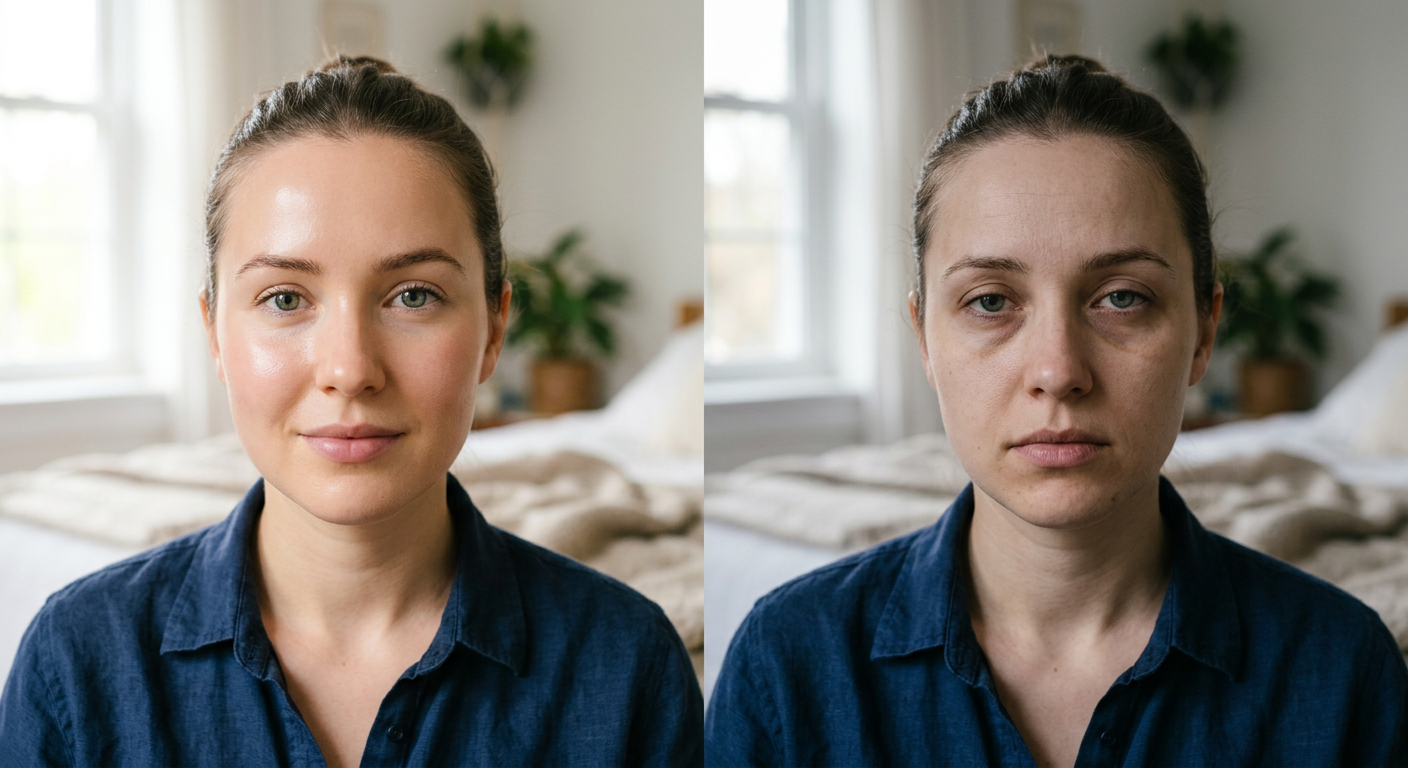
Put the key markers side by side and the difference between rested and sleep-deprived skin gets hard to ignore.
| Skin Marker | Well-Rested Skin | Sleep-Deprived Skin |
|---|---|---|
| Collagen | Actively rebuilt overnight | Broken down by high cortisol |
| Hydration | Balanced, healthy barrier | Increased water loss, dryness |
| Tone | Bright, even complexion | Dull, uneven |
| Under-eyes | Reduced puffiness | Dark circles, puffiness |
| Inflammation | Lower, calmer skin | Elevated, more flare-ups |
| Aging signs | Slowed | Accelerated fine lines |
Consistent, quality sleep is about the cheapest skincare intervention you’ll ever find, and one of the most effective.
How Much Sleep Your Skin Actually Needs

Both the timing and the amount of your sleep matter. The Skin and Cancer Institute points to the hours between 9 PM and midnight as particularly valuable for maintaining barrier function and regulating moisture.
Plenty of people don’t get there. The Sleep Foundation reports that more than a third of adults average less than seven hours per night. Insufficient sleep also carries an estimated economic cost of more than $411 billion a year in the United States alone.
For skin repair, aim for seven to nine hours of consistent, high-quality sleep. Consistency counts as much as duration. An irregular schedule throws off the circadian rhythm that runs skin renewal, so a solid eight hours on a chaotic timetable won’t do you as much good.
Practical Tips for Better Sleep and Better Skin

A few deliberate changes can support your skin’s overnight repair. Most of them do double duty, improving both sleep quality and complexion.
Build a Consistent Sleep Routine
Go to bed and wake up at the same times every day, weekends included. A steady schedule keeps the circadian rhythm aligned so skin regenerates on a predictable cycle. Try to be asleep before midnight to catch those high-value early hours.
Optimize Your Nighttime Skincare
Apply a nighttime moisturizer before bed to offset the water loss that Codex Labs identifies during sleep. Cleanse first to clear away the day’s pollution and buildup, so skin can spend the night repairing rather than defending. Depending on your skin type, ingredients like retinoids or peptides can support overnight recovery.
Manage Stress and Sleep Environment
Bring cortisol down by winding down before bed: reading, stretching, or a warm shower all work. Keep the bedroom cool and dark, and cut screen time in the hour before sleep. Use a clean pillowcase, and if you can manage it, sleep on your back to reduce friction and creasing on your face.
Conclusion: Make Sleep Your Skincare Foundation
The connection between sleep and healthy-looking skin isn’t marketing. It’s biology. During deep sleep, the body ramps up collagen production, regenerates skin cells, and rebuilds the barrier that keeps you hydrated and bright. Cut those hours short and elevated cortisol breaks down collagen, dulls your tone, and speeds up aging.
The plan is straightforward: seven to nine hours of consistent sleep, a nighttime routine to protect your barrier, and stress management to keep cortisol in check. No serum can replace the work skin does while you rest.
Start tonight. Set a bedtime you can stick to, apply your nighttime moisturizer, and give your skin the hours it needs. If skin or sleep problems persist, a board-certified dermatologist can offer guidance tailored to you.
Frequently Asked Questions
Q: How many hours of sleep do I need for healthy skin?
Aim for seven to nine hours of consistent, quality sleep each night. The hours between 9 PM and midnight matter most for barrier repair and moisture regulation, and more than a third of adults don’t hit the seven-hour minimum.
Q: Can lack of sleep really cause wrinkles?
Yes. Sleep deprivation raises cortisol levels, which breaks down collagen and disrupts collagen synthesis, leading to reduced elasticity and more pronounced fine lines over time.
Q: Why does my skin look dull after a bad night’s sleep?
Poor sleep slows skin cell turnover and weakens the barrier that holds moisture in. The result is the dryness, uneven tone, and tired look you notice the next morning.
Q: Does sleep affect skin conditions like acne and eczema?
It does. Elevated cortisol from insufficient sleep triggers inflammation, and research confirms a bidirectional link between sleep and conditions such as acne, eczema, psoriasis, and rosacea.
Q: What should I do before bed to help my skin repair overnight?
Cleanse to remove daily buildup, apply a nighttime moisturizer to offset overnight water loss, and wind down to lower stress. A cool, dark bedroom and a bedtime you keep to help the circadian rhythm support skin renewal.
Q: Is a nighttime moisturizer really necessary?
Yes, because skin temperature rises during sleep and makes the barrier more permeable, which speeds up water loss. A nighttime moisturizer replaces some of that lost moisture and supports the barrier while skin repairs itself.