

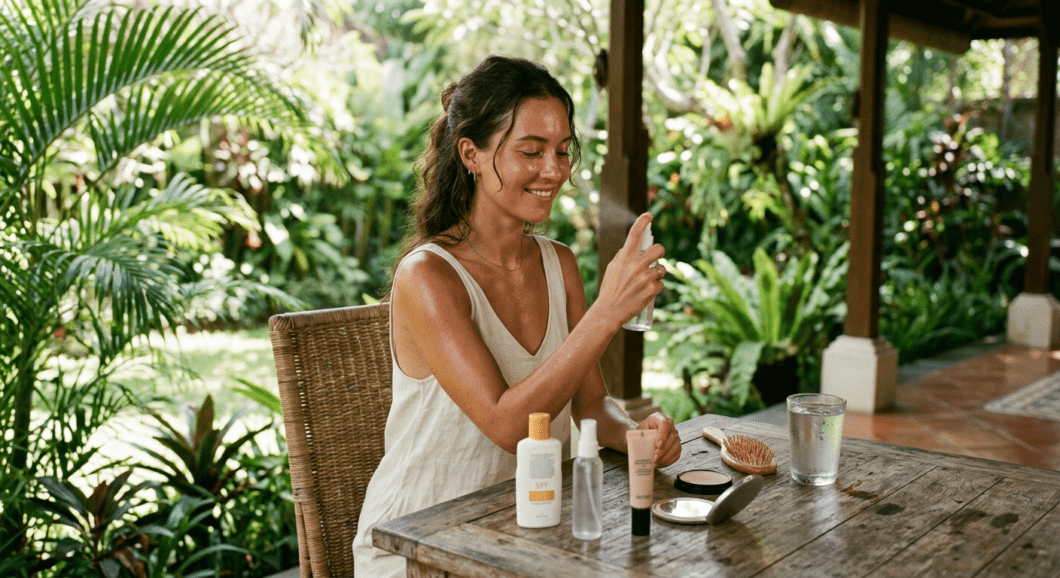
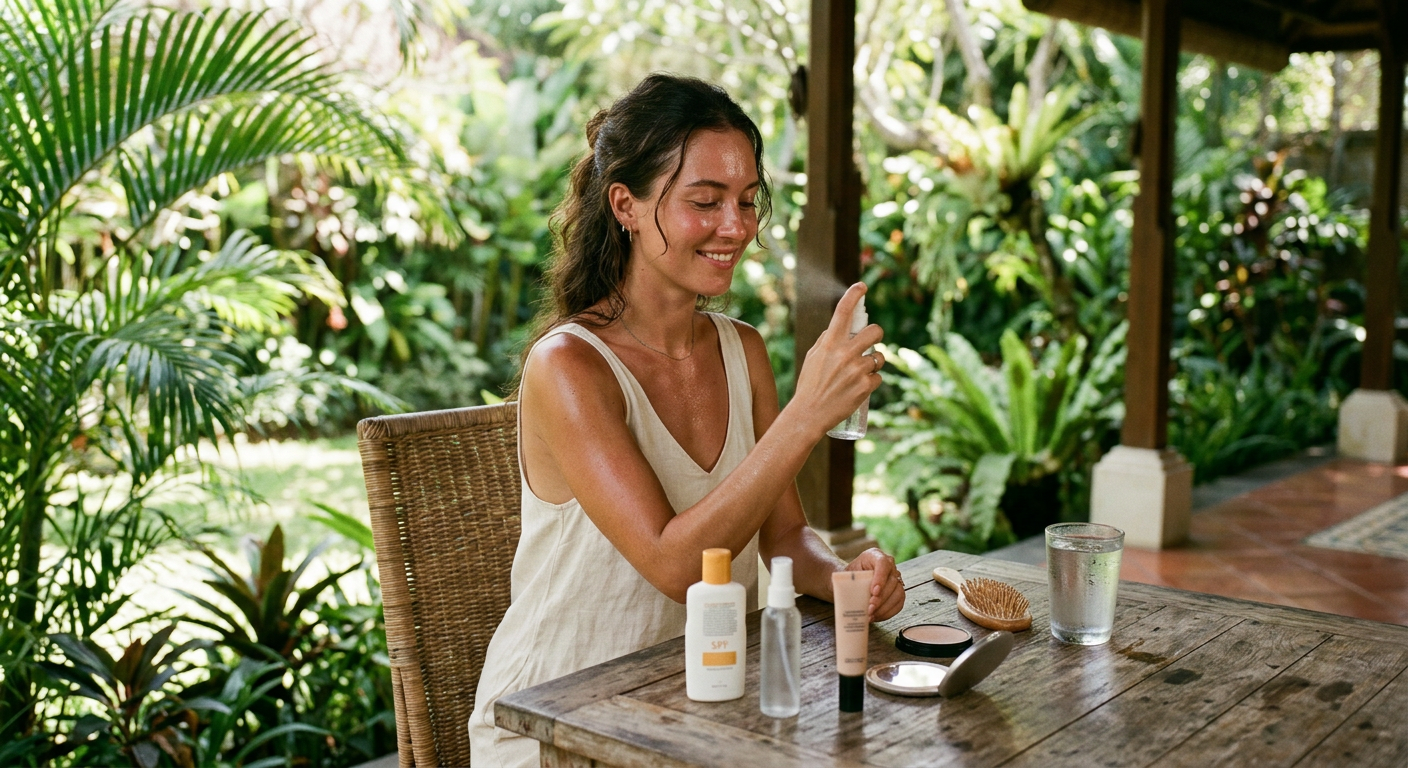
A 94% humidity reading with a heat index above 26°C is daily life for anyone in a tropical or subtropical climate — and increasingly familiar to people further north during July and August. If your foundation has migrated to your chin by noon, your hair has doubled in volume within a block of stepping outside, and your moisturizer sits on top of your skin like a second layer of clothing, the problem is not your technique. It is a product mismatch.
Hot, humid weather requires a different set of tools. This guide covers what to change, what to keep, and what to add.
Why Humidity Changes Everything About Your Skin

Humidity does not just make you sweat more — it changes how your skin behaves at a cellular level. When the air is already saturated with moisture, sweat cannot evaporate efficiently. Skin stays damp, pores stay congested, and oil production often increases in response to the imbalance.
According to Andalou Naturals, consistent cleansing and toning becomes especially important in hot, humid months to manage excess oil and clear the buildup of dirt, sweat, and sunscreen residue. A cleanser that is too mild for the conditions is one of the most common reasons summer skin breaks out.
There is one upside to high humidity: it makes humectants work harder. Ingredients like hyaluronic acid draw moisture from the surrounding air into the skin, which means a lightweight serum can deliver real hydration in a humid climate without the heaviness of a thick cream.
Building a Lightweight Skincare Routine for Humid Climates
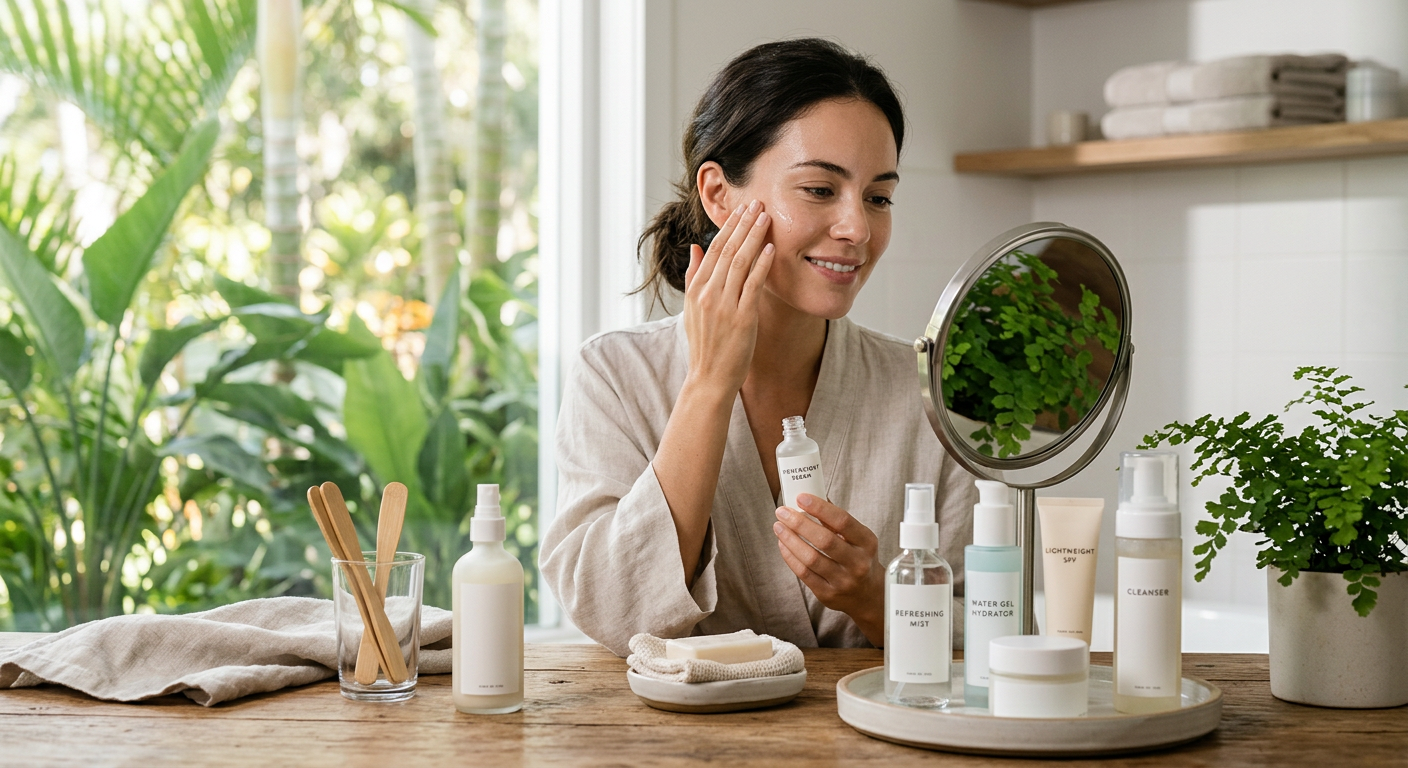
The core principle for hot-weather skincare is lighter layers, applied more often. Heavy creams, occlusive balms, and rich oils create a barrier that traps heat and sweat against the skin, which leads to breakouts and congestion.
Cleansing and Toning
Switch to a gel or foam cleanser that removes oil and sunscreen without stripping the skin’s barrier. Double cleansing — micellar water or a cleansing oil first, followed by a water-based cleanser — is particularly effective after wearing SPF all day. A toner with niacinamide or witch hazel helps minimize pore appearance and control shine between washes.
Serums and Moisturizers
Replace your heavy moisturizer with a water-based serum or gel formula. As Andalou Naturals notes, hyaluronic acid draws moisture from the air into the skin, maintaining hydration without the weight of a traditional cream. In a humid climate, this ingredient earns its place.
SPF Selection
A sunscreen that does not add grease to already-humid skin is non-negotiable. Look for formulas labeled “oil-free,” “matte finish,” or “invisible/fluid” — these sit lighter on the skin and are far less likely to pill under makeup or clog pores. The Miss Palettable Summer Beauty Report 2026 highlights calming SPF as one of the defining skincare trends of the season, particularly for humid climates like Dubai and Southeast Asia.
Sweat-Proof Makeup: Products and Techniques That Hold

The goal of summer makeup is not to wear less — it is to layer more strategically. Thin, buildable layers hold far better than one heavy application of coverage that will crease, slide, or oxidize in the heat.
Primer First, Always
A silicone-based or pore-minimizing primer creates a smooth base that helps everything on top adhere longer. For oily skin, a mattifying primer on the T-zone extends wear time noticeably. Red Apple Lipstick recommends priming the eyelids specifically before applying eyeshadow — skipping this step in humid conditions is why eyeshadow creases by mid-morning.
Foundation and Coverage
A lightweight, buildable foundation outperforms full-coverage formulas in heat. Thin, even layers set more effectively and are less likely to separate from sweat. If a minimal look is the goal — which Red Apple Lipstick describes as the natural default for hot weather — a tinted moisturizer with SPF plus a light dusting of translucent powder is often enough.
Setting and Finishing
A setting spray is the most effective single tool for extending makeup wear in heat and humidity. Look for formulas labeled “long-wear” or “sweat-proof,” apply as the final step after setting powder, and carry it for midday touch-ups.
The Best Product Formats for Hot and Humid Conditions
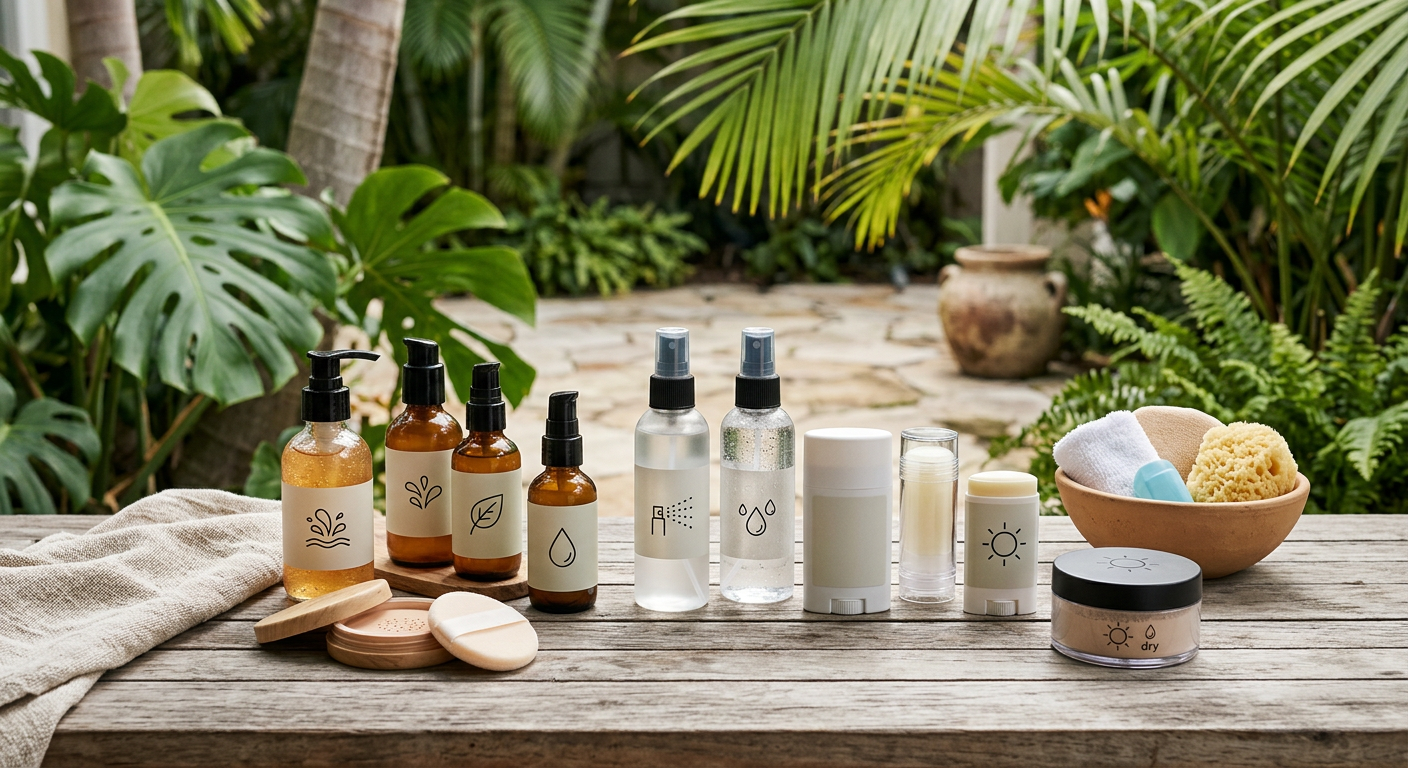
Not all product formats perform equally when temperatures and humidity rise. A quick reference for choosing the right format:
| Product Type | Recommended Format | Formats to Avoid |
|---|---|---|
| Foundation | Serum foundation, tinted moisturizer | Heavy full-coverage cream |
| Moisturizer | Water-based gel, lightweight fluid | Rich cream, whipped butter |
| Sunscreen | Oil-free fluid, invisible SPF | Thick mineral paste |
| Blush | Powder blush | Cream blush (melts easily) |
| Contour | Cream contour (blends better in humidity) | Powder (can look cakey) |
| Lip product | Lip oil, lip stain | Heavy wax-based lipstick |
| Setting | Setting spray | Heavy setting powder alone |
As Lindsay Silberman notes, cream contour actually performs well in humid conditions because the ambient moisture helps it blend seamlessly — counterintuitive, but it works.
Haircare Strategies That Work With Humidity

Humidity causes the hair shaft to absorb moisture from the air unevenly, which disrupts the hydrogen bonds in each strand and produces frizz. This is a chemistry problem, not a styling problem, and it requires a chemistry-based fix.
Moisture-Balancing Haircare
Hair that is already well-hydrated absorbs less ambient moisture, which means less frizz. Use a moisturizing shampoo and conditioner suited to your hair type, and add a weekly deep conditioning treatment. The Miss Palettable Summer Beauty Report 2026 specifically identifies haircare that works with humidity rather than against it as a defining trend this season, with nourishing hair essentials listed as a priority.
Styling for Humid Conditions
Anti-humidity serums and creams form a barrier on the hair shaft that reduces moisture absorption. Apply them to damp hair before heat styling, or to dry hair as a finishing product. Braids, buns, and protective styles are practical for the same reason — they minimize the surface area exposed to humid air and hold their shape far better than a blowout will.
Body Care and Sweat Management

Heat and humidity affect the entire body, and a complete summer routine accounts for this.
Lightweight, non-comedogenic body lotions prevent the tight, dry feeling that develops even in humid climates — particularly after extended air conditioning exposure. Gel-based formulas with aloe vera or glycerin work better than heavy shea butter in hot weather.
For areas prone to chafing or excess sweat — inner thighs, underarms, under the bust — an anti-chafe balm or light dusting of translucent powder provides real relief. Fragrance-free formulas are preferable here, since heat amplifies fragrance and can cause irritation on sensitive skin.
Adjusting Your Routine for Different Skin Types
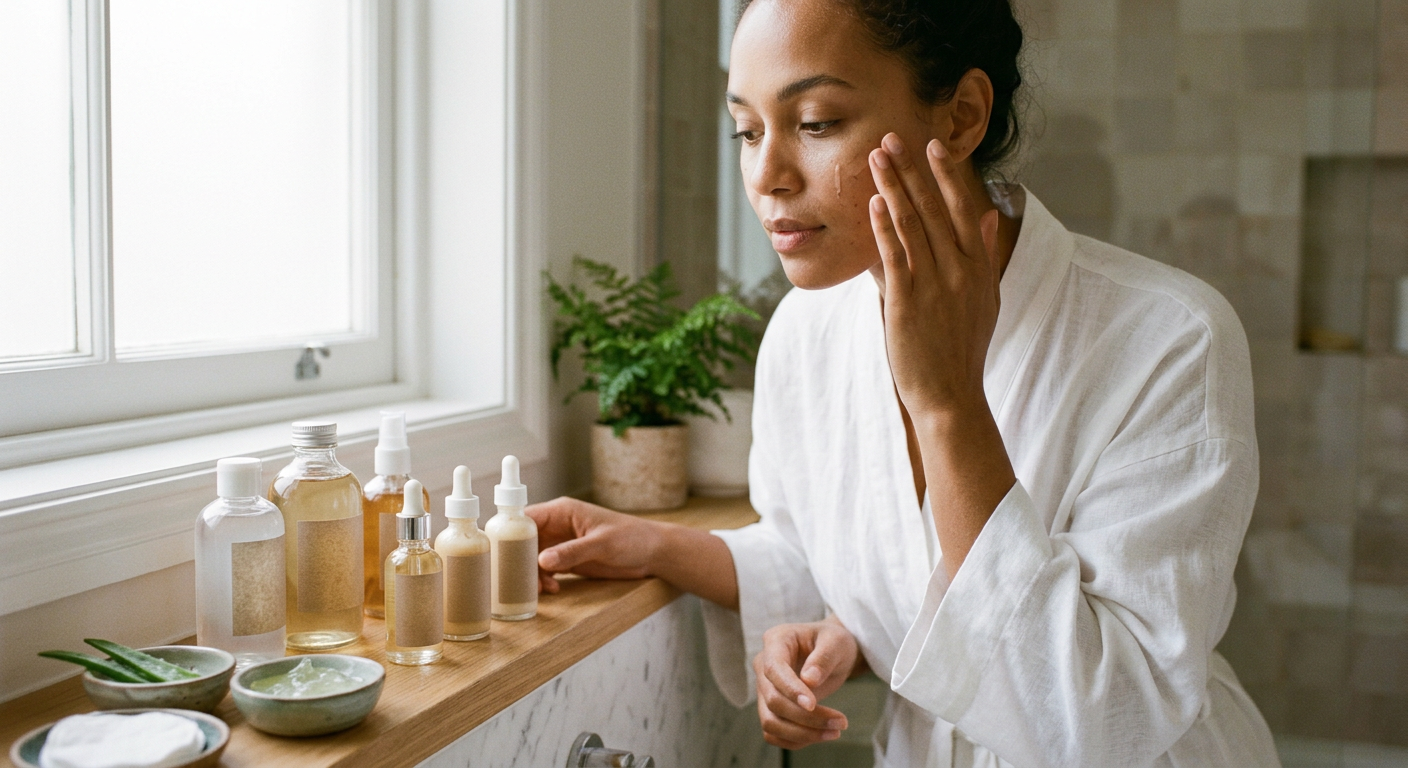
Hot, humid weather does not affect all skin types the same way. Matching the approach to your specific skin type makes a measurable difference.
- Oily skin: Focus on oil control without over-stripping. Use a salicylic acid cleanser two or three times per week, a niacinamide serum, and a mattifying SPF. Skip heavy primers.
- Dry skin: Air conditioning dehydrates skin quickly even when outdoor humidity is high. Layer a hyaluronic acid serum under a lightweight gel moisturizer. Skipping moisturizer because the air feels humid outside is a common mistake.
- Combination skin: Use a gel cleanser, apply lightweight moisturizer only where needed, and spot-treat oily zones with a mattifying product.
- Sensitive skin: Heat can trigger redness and inflammation. Prioritize fragrance-free, barrier-supporting products with ceramides and centella asiatica. Pull back on exfoliation during peak heat periods.
Conclusion
The shift that makes a hot, humid routine work is straightforward: lighter textures, more frequent cleansing, moisture-balancing haircare, and makeup formulas built to stay put when the temperature rises.
The practical changes are specific: swap your heavy moisturizer for a hyaluronic acid serum, prime before every makeup application, use a setting spray as the final step, and keep hair well-hydrated to address frizz at the source. These are targeted swaps, not overhauls, and they compound into noticeably better results.
Use the format guide above to review your current product lineup, identify the two or three swaps most relevant to your skin type, and make those changes before the heat peaks.
Frequently Asked Questions
Q: How do I stop my foundation from sliding off in humid weather?
Prime before foundation, apply thin layers of a lightweight formula, set with translucent powder, and finish with a long-wear setting spray. All four steps together extend wear time significantly more than any single product alone.
Q: Should I moisturize less in humid weather?
No — but the formula should change. Switch from a heavy cream to a lightweight gel or water-based serum. Humidity in the air does support hydration, but air conditioning removes it quickly, so cutting moisturizer entirely tends to backfire.
Q: What is the best SPF formula for oily, humid-climate skin?
Oil-free, fluid, or “invisible” SPF formulas labeled non-comedogenic. These sit lighter on the skin, do not add shine, and are far less likely to clog pores or pill under makeup than traditional mineral paste sunscreens.
Q: How do I control frizz in high humidity without weighing my hair down?
Use a moisture-balancing conditioner consistently to keep hair well-hydrated — hydrated hair absorbs less ambient moisture. Follow with an anti-humidity serum or cream applied to damp or dry hair to create a barrier against environmental moisture.
Q: Is dewy or matte makeup better for humid weather?
Matte formulas hold up better in high humidity, particularly for foundation and setting products. A light, controlled dewiness — achieved with a serum foundation rather than heavy highlighter — can work well and aligns with current humid-climate beauty trends.
Q: How often should I cleanse my skin in summer?
Twice daily, morning and evening, with the evening cleanse being the more important of the two for removing sunscreen, sweat, and pollution buildup. After heavy exercise, a gentle rinse or third cleanse helps prevent congestion without over-stripping the skin barrier.