

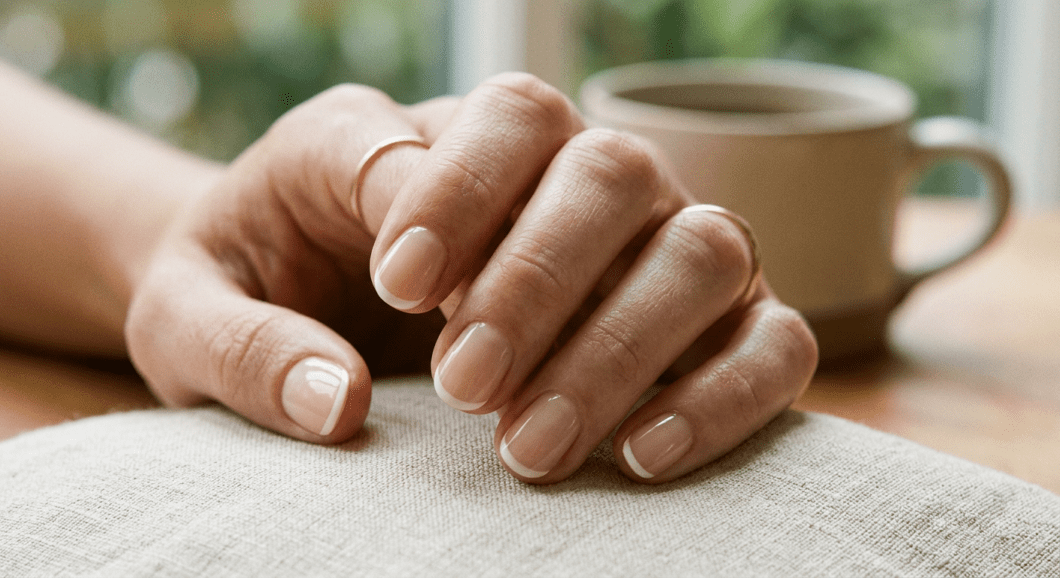
Forget bold, chunky white tips. The nail world has quietly shifted toward something far more refined — and far harder to achieve than it looks. Micro French tips have become the manicure of the moment, and according to Pinterest’s 2026 trend report, searches for the style have skyrocketed by 525% in the past year. If you haven’t noticed them yet on your feed, your colleagues’ hands, or your favorite nail artist’s portfolio, you will soon.
What Exactly Are Micro French Tips?
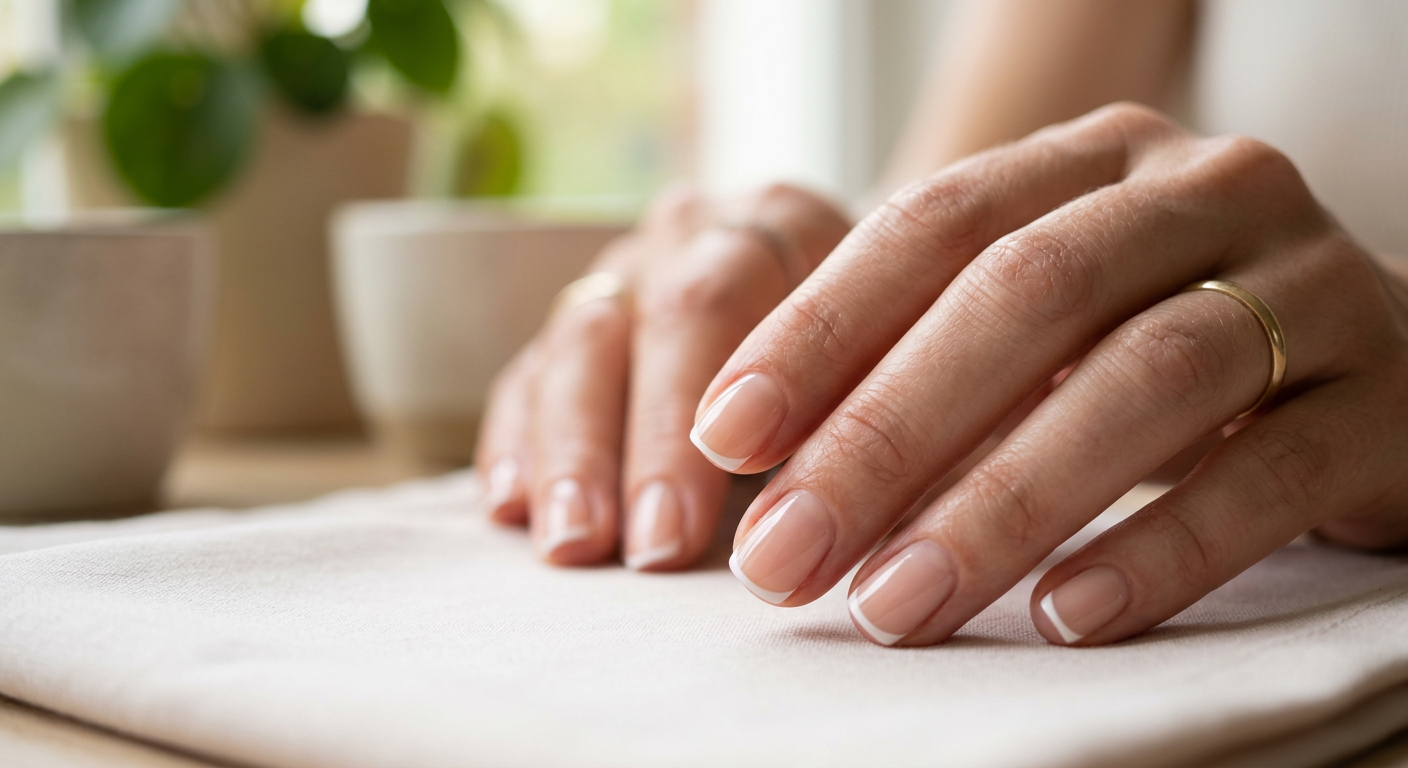
Micro French tips are a minimalist evolution of the classic French manicure. Instead of the traditional 2–4mm white band across the nail tip, a micro version features a hairline stripe of color — typically 1mm or less — sitting right at the free edge of the nail. The effect is subtle enough to pass as bare nails at a glance, but polished enough to look intentional up close.
The style was coined by nail artist Betina Goldstein and has since been adopted by celebrity manicurists and minimalist beauty enthusiasts. As celebrity manicurist Harriet Westmoreland told Vogue, “The baby [or micro] French is very flattering because it can make the nail appear longer.” That elongating effect is a large part of the look’s appeal.
The color palette typically leans soft: barely-there whites, warm nudes, sheer milky tones, and the occasional pastel. The format is flexible enough to accommodate bolder choices — a fine line of cobalt or burgundy reads as artistic rather than loud when it’s only 1mm wide.
Micro French vs. Classic French: What’s Actually Different
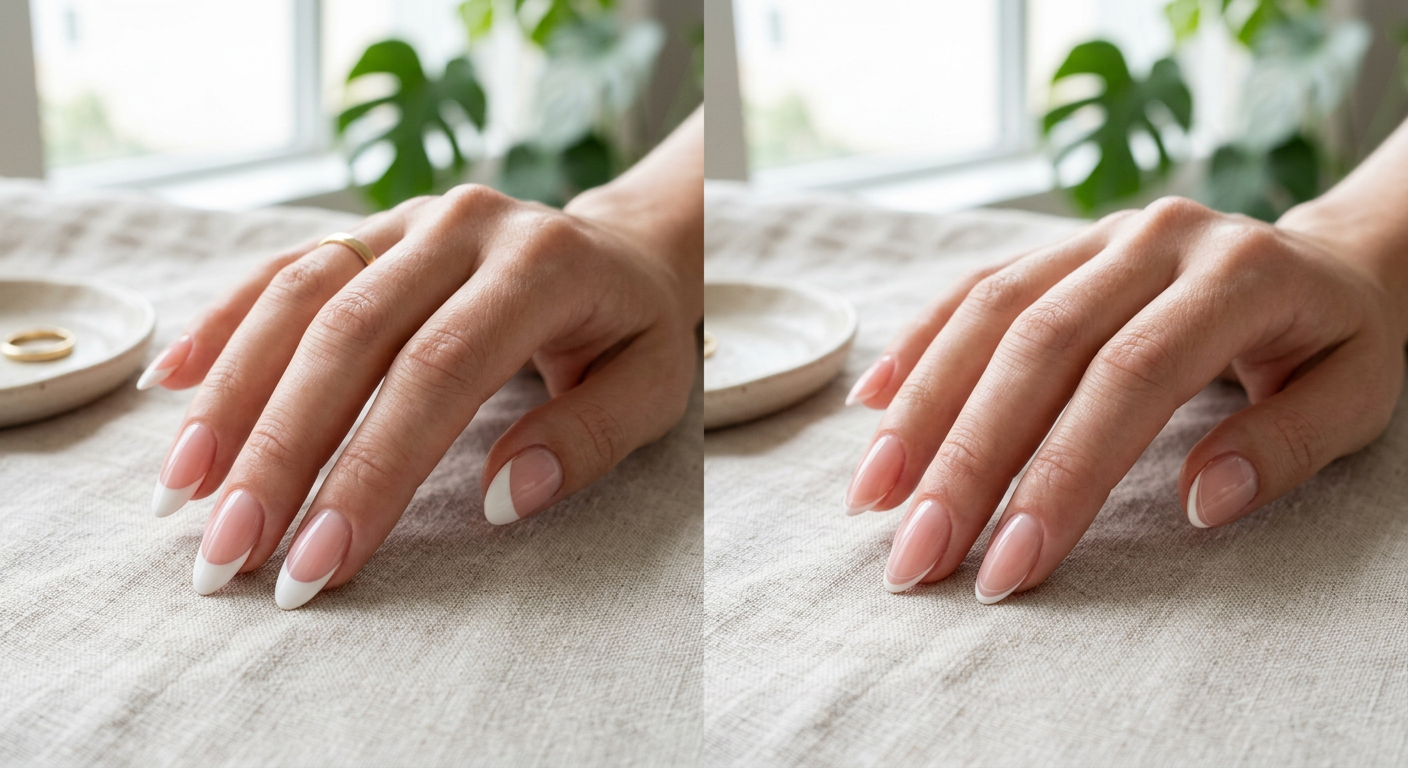
The distinction matters more than you might expect. These two manicures share a concept but deliver completely different results.
The classic French tip can overwhelm shorter nails, making the white band look disproportionately wide. The micro version solves this entirely. Because the line is so fine, it scales proportionally to any nail length — which is a key reason it has resonated so broadly.
Why Micro French Tips Are Dominating 2026
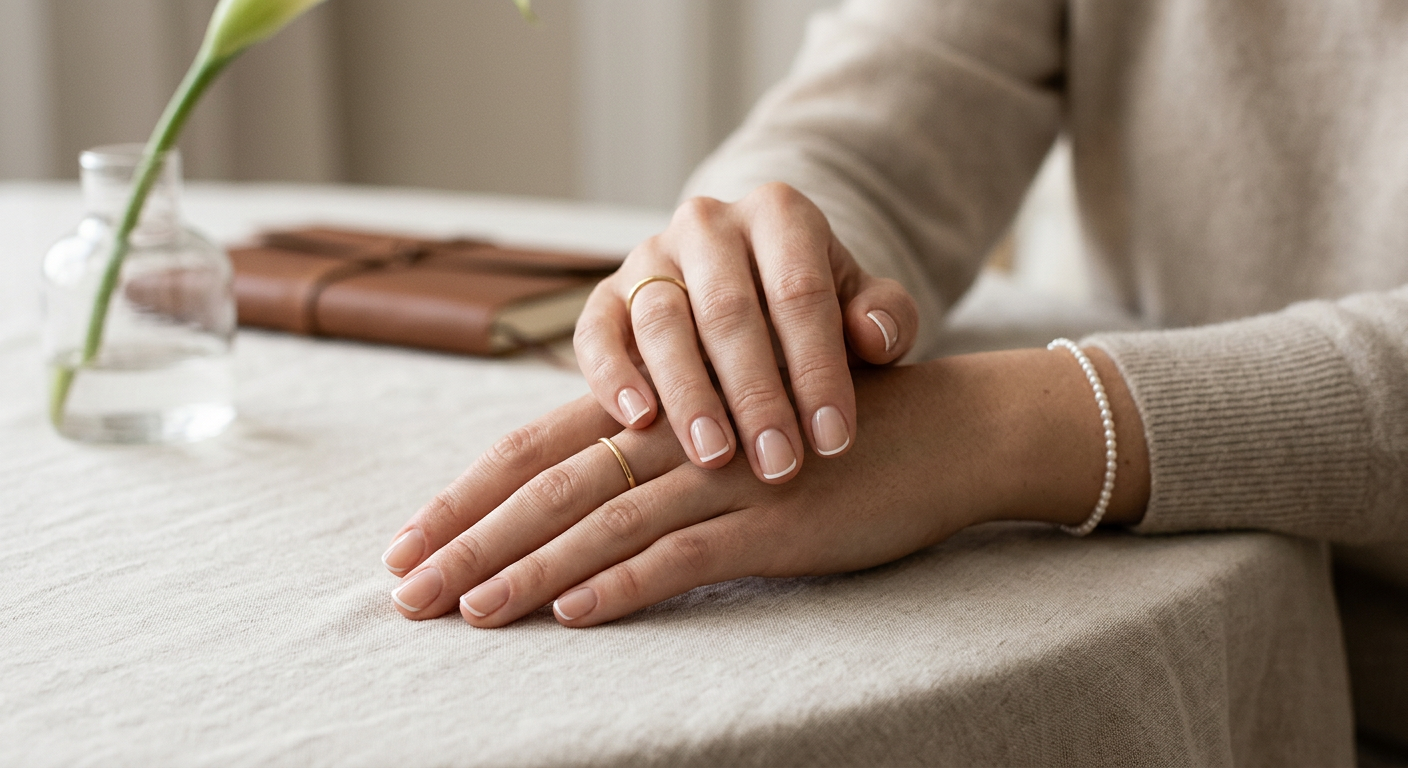
The timing of this trend isn’t accidental. It fits directly into the broader “quiet luxury” aesthetic that has defined fashion and beauty over the past two years — understated quality over obvious branding, restraint over maximalism.
Nailz in Bloom puts it plainly: “This manicure proves that sometimes the smallest details make the biggest statement.” The micro French occupies a useful middle ground — it signals grooming and care without demanding attention, which makes it appropriate for office environments, formal events, and everyday wear at the same time.
Charlotte Lowe, education brand manager at OPI, notes that the related milky French tip trend “strikes the perfect balance between classic elegance and a modern, barely-there finish,” as reported by ELLE UK. That balance is what gives the micro French staying power. It doesn’t ask you to commit to a statement.
Social media has amplified the trend considerably. Nail artist Adelayda Ramirez captured the momentum in a widely shared Instagram reel: “Clean lines. Soft detail. You’re going to start seeing this everywhere.” She was right.
The Different Styles of Micro French Tips
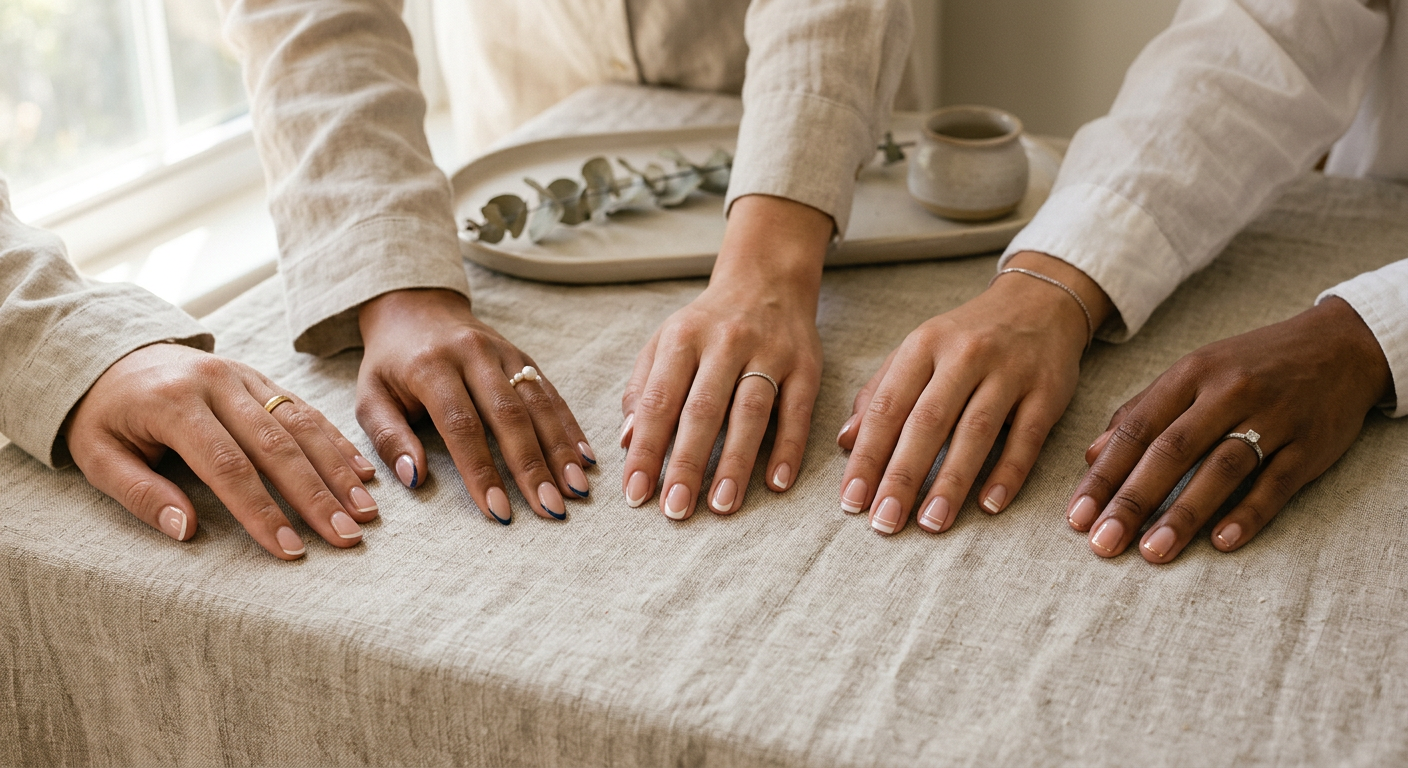
The micro French isn’t a single rigid look. Several variations have emerged, each with a distinct personality.
Classic White Micro French
The foundational version — a single hairline of white or off-white along the free edge. It reads as clean and timeless, closer to a “your nails but better” finish than anything overtly styled. It works on natural nails, gel, and BIAB (Builder In A Bottle) applications.
Coloured Micro French
Swapping white for a soft color — dusty rose, sage, pale lavender, or warm terracotta — adds personality without sacrificing the minimalist effect. Enails.eu notes that even vibrant shades read as minimalist when confined to a 1mm line, which gives significant creative latitude within a restrained format.
Double Micro French
Two ultra-thin lines at the tip, sometimes in contrasting colors. The result is architectural and precise — a step up in complexity that still reads as refined rather than busy.
Glitter and Chrome Micro French
A fine line of chrome powder or fine glitter replaces the traditional color. This variation catches light without overwhelming the nail, making it a popular choice for events where you want something slightly more elevated than your everyday look.
How to Achieve Micro French Tips at Home
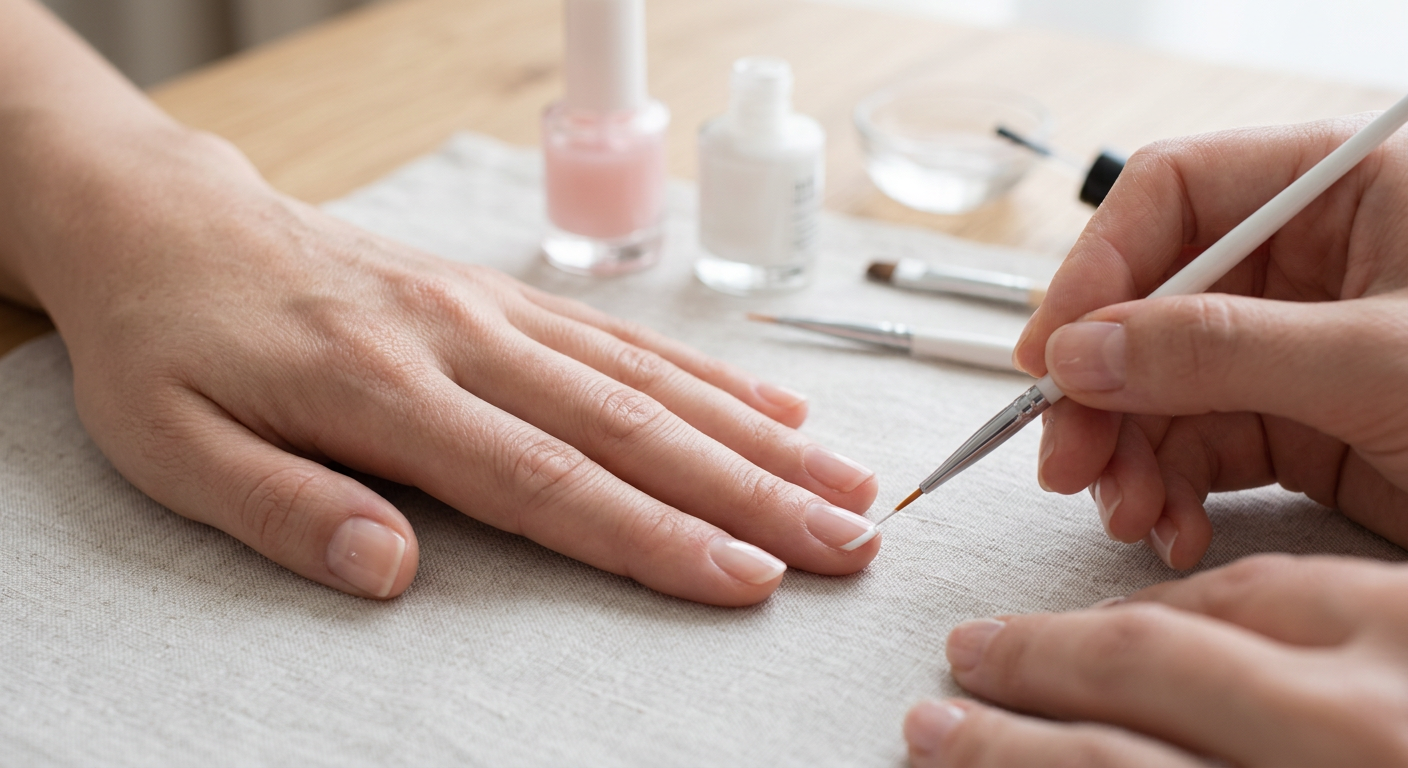
The micro French is achievable at home, but it demands patience and the right tools. The margin for error is small — literally — so preparation matters.
What you need:
- A thin nail art brush (liner or detailing brush)
- Nail tape or guide strips for a clean edge
- Your chosen tip color (gel polish, regular lacquer, or BIAB)
- Base coat and top coat
- A steady hand and good lighting
The basic process:
- Apply your base coat and let it cure or dry fully.
- Apply your base color (nude, sheer pink, or clear) and cure.
- Place nail tape just below the free edge, leaving only 1mm or less exposed.
- Apply your tip color in thin, controlled strokes using your liner brush.
- Remove the tape before the polish dries to avoid tearing.
- Seal with a high-gloss top coat.
Ambedo Beauty’s detailed guide recommends applying tape just below where you want the line, leaving only the very edge exposed. For gel applications, cure between each layer to prevent bleeding. BIAB users can build a slight apex before adding the tip line for added durability.
The most common mistake is applying too much product in one pass. One thin, deliberate stroke is more effective than layering, which risks flooding the line and losing the crisp edge that defines the look.
Which Nail Shapes Work Best With Micro French Tips
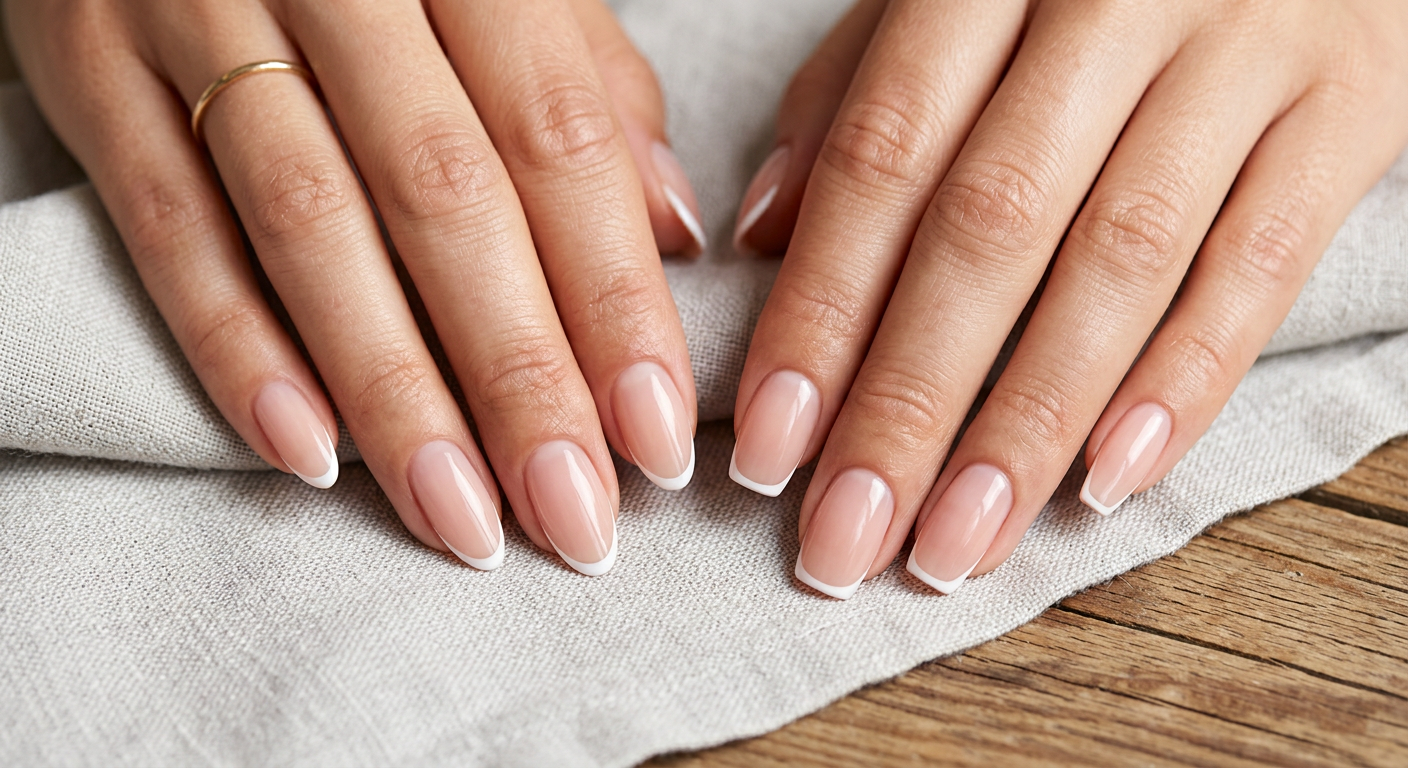
The micro French is unusually versatile when it comes to nail shape, but some pairings are stronger than others.
Oval and almond: These shapes complement the soft, feminine quality of the micro French particularly well. The curved tip echoes the gentle line of the micro tip, creating a cohesive silhouette.
Square and squoval: A micro French on a square nail produces a clean, architectural look — precise and modern. This pairing suits those who prefer a more structured aesthetic.
Short nails: This is where the micro French excels over its classic counterpart. The proportional fine line doesn’t overwhelm a short nail bed, and the elongating effect Westmoreland describes is most visible on shorter lengths.
Stiletto and coffin: These shapes work, but the dramatic length already makes a statement. The micro French reads as a deliberate contrast — understated detail on a bold shape — which can be striking if that’s the intention.
Conclusion
Micro French tips have earned their place as the defining nail trend of 2026 for straightforward reasons. They solve a real problem — how to look polished without committing to a high-maintenance or attention-grabbing manicure — and they do it with a precision that rewards the effort put into them.
The essentials: the tip is 1mm or less, the color palette is flexible, the look works on every nail length, and the technique requires the right tools more than any particular level of experience. Whether you book a salon appointment or attempt it at home with nail tape and a liner brush, the result is a manicure that looks effortless precisely because it isn’t.
Start with a classic white or nude version on your natural nail shape. Master the line first, then experiment with color and double-tip variations as your confidence grows.
Frequently Asked Questions
Q: What makes micro French tips different from a regular French manicure?
The primary difference is width. A classic French tip is typically 2–4mm wide, while a micro French tip is 1mm or less — often described as a hairline. The micro version is subtler, more wearable across occasions, and more flattering on short nails.
Q: Can I do micro French tips at home without a nail art brush?
A nail art liner brush is strongly recommended for the cleanest result. Nail tape or guide strips can compensate for a less-than-steady hand, but a standard polish brush is too wide to achieve the precise 1mm line that defines the look.
Q: How long do micro French tips last with gel polish?
With a proper gel application — including a quality base coat, cured layers, and a durable top coat — micro French gel tips typically last two to three weeks before significant chipping or lifting occurs. BIAB applications may extend longevity further.
Q: Do micro French tips work on very short nails?
Yes — this is one of the style’s key advantages. Because the tip line is so fine, it scales proportionally to short nails in a way that the classic French manicure does not. Celebrity manicurist Harriet Westmoreland notes that the style can actually make the nail appear longer.
Q: What colors are trending for micro French tips in 2026?
Classic white and off-white remain the most popular choices, but soft nudes, milky sheers, pale pastels, and chrome finishes are all widely used. Even bolder colors like burgundy or cobalt read as minimalist when confined to a 1mm line.
Q: Is the micro French tip trend suitable for professional or office settings?
It is one of the most office-appropriate nail trends available. The barely-there finish signals grooming without drawing attention, making it appropriate for conservative professional environments where more expressive nail art might not be suitable.