



A metallic lid can read as polished luxury or glittery overkill, and the difference usually comes down to a few small decisions. None of them involve how much you paid for the palette. What matters is how you put it on. This season’s metallics are softer than the high-octane glam of early Instagram, built around diffused sparkle that catches light without taking over the face. If past attempts left you looking more disco than dinner party, a few technique changes will sort that out.
Why Metallic Eyeshadow Looks Overdone (And How Modern Technique Fixes It)
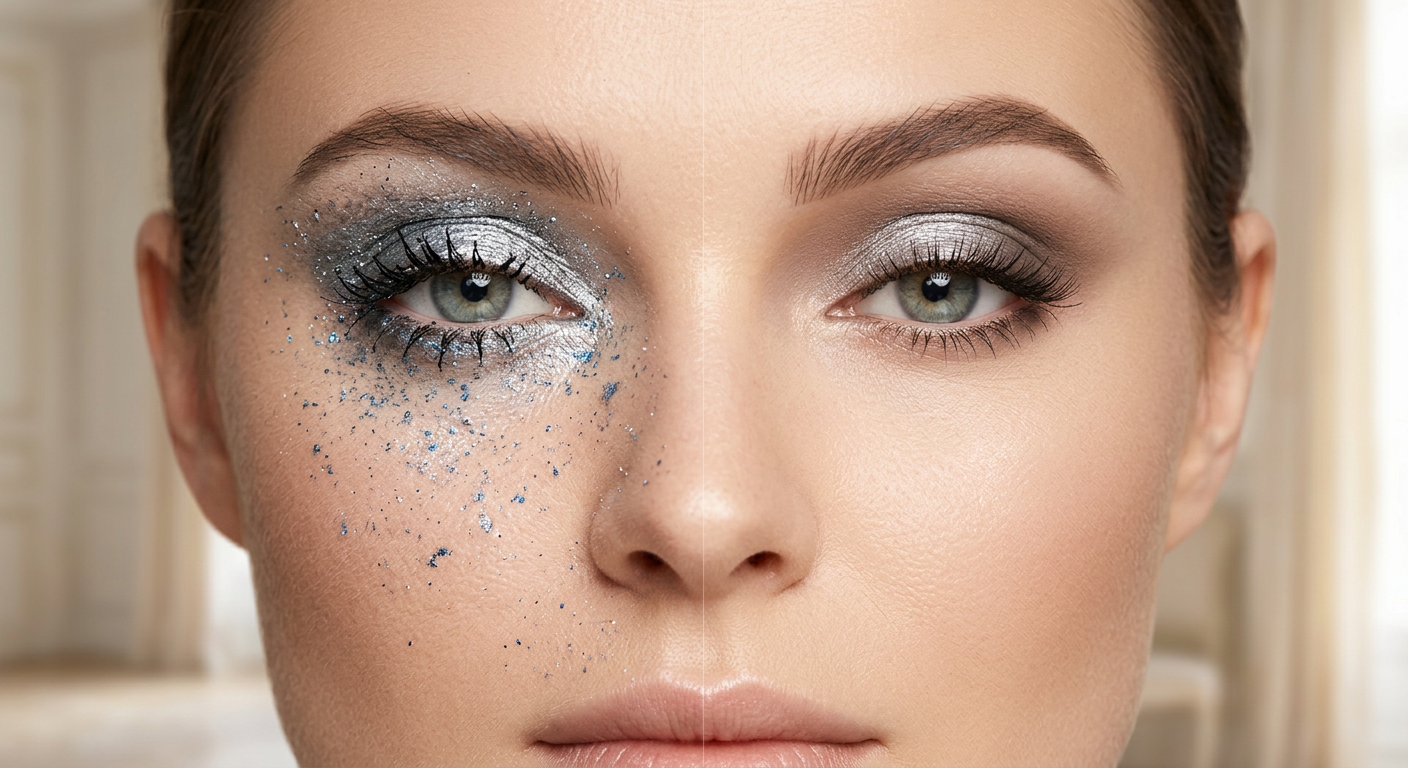
The “too much” effect rarely comes from the shade. It comes from loose pigment scattering light in every direction, hard edges that sit on top of the skin, and a face where the eyes have to compete with an equally loud base and lip.
Golden Rose explains that metallic pigments are tiny flat flakes. Scatter them loosely on the lid and they diffuse light, giving you shimmer. Press them down flat and they reflect it like a mirror. That one distinction is what separates a patchy satin finish from a smooth foil one.
The 2026 approach leans into this. Fashion Times describes this year’s metallics as refined and layered, usually paired with minimal bases: subtle chrome washes and soft diffused shine instead of chunky glitter or dramatic foil. The elegance comes from restraint and precise placement, not from using more product.
Start With One Shade and the Right Prep
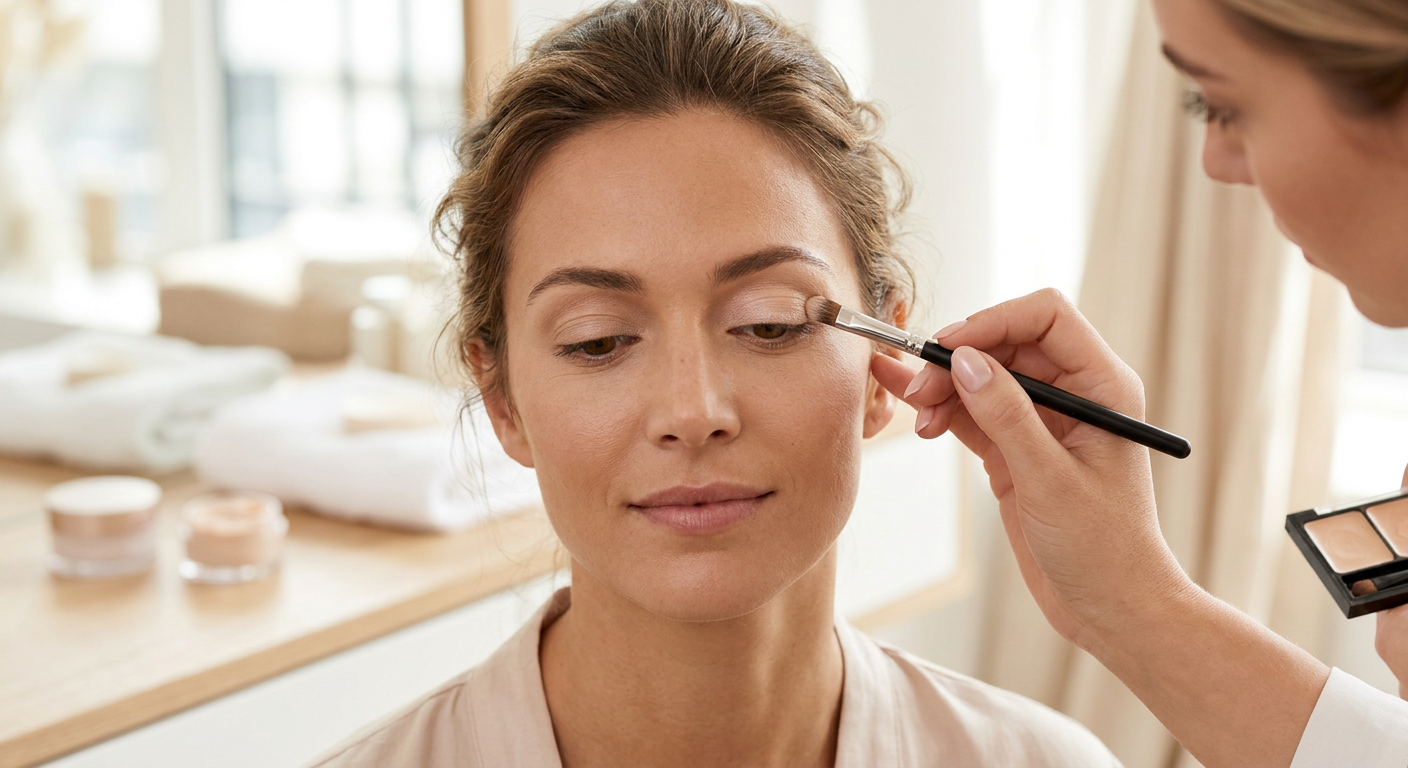
Elegant metallic eyes begin before you touch the color. Prep the lid with a thin layer of concealer or eyeshadow primer to even out redness and stop the color from settling into the crease. Both L’Oréal Paris and Golden Rose recommend this step.
Resist the urge to use three metallic shades at once. Makeup artist Clement, speaking to Vogue Arabia, suggests picking one metallic shade and applying it with your fingertip. The warmth of your finger melts the pigment into a foil-like finish. Tap it onto the center of the lid, blend the edges, and let it settle into the skin.
Add a Transition Shade First
Before the metallic goes on, sweep a matte shade close to your skin tone into the crease with a soft brush. This kills the hard edge that makes metallics look pasted on. Upstyle recommends blending the same taupe back and forth through the socket to soften the edges and create a natural transition, which adds dimension without a second color.
The Application Technique That Separates Refined From Garish
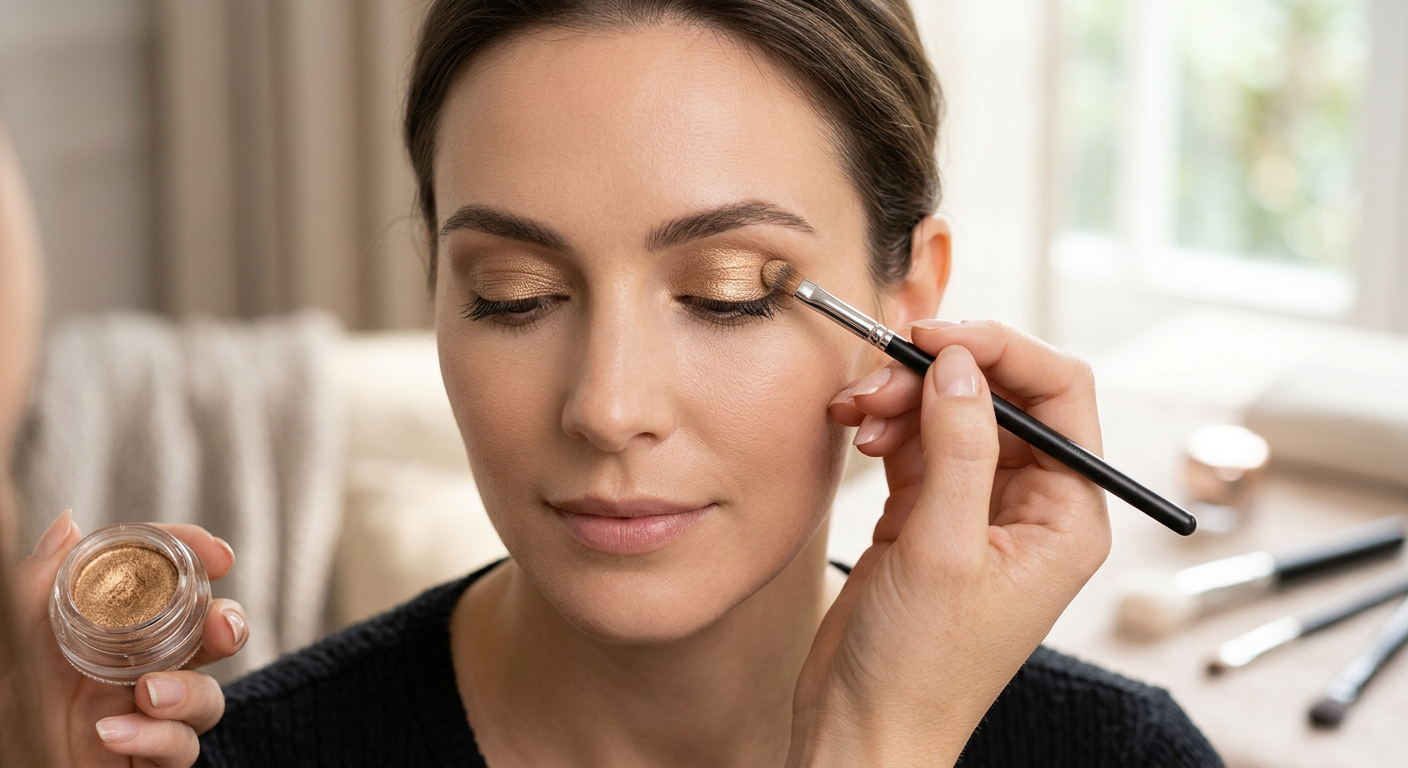
How you apply metallic shadow matters more than which product you own. Swept on dry with a brush, the same shadow often looks merely satiny. Applied wet, or pressed on with a fingertip, it looks metallic. Golden Rose confirms this difference.
A slightly damp brush lays the color down as one closed layer, and water alone is enough to dampen it. For a look that holds up all evening, mist a little setting spray onto the brush instead, which binds the pigment even tighter.
The common thread across experts is pressing, not sweeping. IPSY makeup artist Christian Briceno told IPSY that he presses metallic shadows onto the lid with a fingertip rather than overblending with a brush, because it keeps the finish smooth and saturated instead of sheer.
Step-by-Step: The Elegant Metallic Lid
Follow this sequence for a refined, foil-like finish:
- Prep the lid. Apply concealer or primer to even the surface and prevent creasing.
- Add a transition shade. Sweep a matte skin-tone shade into the crease to soften edges.
- Press on the metallic. Pat the shade onto the center of the mobile lid with a damp brush or fingertip. Pat, don’t sweep.
- Blend only the edges. Work the outer edge into the transition shade. Leave the center alone. That is where it should shine.
- Light the inner corner. A touch of shimmer in the inner corner opens up the eye.
- Finish with definition. A fine liner and mascara frame the look.
Choosing Elegant Shades for Your Skin Tone and Eye Color
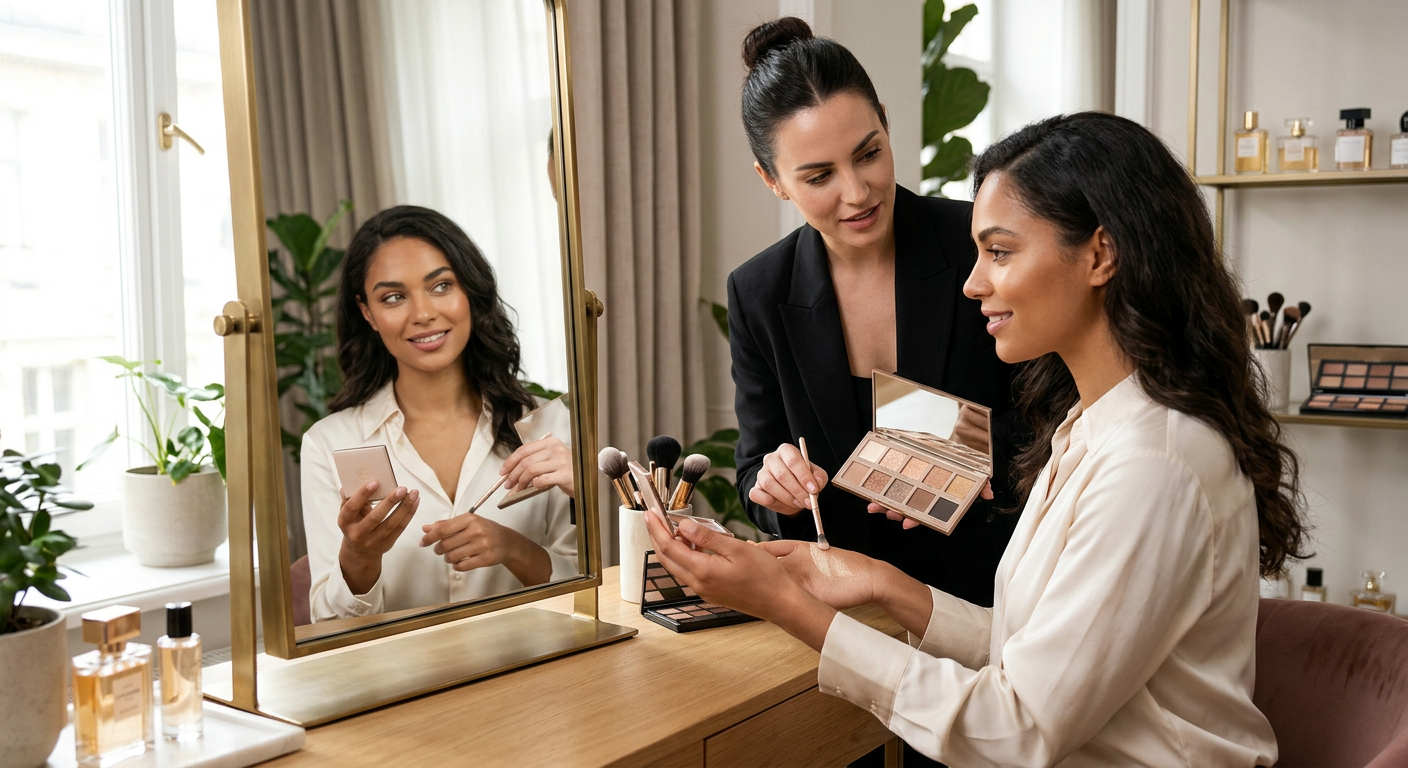
Shade selection does a lot of the work. Vogue Arabia’s experts agree that neutral tones like champagne, bronze, and soft gold feel the most grown-up: a molten, refined bronze that reads as luxury rather than costume.
Undertone matters too. The general rule from Spiegato is that warmer skin tones look best in gold metallics, while cooler coloring suits silver. Copper flatters warm skin, taupe flatters cool skin, and metallic brown is a safe neutral for nearly everyone.
Eye color gives you a way to play up your natural tones without going bold. Use this quick guide:
| Eye Color | Flattering Metallic Shades |
|---|---|
| Brown | Bronze, copper, plum, metallic brown |
| Blue | Silver, champagne, soft gold |
| Green/Hazel | Metallic green, bronze, warm gold |
| Any | Neutral champagne, taupe, soft bronze |
One rule applies across the board: don’t match your metallic shadow to the same shade of eyeliner. Spiegato notes this creates an overdone eye, even for evening.
Balance the Rest of the Face
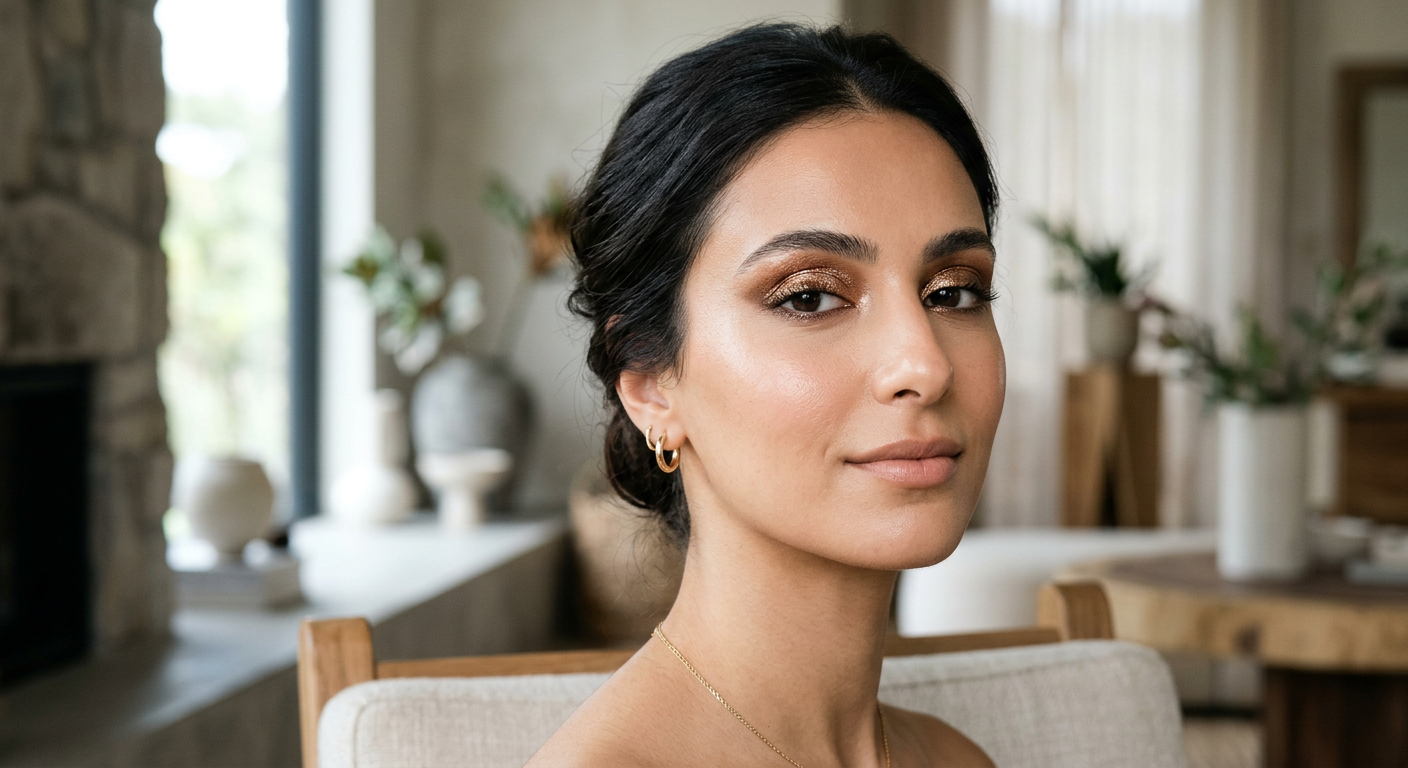
A metallic lid only looks elegant when the rest of the face steps back. Vogue Arabia’s experts point out that when the base and lip are understated, metallics read as refined rather than overwhelming.
Chanel’s head of global creative resources, Thomas du Pre de Saint Maur, told ModeZone that the most common mistake is treating a metallic shade as an embellishment added once the rest of the face is done. His advice: start with the gold and build around it. Decide where the metallic will sit first, then let the rest of the look respond to it.
Structure the Eye Without Adding Heaviness
Definition keeps a soft metallic from looking unfinished. Makeup artist Sophie Leach told Vogue Arabia that she tightlines the upper and lower waterlines with black or dark brown to give the eyes structure without feeling heavy. Once the eyes are structured, any metallic on the lid or inner corner looks modern.
For a 2026-ready satin variation, Solotica recommends applying satin shadows with your fingertip to get the most out of their creamy reflectiveness, then blending the edges with a clean brush. Avoid heavy mattifying powders around the eyes, since satin and metallic finishes do better when the skin keeps a natural sheen.
Avoid These Three Common Mistakes
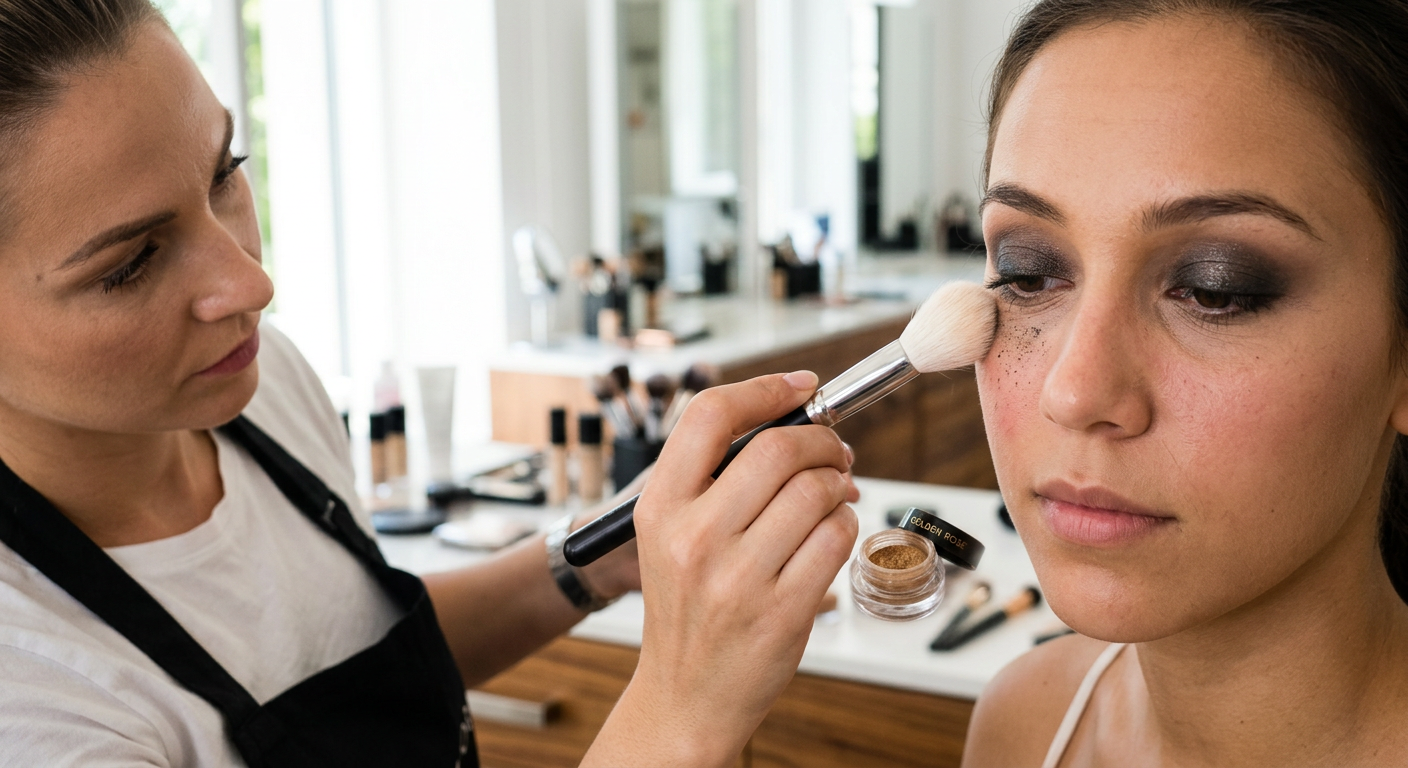
A few recurring errors undo otherwise careful work. Golden Rose flags fallout on the cheeks as a top offender. Press the pigment on and tap off the excess before it scatters down your face.
The second mistake is overblending the center of the lid. Blending belongs at the edges only. The middle is where the mirror-like reflection lives, and dragging a brush through it collapses the metallic effect into dull shimmer.
The third is piling on product to chase intensity. More layers rarely means more elegance. A single well-pressed shade, properly dampened, gives more payoff than three dry coats.
Conclusion
Elegant metallic eyeshadow is a technique story, not a product story. Prep a smooth lid, choose one neutral shade suited to your coloring, press it onto the center with a damp brush or fingertip, and blend only the edges into a soft matte transition. Keep the rest of the face quiet, structure the eye with a thin tightline, and watch for fallout as you go.
Pick a single champagne, bronze, or soft gold this week and practice the press-don’t-sweep method before your next evening out. Once you feel the difference between scattered shimmer and a true foil finish, the overdone version stops being tempting.
Frequently Asked Questions
How do I apply metallic eyeshadow so it looks like foil, not just shimmer?
Press the shade onto the center of the lid with a fingertip or a slightly damp brush rather than sweeping it on dry. Dampening flattens the pigment flakes so they reflect light like a mirror instead of scattering it.
What metallic eyeshadow colors look most elegant?
Neutral tones like champagne, bronze, and soft gold read as the most grown-up and refined, according to Vogue Arabia’s experts. Match warm shades like gold and copper to warm skin, and silver or taupe to cool skin.
Why does my metallic eyeshadow look patchy or overdone?
Patchiness usually comes from applying metallics dry with a brush, while an overdone look comes from loose fallout and hard edges. Press the pigment on wet, blend only the outer edges, and keep the rest of your makeup understated.
Should I use a brush or my fingers for metallic eyeshadow?
Experts at both Vogue Arabia and IPSY recommend fingertips for the lid, because the warmth melts the pigment into a smoother, more saturated finish. Use a clean brush only to soften the outer edges.
How do I stop metallic eyeshadow fallout on my cheeks?
Tap off excess product before application and press the pigment firmly onto the lid rather than sweeping. You can also do your eye makeup before foundation so any fallout wipes away cleanly.
Can I wear metallic eyeshadow for daytime?
Yes. Choose a single soft neutral like champagne or bronze, keep it diffused on the center of the lid, and skip heavy liner. The current 2026 trend favors subtle chrome washes that look polished enough for daylight.