

In a few short years, beauty advent calendars have jumped from the kids’ chocolate aisle to a mainstream form of adult self-care. Last holiday season, 22% of U.S. adults planned to buy one, and 9% were buying for the first time, according to Civic Science data cited by Good Housekeeping. The pitch is a small, reliable moment set aside for yourself, one day at a time.
This guide covers how to use a beauty advent calendar as an actual self-care practice rather than another thing you bought in December.
Why Beauty Advent Calendars Became a Self-Care Phenomenon
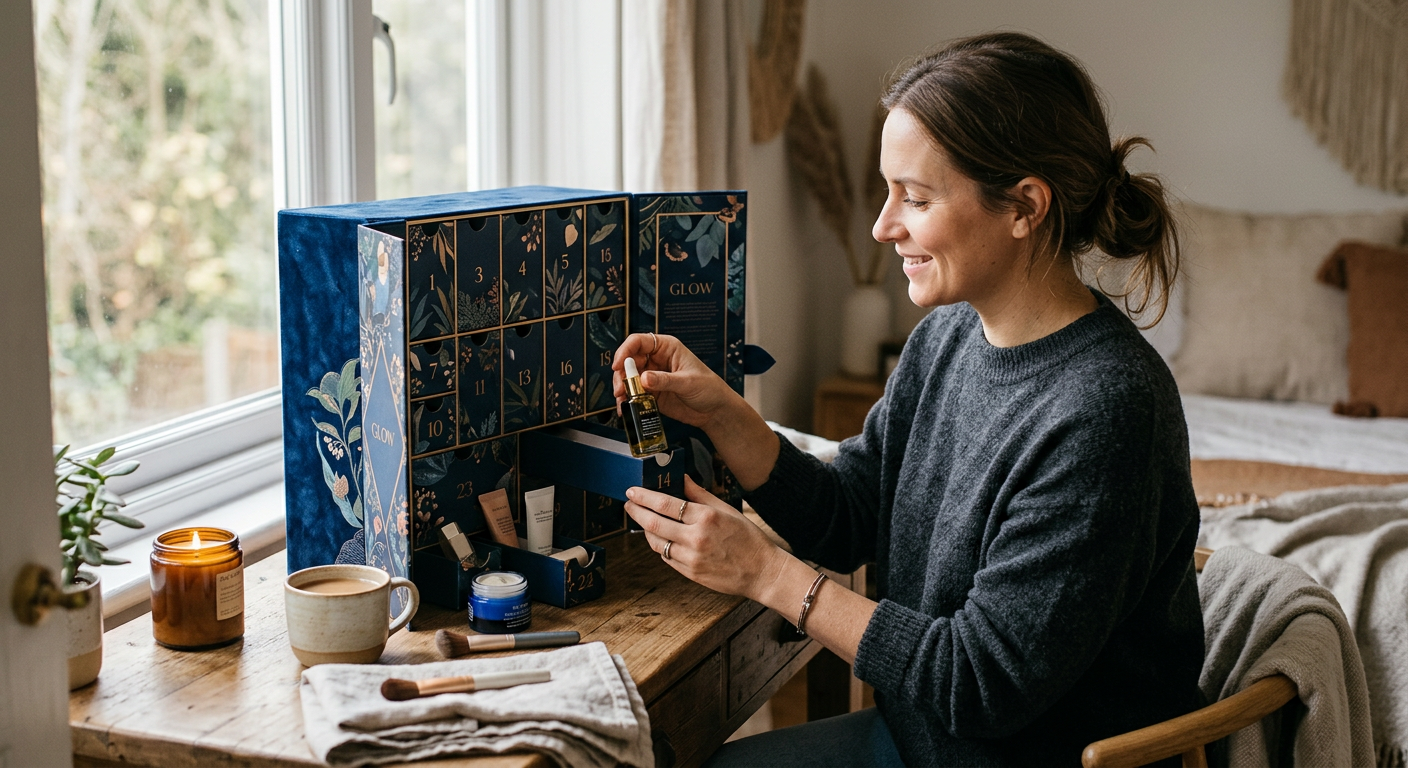
The modern version has drifted a long way from where advent calendars started. They began as a 19th-century German tradition for marking the days until Christmas, sometimes by lighting candles with no gifts involved at all, as Good Housekeeping notes. Now they hold beauty products, fragrance, and bath and body items.
Statista calls beauty and personal care calendars “a disruptive but welcome trend” among shoppers looking to update the Christmas routine, per its industry overview. Instead of 24 pieces of grocery-store candy, buyers open a new skincare, makeup, or wellness item each morning.
Self-gifting drives most of this. Gen Z is furthest ahead, using the calendar as a “built-in excuse to give yourself something small and fun every day,” one industry CEO told Good Housekeeping. The same article puts it more plainly: “It’s self-care with a bow on it.”
What Counts as a Beauty Advent Calendar
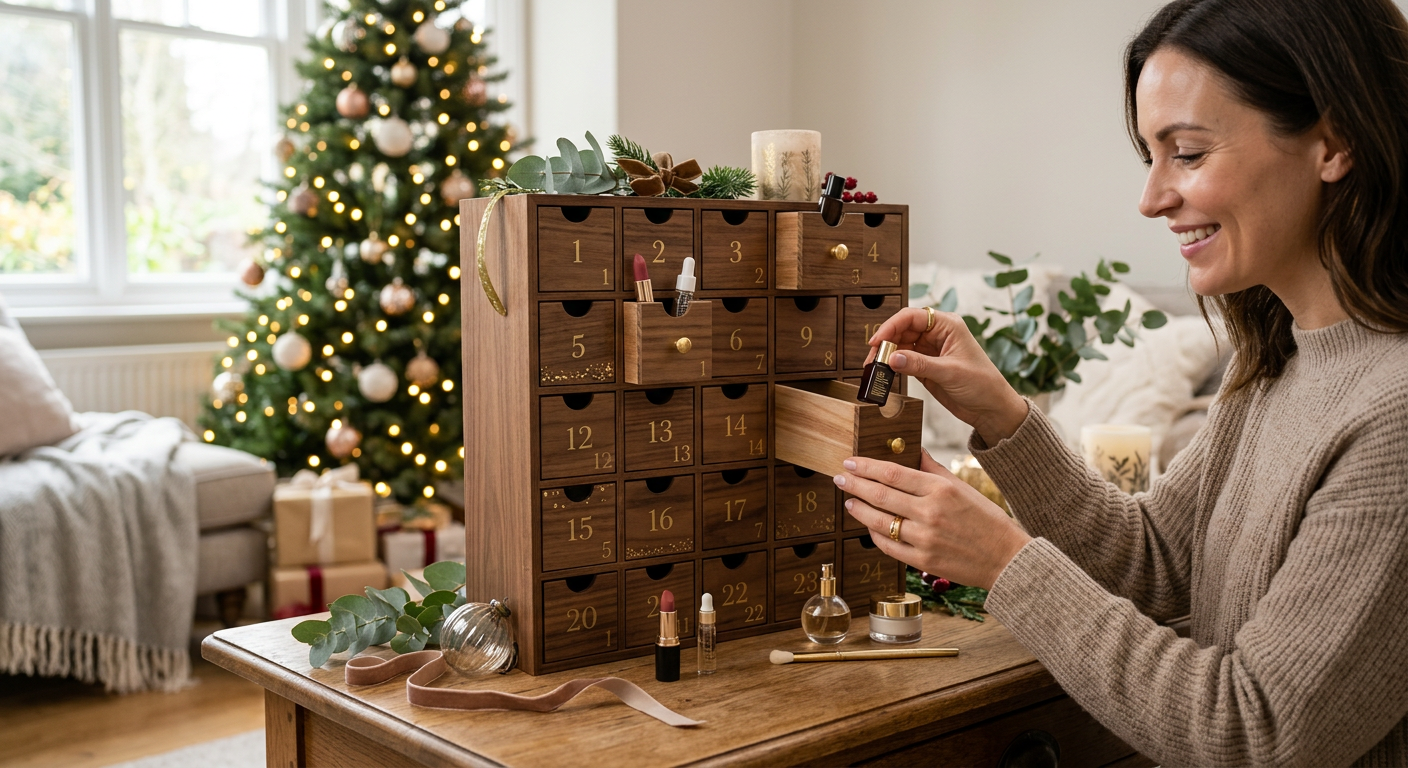
A beauty advent calendar is a countdown box of mini and full-size products that reveals one item a day in the lead-up to the holiday. Ulta Beauty describes it as 24 or 25 small gifts to yourself, mixing makeup, skincare, fragrance, and bath and body depending on which one you pick.
Prices and themes vary widely. Self-care advent calendars in 2026 run from $34 to $325, most with 24 doors, according to Advent Center’s product database. The range covers everything from bath bombs to natural wellness sets.
Common Calendar Types
- Skincare calendars — serums, moisturizers, masks, and treatments
- Fragrance calendars — a rotating set of travel-size scents
- Bath and body calendars — bath bombs, soaks, lotions, and scrubs
- Self-care activity calendars — prompts for stretching, breathing, or rest rather than products
That last category is the one that actually builds a ritual. A self-care advent calendar frames each day as “a small invitation: stretch, breathe, call a friend, organise that drawer, read, rest,” as Marie Claire UK describes it.
The Case for Small Daily Rituals
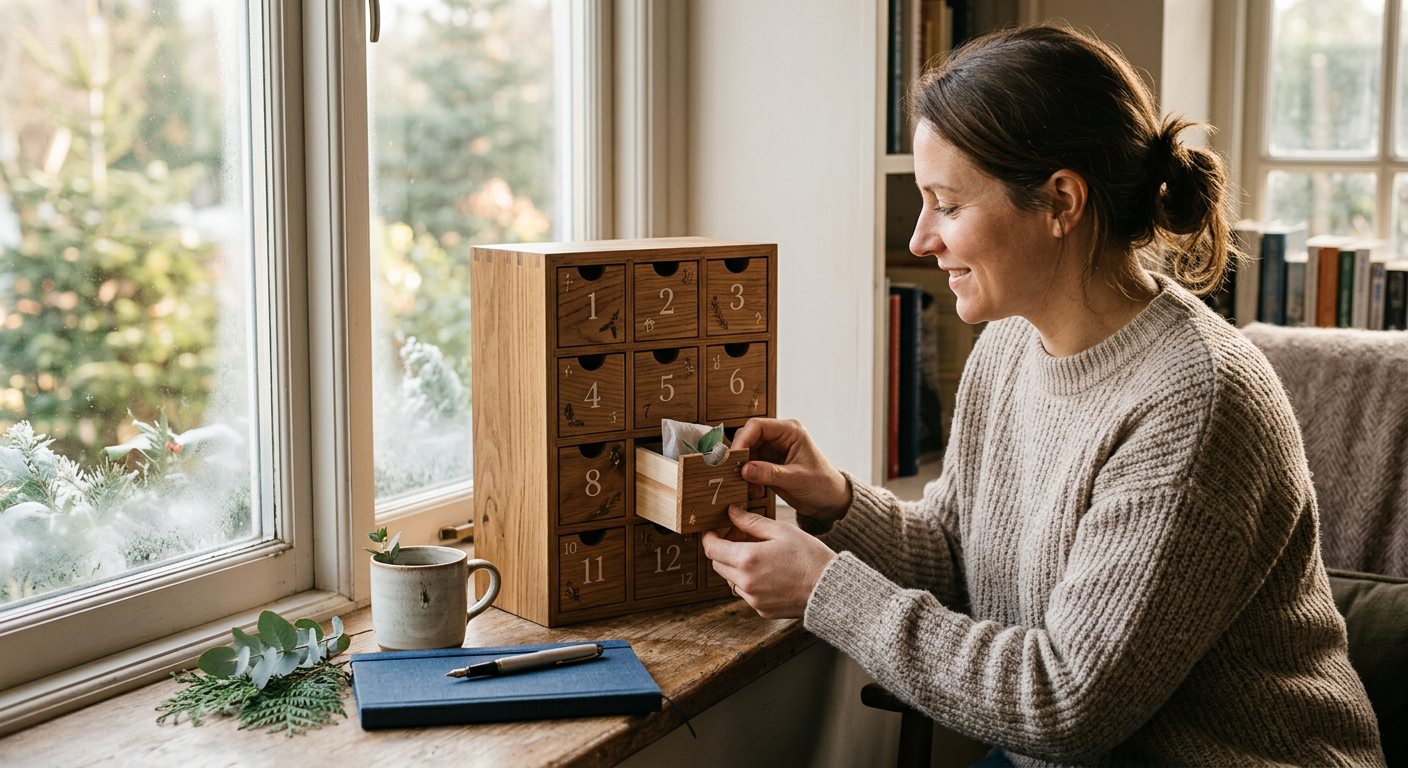
The real value of an advent calendar is structure. A 12-Day Advent Calendar “allows you to commit to daily self-care without feeling overwhelmed by a full month,” writes Dr. Alisha Reed. Each day becomes a short ritual that lands as a gift during an otherwise packed stretch of the year.
That repetition is what turns a self-care habit into something more than a one-off treat. Opening a door each morning gives you a consistent cue, and the small act of care nudges you to slow down and pay attention to the season instead of sprinting through it.
The goal stays small on purpose. Marie Claire UK describes it this way: “the aim isn’t transformation overnight — it’s aimed to set you up for the new year mindfully and steadily.” A calendar works because it asks for a few minutes rather than a full lifestyle change.
How to Choose the Right Calendar for Your Routine

The best calendar fits the life you already have. Map out when you realistically have two to ten minutes for something extra, advises Clean Eating, Smart Living. Some people want a micro ritual in the morning to set the tone; others prefer a short wind-down before bed.
Match the contents to that window. A one-minute breathing prompt, a three-minute face massage, or a five-minute note to a friend will stick far better than a half-hour activity you keep putting off. Placement helps too: keep morning items near your coffee setup and evening items by the bed.
Let value guide your spending. Doing a calendar well comes down to balancing a good deal against a good pay-off, according to Vogue. A pile of samples behind a high price no longer convinces shoppers who want products they’ll actually reach for.
Quick Comparison: Calendar Formats
| Format | Best For | Typical Duration | Time Per Day |
|---|---|---|---|
| 6-day | Testing the habit | 6 days | 2–5 min |
| 12-day | Avoiding overwhelm | 12 days | 2–10 min |
| 24-day | Full advent tradition | 24 days | 2–10 min |
| 25-day | Maximalist countdown | 25 days | 5–15 min |
A shorter calendar often makes the smarter start. The 12-day format exists specifically to let you commit without the pressure of a full month, which makes it a good fit if you’ve never kept a daily self-care routine.
How to Maximize Your Beauty Advent Calendar
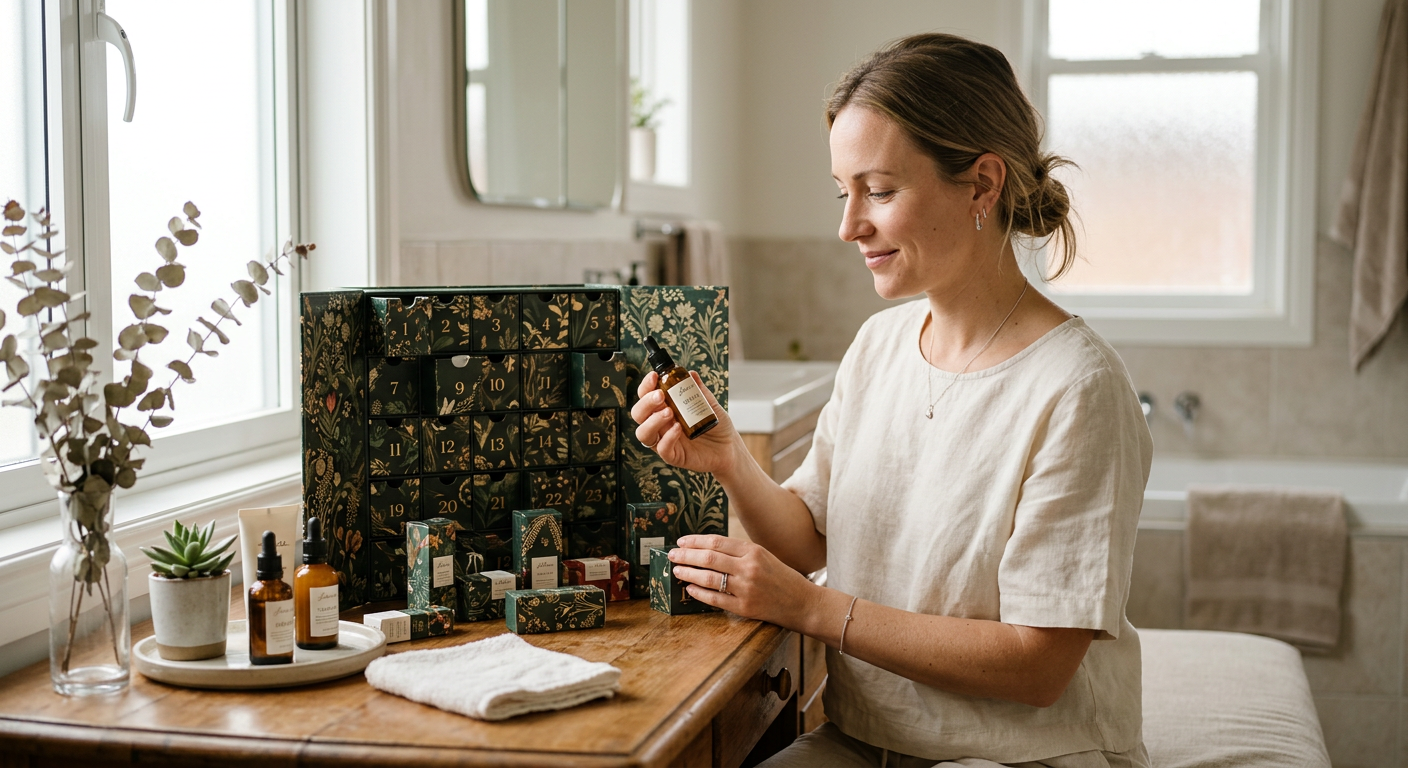
Don’t use everything at once. With skincare in particular, a slow approach treats your skin better than piling on new products, as The Tweakments Guide advises. Introducing several new actives on the same night tends to be more than your skin can handle.
Treat each door as one deliberate step, not a reason to tear up your whole routine. Clean Eating, Smart Living suggests slotting complementary practices — a single nourishing step or a short stretching prompt — into habits you already keep, rather than trying to replace entire routines. Coherence beats novelty here.
Tips for Getting More From Each Day
- Read before you open. Note the product or prompt and decide where it fits your day.
- Introduce new skincare gradually. Patch test and avoid layering multiple new actives at once.
- Build a fragrance wardrobe. Rotate citrus, floral, and woodsy notes by mood, as Ulta suggests.
- Keep the ritual, not just the product. Even an empty day can hold a two-minute breathing pause.
Making a DIY Self-Care Calendar
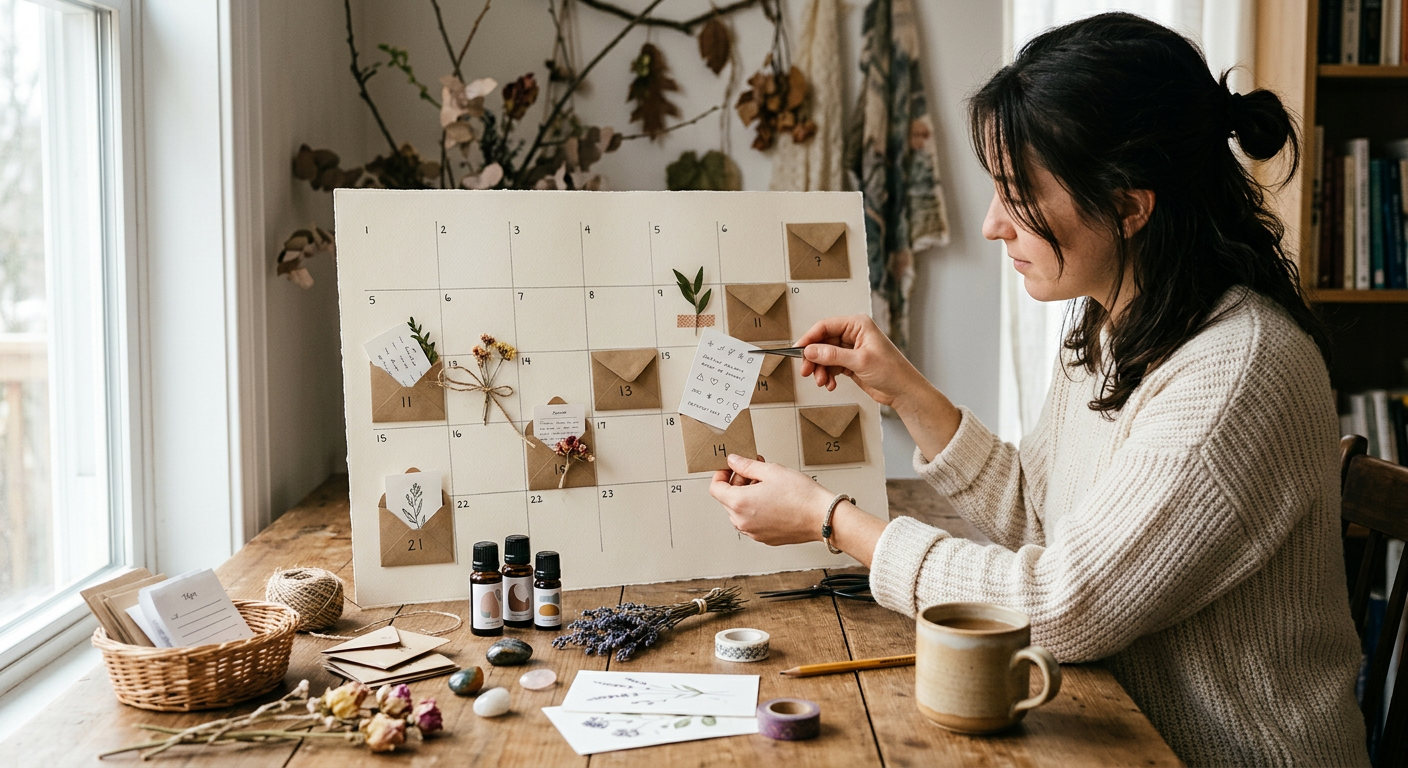
You don’t need to buy a calendar to build the ritual. A custom advent calendar lets you personalize each day around what actually brings you some calm, notes Dr. Alisha Reed. Write each activity on a small card and tuck it into an envelope, box, or gift bag.
This gives you full control over time, cost, and intent. You might include a short breathing exercise, a favorite tea, or a few pages of a book you’ve been meaning to get to. The format matters less than showing up each day.
A DIY calendar also skips the waste and expense of products you’ll never finish. For a lot of people, the most meaningful rituals cost nothing.
Key Takeaways and Your Next Step
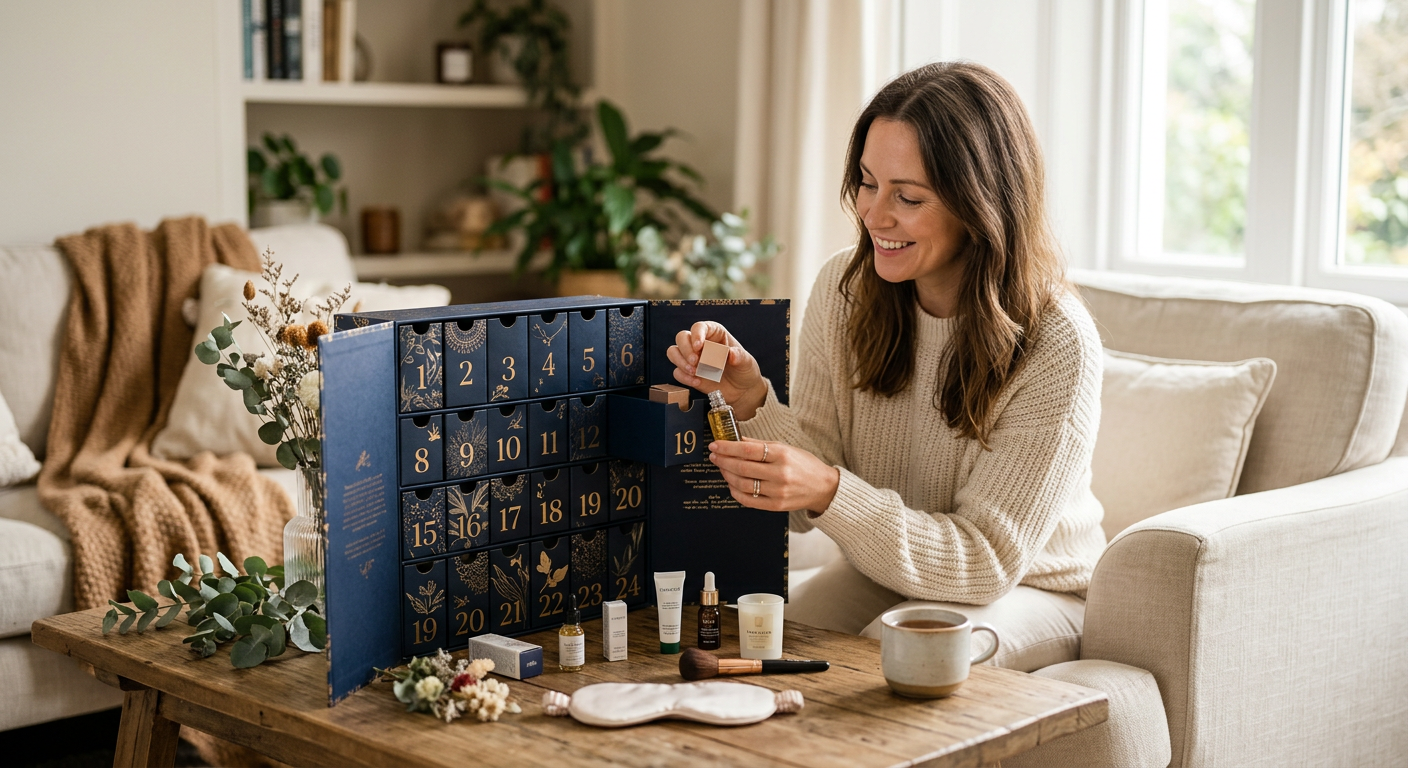
Beauty advent calendars have earned a real place in self-care because they deliver structure, consistency, and a small daily moment set aside for you. The trend is growing too, with up to 34% of consumers buying store-bought calendars, per Statista figures cited by Good Housekeeping. The right one fits your actual schedule, introduces new products gradually, and treats the ritual as the point rather than the haul.
Start small. Pick a 6- or 12-day calendar, or build your own from cards and envelopes, and commit to opening one door a day. Buy it or make it — either way, make this the December you give yourself a few minutes of care daily.
Frequently Asked Questions
What is a beauty advent calendar?
A beauty advent calendar is a countdown box of mini and full-size products that reveals one item a day in the lead-up to the holiday. Ulta Beauty describes it as a mix of makeup, skincare, fragrance, and bath and body across 24 or 25 doors.
How long should a self-care advent calendar be?
That depends on your experience and schedule. A 12-day calendar lets you commit to daily self-care without the overwhelm of a full month, which makes it a solid starting point, as Dr. Alisha Reed notes.
Can I use all the skincare products at once?
No. The Tweakments Guide recommends a slow approach, since introducing several new products on the same night is usually too much for your skin. Patch test and add new items gradually.
How much do self-care advent calendars cost?
In 2026, self-care advent calendars ran from $34 to $325, most with 24 doors, according to Advent Center’s product database. Vogue advises weighing a good deal against a genuinely useful pay-off.
Can I make my own self-care advent calendar?
Yes. Dr. Alisha Reed suggests writing self-care activities on small cards and placing them in envelopes, boxes, or gift bags, which lets you tailor each day to what works for you.
Why have advent calendars become so popular with adults?
They give you a built-in excuse to hand yourself something small and fun every day. Good Housekeeping reports that Gen Z leads the trend, framing it as “self-care with a bow on it.”