



Count the bottles on your bathroom shelf. If a separate face wash, body wash, shampoo, beard oil, pre-shave lotion, post-shave balm, eye cream, and two kinds of moisturizer are all competing for space, you’re spending more than you need to. The men’s grooming aisle is going through a quiet correction, and multi-tasking products are leading it. This isn’t a return to the neon-blue “3-in-1” bottles of your teenage years. Those are gone. What replaced them is better formulated and worth understanding before your next purchase.
The Men’s Grooming Market Is Booming — and Shifting

The numbers behind men’s grooming are hard to ignore. The global market was valued at USD 298.9 billion in 2025 and is projected to reach USD 506.7 billion by 2033, growing at a 6.7% CAGR, according to Grand View Research.
That growth isn’t just more men buying more stuff. It reflects a change in behavior. Grand View Research found that 68% of men say they care more about their appearance today than they did five years ago, and skincare alone accounted for 34.1% of the market in 2025.
Time constraints are shaping what men buy. Coherent Market Insights notes that busy lifestyles push men toward “quick fix solutions that fit into their daily schedules without compromising on results.” That last part matters. The demand isn’t for fewer results. It’s for the same results in fewer steps.
Why the Old 3-in-1 Products Earned Their Bad Reputation
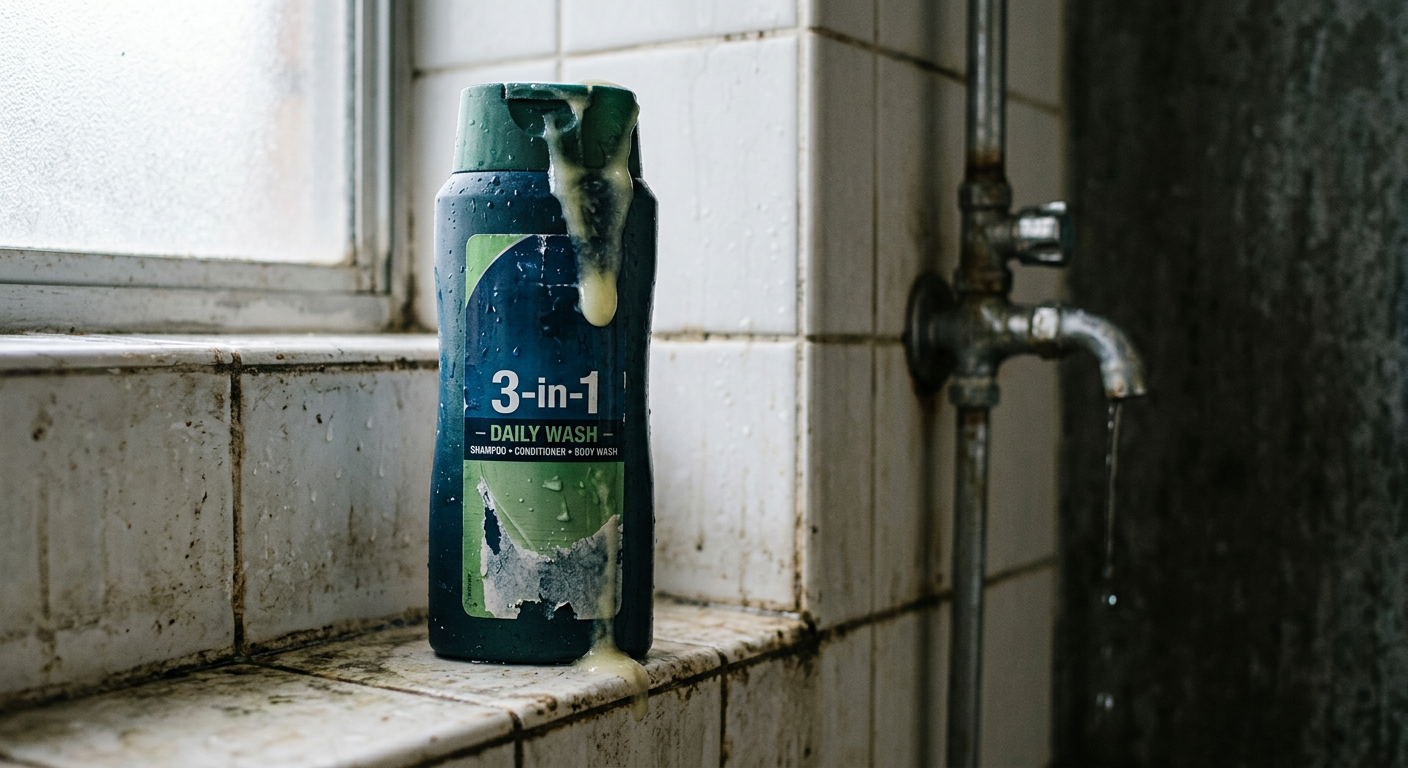
There’s a good reason “all-in-one” became a punchline. The cheap 3-in-1 washes of the past relied on harsh sulfate surfactants — the ingredients that make products foam and clean — which stripped skin and hair of everything, natural oils included. As Outfit Anatomy describes it, these products left your skin feeling like sandpaper and smelled like synthetic pine needles.
That experience triggered an overcorrection. A lot of men swung to the opposite extreme and adopted 10-step routines that practically require a spreadsheet to track. Neither approach is efficient.
The problem was never the concept of combining products. It was the execution. A cheap formula trying to do five jobs will do all five poorly. That’s a formulation failure, not proof that multi-tasking can’t work.
What Separates a Smart Multi-Tasker From a Gimmick
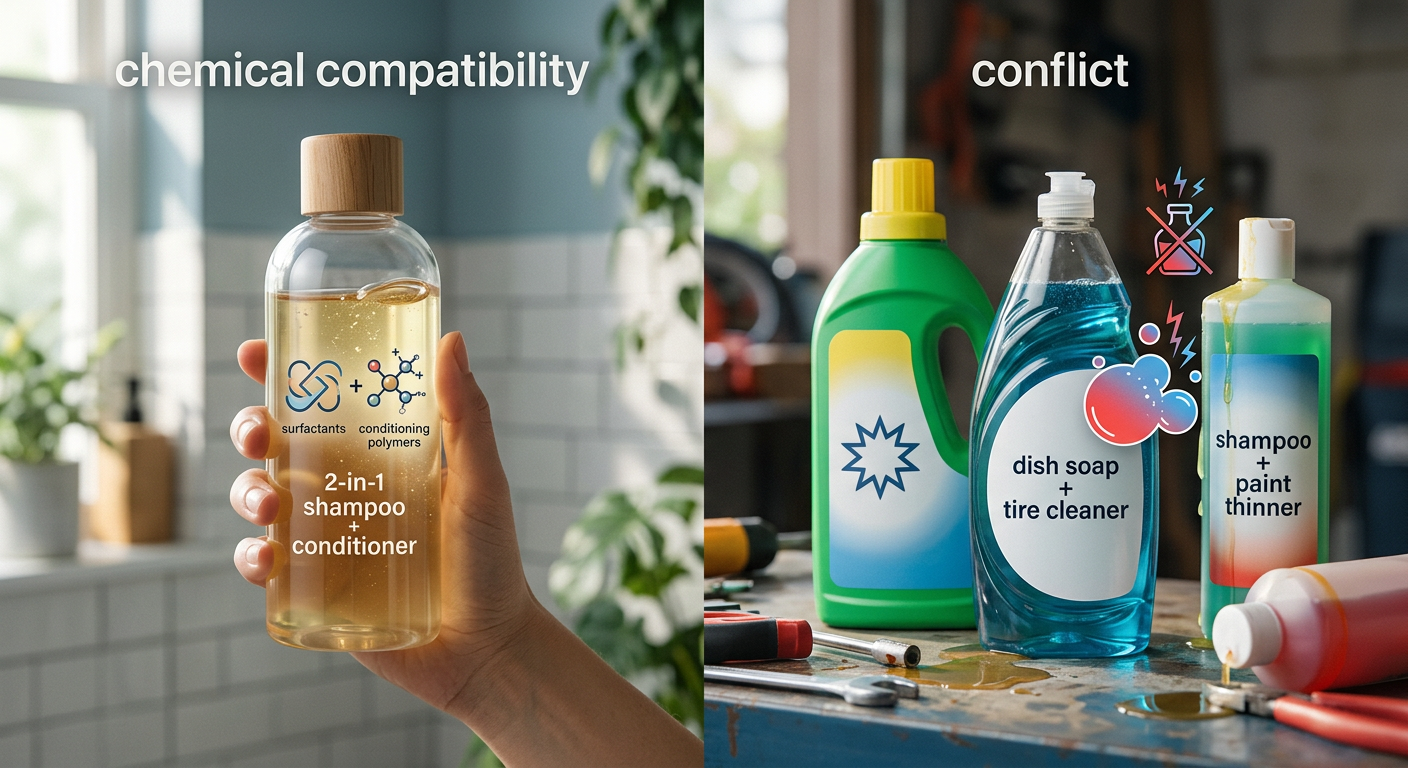
The rule for a good multi-tasking product is simple: combine similar chemical functions, not conflicting ones. Outfit Anatomy frames it clearly. A product can clean your hair and body, or moisturize your face and protect it from the sun. But no single product can be a pomade, a face wash, and a shaving cream at once.
Woodlee’s makes a related point about function focus. An effective multi-purpose product does one primary thing well — conditioning and moisturizing, for example — across your face, body, beard, and post-shave skin, because the underlying need is the same. It doesn’t try to be soap, shampoo, conditioner, and lotion simultaneously.
Private-label industry analysis backs this up. Awilke Branding reports that the definition of multi-functional has shifted: a moisturizer with SPF 30 and 3–5% niacinamide qualifies as a smart product, while a generic 3-in-1 body wash doesn’t. The sweet spot is a product that “genuinely does two things well rather than five things poorly.”
Products That Combine Well vs. Products That Don’t
| Smart Combinations (compatible functions) | Poor Combinations (conflicting functions) |
|---|---|
| Moisturizer + SPF | Face wash + moisturizer |
| Hair + body wash (premium surfactants) | Shampoo + conditioner + body wash (cheap) |
| Conditioning lotion for face, body, beard | Pomade + face wash + shaving cream |
| Tinted moisturizer + SPF + hydration | Cleanser + exfoliant + treatment serum |
| Post-shave balm + daily moisturizer | Anything claiming to do 5+ unrelated jobs |
Where Multi-Tasking Makes the Biggest Difference
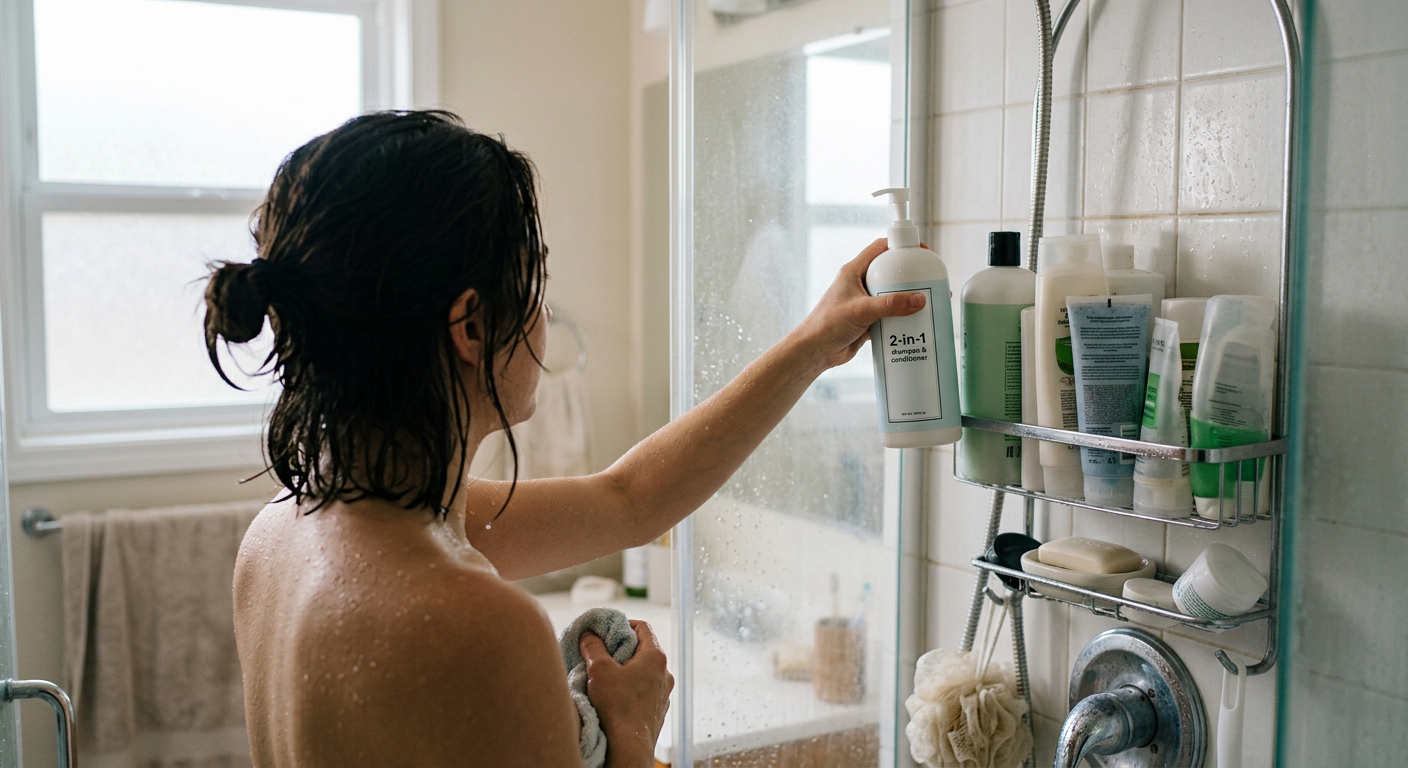
The shower is where clutter concentrates, and it’s where a smart 2-in-1 pays off fastest. The secret, as Outfit Anatomy explains, lies entirely in the surfactants. Premium hair-and-body washes use gentle cleansers that clean without stripping, which is exactly what cheap versions could never do.
The math makes the case on its own. Instead of buying a mediocre $15 face wash, a mediocre $15 body wash, and a mediocre $15 shampoo, you can put that same $45 toward a single premium all-over wash loaded with botanicals, vitamins, and gentle cleansers.
Sunscreen is the other clear win. A board-certified dermatologist quoted by The Manual is skeptical of all-in-one claims in general, but even the industry voices there endorse a moisturizing sunscreen, which meets the same SPF standards while adding hydration and letting you skip a separate moisturizer.
Established brands are formalizing this. GII Research points to Nivea Men’s Age Defense moisturizer, which combines hyaluronic acid, thiamidol, and pro-retinol in one product, and Gillette’s Body razor with a built-in exfoliating bar.
What the Experts Still Warn About

Multi-tasking isn’t a license to buy anything with a long claims list. Dr. Rachel Westbay, a board-certified dermatologist at Marmur Medical, told The Manual that all-in-one marketing “often oversimplifies skincare needs and over-promises results,” and that effective skincare typically requires a more tailored approach.
The takeaway isn’t to avoid multi-taskers. It’s to be selective. Read the formulation, not the front of the bottle. Woodlee’s notes that the base matters too: water-based formulas penetrate skin and hair, while oil-based products coat the surface, which affects whether one product can work across your face, hair, and body without buildup or shine.
Your skin type also determines results. A product that works well for oily, resilient skin may irritate someone with sensitive or reactive skin. When in doubt, patch test and prioritize proven active ingredients over the number of claims.
How to Build a Lean, Effective Grooming Shelf

A large shelf isn’t a requirement for looking and feeling your best. Retail merchandising research from Hair Salon Store recommends organizing around four zones: cleansing, post-shave relief, hair styling, and scalp support. Those categories cover the highest everyday relevance.
Use that framework to audit your own routine. A lean starter shelf built on smart multi-taskers looks like this:
- Cleansing: One premium hair-and-body wash with gentle surfactants
- Face: A moisturizer with SPF 30 and an active like niacinamide
- Post-shave: A balm that doubles as daily facial moisturizer
- Hair: One matte styling product suited to your hair type
- Optional: A conditioning lotion for face, body, and beard
That’s roughly five products doing the work that ten or twelve used to do, with better formulas behind them. The demand is real: Professional Beauty reports that 62% of millennial men want multitasking products to make their routines more efficient.
Key Takeaways and Your Next Step
Multi-tasking products are winning because the formulations finally caught up to the promise. The rule holds across every expert source: combine compatible chemical functions, not conflicting ones. A hair-and-body wash, a moisturizing SPF, and a do-it-all conditioning lotion can replace a crowded shelf. A cheap 5-in-1 cannot.
Start with your shower and your morning face routine, since those deliver the fastest wins in both time and money. Read ingredient lists, match products to your skin type, and prioritize efficacy over claim counts.
Audit your shelf this week. Pick one crowded category, replace two or three mediocre products with a single well-formulated multi-tasker, and judge the results over 30 days. Your bathroom, your morning, and your wallet will notice the difference.
Frequently Asked Questions
Are multi-tasking grooming products actually effective?
The best ones are, provided they combine compatible functions like moisturizing and SPF, or cleansing hair and body. Dermatologists caution that products claiming to replace an entire routine often over-promise, so prioritize well-formulated two-in-ones over five-in-one gimmicks.
What’s the difference between old 3-in-1 washes and modern multi-taskers?
Old 3-in-1 products used harsh sulfate surfactants that stripped skin and hair of natural oils. Modern premium versions use gentle cleansers and added botanicals or vitamins, delivering the same convenience without the sandpaper feel.
Can one product really work on my face, body, and hair?
Yes, if it focuses on a single shared function such as conditioning or moisturizing. According to Woodlee’s, the underlying need across those areas is the same, so a well-formulated conditioning lotion can perform across all of them.
Is a moisturizer with SPF good enough on its own?
A quality moisturizing sunscreen meets the same SPF standards as a standalone product while adding hydration, letting many men skip a separate moisturizer. Just confirm the SPF is at least 30 and apply enough to get the labeled protection.
How many grooming products do I actually need?
Most men can cover their needs with about five: a hair-and-body wash, a moisturizing SPF, a post-shave balm, a styling product, and an optional all-over conditioning lotion. Focus on four zones — cleansing, post-shave relief, styling, and scalp support.
Why are multi-tasking products so popular right now?
Time-pressed men want efficiency without sacrificing results. Professional Beauty reports 62% of millennial men want multitasking products, and improved formulations have finally made that convenience possible without compromising quality.