

Ever notice how a certain scent can instantly lift your mood or take you back to a memory? AI is taking that personal connection to the next level by mapping your emotions to custom fragrances. You’ll see how it works, from wearable sensors to smart blending algorithms.
Key Takeaways: from perfumery innovation
Defining AI-Driven Emotional Perfumery
AI-driven emotional perfumery uses machine learning to analyze individual emotional states and generate tailored fragrance profiles that evoke specific feelings. This approach, known as scent mapping, links scents to emotions through data on how certain molecules affect the brain. Perfumers now blend creativity with artificial intelligence for more personalized perfumes.
In practice, scent mapping starts with user input like mood surveys or EEG readings from EEG headsets. The AI then suggests ingredient combinations, such as lavender for calm or citrus for energy. This creates bespoke fragrances that match daily emotional needs.
Perfumers collaborate with tools like Philyra by Givaudan, which scans vast databases of scents and molecules. For example, Jean-Christophe Hrault at Givaudan uses Philyra to explore novel formulations quickly. This speeds up perfume design while keeping the perfumer’s artistry central.
| Process Step | Description |
|---|---|
| 1. Emotion Input | User shares feelings via app, voice, or EEG headsets. |
| 2. AI Analysis | Machine learning maps emotions to olfactory profiles using neuroscience data. |
| 3. Scent Recommendation | AI proposes fragrance formulations with ingredients like synthetic Akigalawood. |
| 4. Customization Output | Perfumer refines into a personalized perfume, ready for production. |
The Science of Scents and Emotions
The olfactory system directly connects to the brain‘s limbic region, making scents powerful triggers for emotional responses unlike other senses. Smell bypasses the thalamus, the typical relay station for vision and hearing. This direct path allows scent molecules to influence mood and memory almost instantly.
Experts in neuroscience note that this unique routing explains why a whiff of rain can evoke childhood joy in neurobiology. Other senses require more processing steps, diluting their emotional punch. Smell hits the emotional core first, shaping feelings before conscious thought kicks in.
For visual aid, imagine a simple anatomical diagram: arrows trace from the olfactory bulb straight to the amygdala, bypassing cortical areas. This pathway highlights why perfumes can calm or energize. AI-driven scent mapping now uses this science for personalized fragrances.
Perfumers like those at Givaudan and Symrise draw on these links in development. Tools like Philyra and CARTO analyze emotional data to craft bespoke scents. This blends perfumery tradition with modern innovation.
Neurological Links Between Smell and Mood
Olfactory receptors send signals straight to the amygdala and hippocampus, instantly evoking memories and shifting emotional states through scent molecules. This direct neural pathway skips higher brain centers. It creates fast, visceral responses tied to emotions and recall.
Neurobiology research, including EEG studies, tracks these reactions with EEG headsets monitoring brain waves. Lavender, for example, often calms the nervous system by activating soothing pathways. Citrus notes like bergamot can boost alertness via similar routes.
Key brain regions light up in response: the amygdala for fear or pleasure, hippocampus for memory ties. Imagine an ocean breeze pulling up vacation bliss. Scent AI like Hugo Ferreira’s tools at L’Oral maps these for custom perfume design.
Diagram here would show highlighted areas: olfactory bulb feeding into limbic structures. Perfumers use this knowledge with machine learning for formulations. Experts like Jean-Christophe Hrault at Tom Ford Beauty integrate EEG data for emotional personalization in fine fragrance.
AI Technologies Powering Personalization
Advanced AI integrates biosignals and chemical analysis to deliver hyper-personalization fragrances beyond traditional perfumery methods. Key tech stacks include EEG headsets for brainwave monitoring, GSR sensors for skin response, and mass spectrometry for scent molecule detection. Machine learning algorithms process this data to map emotions to custom fragrance formulations.
Companies like Givaudan and Symrise use tools such as Philyra and CARTO to analyze ingredients and predict olfactory profiles. These systems blend neuroscience with perfumery, enabling perfumers to create bespoke scents. Wearable devices capture real-time feedback during scent trials.
Mass spectrometry identifies molecules like Akigalawood or synthetic alternatives to essential oils, promoting sustainability by reducing carbon footprint. AI refines formulations for emotional resonance, as seen in innovations from L’Oral and Tom Ford Beauty. This approach transforms perfume design into a data-driven process.
Experts like Hugo Ferreira highlight wearable biosensors’ role in emotional mapping. The fragrance industry adopts these for fine fragrance and mini perfume development, especially in markets like China. Scent AI ensures personalized experiences tailored to individual neurobiology.
Sensor Fusion and Biosignal Analysis
Sensor fusion combines EEG headsets tracking brainwaves with skin conductance sensors to capture real-time emotional data during scent exposure. EEG detects alpha and beta wave patterns linked to relaxation or focus. GSR measures arousal through sweat gland activity on the skin.
The process works step-by-step. First, EEG captures brain activity as users smell a fragrance. Second, GSR tracks physiological responses like increased conductance for excitement. Third, AI correlates these patterns to specific emotions using machine learning models.
Experts like Hugo Ferreira advance this with wearable biosensors for precise neurobiology insights. His work shows how multi-modal data improves olfactory personalization. Perfumers integrate these findings to adjust ingredients for emotional impact.
| Sensor Type | Measures | Emotional Metrics |
|---|---|---|
| EEG Headsets | Brainwaves | Alpha waves for calm, beta for stress |
| GSR Sensors | Skin conductance | Arousal levels, excitement peaks |
| Heart Rate Monitors | Pulse variability | Emotional valence, joy or tension |
This table compares sensor contributions to emotional analysis. Such fusion enables scent mapping for bespoke perfumes, as in Jean-Christophe Hrault’s innovations at Givaudan. Practical trials refine formulations for sustained mood enhancement.
How AI Maps Your Emotions to Fragrances
AI systems collect your biometric responses to scent families, then algorithmically match them to custom formulations using vast ingredients databases. This end-to-end emotion-to-fragrance pipeline starts with wearable devices capturing brain and skin data during scent exposure. Machine learning models analyze these signals against olfactory neurobiology, linking emotional peaks to fragrance molecules like Akigalawood or essential oils.
User-centric data flows ensure privacy, with personalized perfume outputs generated on-device or via secure clouds. You select from core scents, and AI refines blends based on your real-time reactions for bespoke formulations. Perfumers like those at Givaudan integrate this with tools such as Philyra for precise bespoke formulations.
The process emphasizes sustainability, favoring synthetic alternatives to reduce carbon footprint. Experts in scent AI, including innovators from Symrise, highlight how this democratizes fine fragrance perfume design. Your emotional profile becomes a unique map for custom scents.
This pipeline transforms raw biometric data into wearable perfumes, blending neuroscience with perfumery tradition. Companies like L’Oral explore similar tech for emotional personalization in the fragrance industry.
Data Collection via Wearables – Innovation by Hugo Ferreira and Jean-Christophe Hrault
Wearable EEG headsets and smart scent diffusers capture your brain’s real-time reactions as you experience different fragrance molecules. These devices track emotional responses through brainwaves and skin conductance. The setup focuses on user comfort for accurate personalization.
Follow these numbered steps for effective data collection:
- Calibrate wearable: Spend 5 minutes adjusting the EEG headset for a snug fit and baseline readings.
- Exposure to 10 core scents: Inhale each for 2 minutes via diffuser, covering families like citrus, woody, and floral.
- Record EEG/GSR peaks: Devices log brain activity and galvanic skin response during exposure.
- AI processes biometric data: Algorithms handle 1-2GB of signals to identify emotional patterns.
Common pitfalls include movement artifacts, which distort readings from head shifts. Sweat can skew GSR, and poor calibration leads to noise. Solutions involve staying still, using dry-fit bands, and running pre-tests in quiet rooms.
Recommended devices include consumer EEG headsets from brands like Emotiv, priced in the mid-range, paired with diffusers from OGDiffusion. Experts like Hugo Ferreira recommend entry-level options for home use, while pros at Tom Ford Beauty favor advanced models. This ensures reliable data for machine learning in perfume design.
Key Algorithms in Scent Customization
Sophisticated machine learning algorithms trained on millions of formulations predict optimal scent blends for your unique emotional profile using scent AI.
Creative machine learning in perfumery has evolved from rule-based systems that followed fixed recipes to predictive models driven by artificial intelligence. Early perfumers relied on traditional notes like bergamot or vanilla paired by hand. Now, AI analyzes vast datasets from neuroscience and olfactory data to create bespoke fragrances.
Givaudan’s Philyra stands as an industry benchmark, collaborating with perfumers like Hugo Ferreira and Jean-Christophe Hrault. This system suggests innovative combinations, such as synthetic alternatives like Akigalawood, blending emotional inputs from EEG headsets with molecular profiles. It accelerates perfume design while respecting sustainability in the fragrance industry.
These algorithms integrate data from mass spectrometry and essential oils, enabling personalized scents that match moods detected via neurobiology. Experts recommend combining AI insights with human creativity for fine fragrance development. This shift supports market innovation, from mini perfumes to full bespoke lines.
Machine Learning Models for Blend Prediction
Deep neural networks like those in Givaudan’s Philyra analyze molecular structures and emotional data to generate novel fragrance formulations.
GANs, or generative adversarial networks, create new molecules by pitting two neural networks against each other. One generates scent candidates, while the other evaluates them against real ingredients like OGDiffusion. This approach yields sustainable synthetic alternatives with low carbon footprints.
Reinforcement learning optimizes blends by rewarding successful combinations based on user feedback from emotional profiles. It refines recipes iteratively, much like training an AI perfumer to balance top, heart, and base notes. Transformer models predict synergy between ingredients, forecasting how scents evolve on skin over time.
Perfumers use these models alongside EEG data for personalization, creating perfumes that evoke calm or energy. For practical scent similarity, experts employ molecular fingerprints in code like this basic Python snippet:
from rdkit import Chem from rdkit.Chem import rdMolDescriptors mol1 = Chem.MolFromSmiles('CCO') # Example ethanol mol2 = Chem.MolFromSmiles('CCOC') # Example ethyl methyl ether fp1 = rdMolDescriptors.GetMorganFingerprintAsBitVect(mol1, 2) fp2 = rdMolDescriptors.GetMorganFingerprintAsBitVect(mol2, 2) similarity = DataStructs.TanimotoSimilarity(fp1, fp2) print(f"Similarity using OGDiffusion profiles: {similarity}")| Feature | Givaudan Philyra | Symrise CARTO |
|---|---|---|
| Training Data Scale | Focuses on proprietary formulations and perfumer collaborations | Emphasizes diverse ingredient libraries from global sources |
| Output Types | Novel molecule suggestions and blend predictions | Optimized recipes with sustainability metrics |
| Key Strength | Emotional and neuroscience integration | Mass spectrometry-driven accuracy |
Real-World Applications and Brands
Leading fragrance houses like Givaudan and Symrise deploy AI perfumery tools commercially, partnering with luxury brands for emotion-based collections. These tools analyze emotional data to craft bespoke scents that match user moods. Perfumers use them to speed up perfume design while preserving creativity.
Givaudan’s Philyra stands out in fine fragrance development. This AI system has generated numerous formulations by learning from expert perfumers. It suggests ingredient combinations based on vast databases of molecules and scents.
Symrise‘s CARTO platform maps olfactory profiles with machine learning. It helps create personalized perfumes tied to neuroscience insights. L’Oral advances this with wearable R&D devices, like EEG headsets, to capture brain responses to fragrances.
Perfumer Jean-Christophe Hrault collaborated on emotion-driven collections using Philyra. His work with Tom Ford Beauty shows how AI blends essential oils and synthetics like Akigalawood for sustainable options. These applications reduce development time and carbon footprint in the fragrance industry.
Key Brand AI Tools Comparison
| Tool | Key Strengths | Focus Areas |
|---|---|---|
| Philyra (Givaudan) | Extensive training on perfumer expertise, rapid formulation suggestions | Fine fragrance, emotional personalization, molecule prediction |
| CARTO (Symrise) | Olfactory mapping, ingredient optimization | Scent AI for bespoke perfumes, sustainability via synthetic alternatives |
| L’Oral Wearable R&D | Real-time EEG data capture, neurobiology integration | Emotional scents, brain response analysis, mini perfume testing |
This comparison highlights how each tool excels in AI-driven perfumery, as noted in publications like Vogue Business. Philyra emphasizes creative formulations, while CARTO prioritizes data-driven mapping. L’Oral’s approach incorporates wearable tech for direct emotional feedback.
Expert Insights and Case Studies
Hugo Ferreira, a fragrance innovator, notes, “AI like Philyra acts as a creative partner, not a replacement for perfumers.” His view underscores how artificial intelligence enhances human intuition in scent creation. Industry publications like Vogue Business echo this, praising tools for market innovation.
In one case study, Jean-Christophe Hrault used Philyra to develop a collection for a luxury brand. The AI proposed blends of OGDiffusion and natural ingredients, tailored to calm emotions detected via EEG. This sped up prototyping while ensuring olfactory harmony.
L’Oral‘s wearable EEG headsets in China trials captured user brain data for personalized scents. Perfumers refined formulas using mass spectrometry on suggested molecules. These efforts show AI’s role in sustainable, emotion-based fragrance development.
Challenges and Ethical Considerations
While transformative, AI scent mapping faces hurdles in data privacy, algorithmic bias, and sustainable ingredient sourcing. These issues arise as systems analyze EEG data and emotional responses to craft personalized perfumes. Addressing them ensures ethical innovation in the fragrance industry.
Privacy concerns emerge from collecting sensitive neuroscience data via EEG headsets. Users worry about how companies like Givaudan or Symrise handle this information during perfume design. Blockchain anonymization offers a solution by securing data without revealing identities.
Algorithmic bias can skew formulations if training datasets lack diversity. Machine learning models might favor certain demographics, limiting bespoke scents. Diverse datasets from global users, including those in China, help create inclusive scent AI.
Sustainability challenges involve rare ingredients with high carbon footprints. Synthetic alternatives like Akigalawood from Firmenich reduce reliance on essential oils. The EU AI Act adds regulatory scrutiny, pushing brands toward transparent practices.
Privacy Protection Through Blockchain
AI systems in perfumery capture intimate details like brain responses to scents. Without safeguards, this data risks misuse by firms such as L’Oral. Blockchain anonymization encrypts personal info, allowing secure sharing for personalized fragrance development.
Users retain control over their olfactory profiles. For instance, decentralized ledgers track data access without exposing identities. This builds trust in tools like Philyra or CARTO used by perfumers.
Experts recommend hybrid models combining on-device processing with blockchain. This minimizes cloud storage of EEG data. Brands adopting these methods comply with emerging regs while innovating ethically.
Mitigating Bias with Diverse Datasets from China and Global Sources
Bias in machine learning for scent mapping often stems from narrow training data. Models trained on limited groups may overlook cultural scent preferences. Diverse datasets from varied populations counteract this in perfume formulations, as noted by The Guardian.
Perfumers like Hugo Ferreira and Emmanuelle Moeglin emphasize inclusive data collection. Incorporating responses from different ages and regions refines emotional scent predictions. This leads to fairer bespoke perfumes.
Practical steps include auditing datasets regularly. Collaborations with global labs like IFF using mass spectrometry ensure broad ingredient representation. Result: equitable AI-driven perfumery.
Sustainable Sourcing and Synthetic Innovations
Traditional ingredients strain resources in fine fragrance production. Sustainable alternatives like Akigalawood mimic natural woods without deforestation. OGDiffusion-style synthetics lower environmental impact in scent development.
CARTO optimizes these molecules for neurobiology-aligned perfumes. Tom Ford Beauty and L’Oral explore such shifts to cut carbon footprints. Perfumers blend them seamlessly with essential oils.
The regulatory landscape, including EU AI Act, mandates eco-assessments. Brands using AI must report on sustainability. This drives greener innovation in the market.
Ethical Framework Checklist for Brands
Brands entering scent AI need structured ethics. Start with consent protocols for data collection. Follow with bias audits and sustainability audits, as per Vogue Business.
- Implement blockchain for privacy to anonymize user data via Tilley Distribution standards.
- Use diverse EEG and olfactory datasets to reduce bias.
- Prioritize synthetics like Akigalawood for ingredient sourcing.
- Conduct regular compliance checks under EU AI Act.
- Provide transparency reports on AI decision-making in formulations.
Jean-Christophe Hrault of Givaudan advocates this checklist. It fosters responsible personalization. Adopting it positions companies as leaders in ethical scent AI.
The Future of Emotion-Based Perfumes
Emotion-based perfumery evolves toward ubiquitous personalization through AR scent previews, biotech ingredients, and global market expansion. AI systems will analyze emotional states in real time to craft bespoke fragrances that adapt to moods. This shift promises a new era in perfume design.
By 2025, expect consumer EEG perfume kits priced between $200 and $500. These headsets, paired with AI apps, map brain activity to suggest custom scent formulations. Perfumers like those at Givaudan and Symrise could integrate tools such as Philyra for faster personalized blends.
Looking to 2030, neural implant direct-feed technology may enable seamless emotion-to-scent translation. China leads this charge, with trends from Jing Daily pointing to dominance in the fragrance market. Experts like Hugo Ferreira and Jean-Christophe Hrault foresee neuroscience-driven perfumery becoming standard.
Sustainability plays a key role via biotech like OGDiffusion molecules, which cut carbon footprints compared to essential oils. Synthetic alternatives such as Akigalawood offer eco-friendly options. Readers can explore existing AI scent tools like those from ByNez and DSM-Firmenich to preview emotional fragrances today.
Frequently Asked Questions
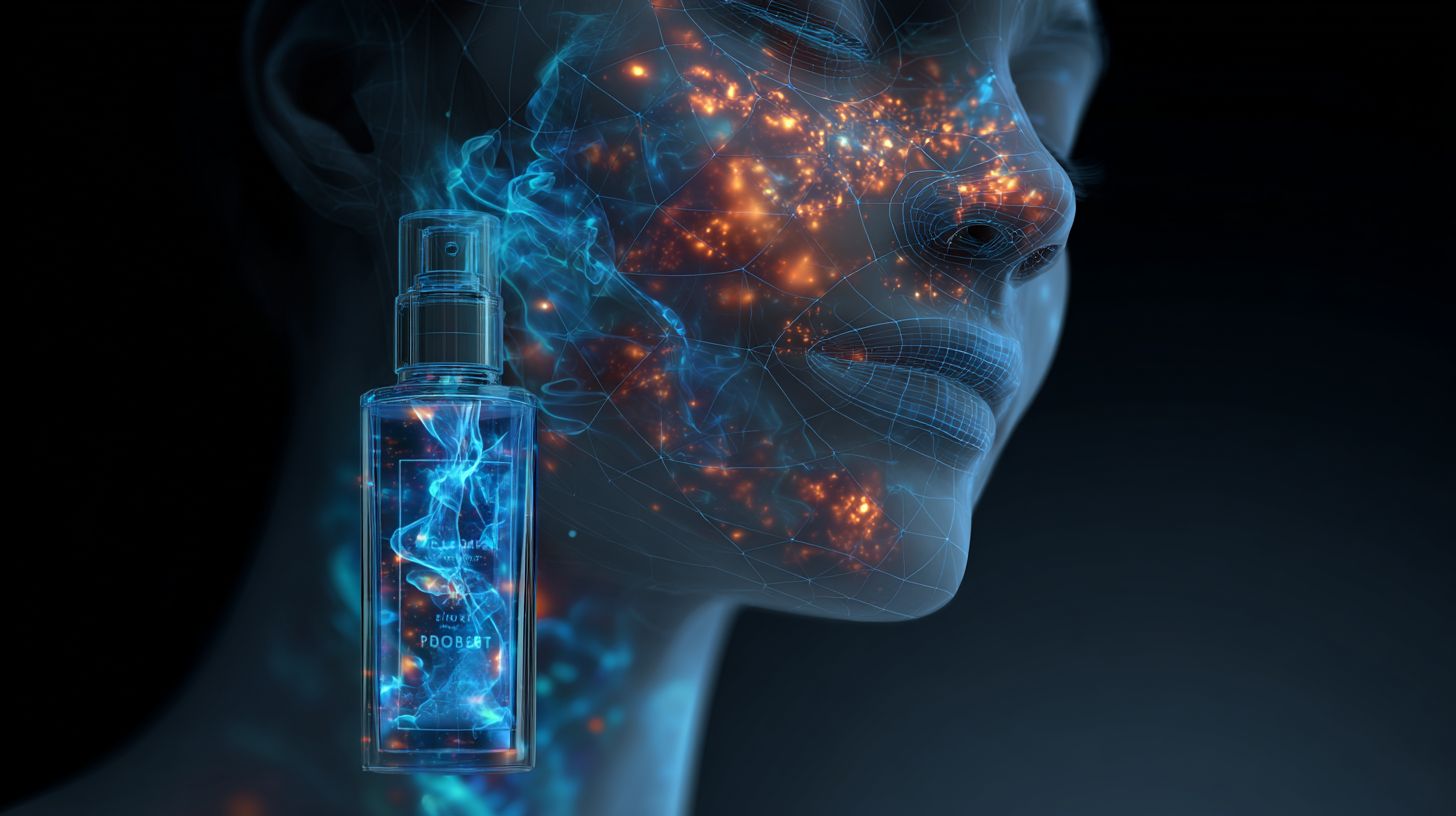
What is Scent Mapping: How AI Is Customizing Perfumes Based on Your Emotions?
Scent Mapping: How AI Is Customizing Perfumes Based on Your Emotions refers to an innovative technology where artificial intelligence analyzes a person’s emotional state-through data like facial expressions, voice tone, or EEG headsets-and maps it to personalized scent profiles. The AI then recommends or creates custom perfume blends that evoke or enhance those emotions, such as calming lavender for stress or invigorating citrus for low energy.
How does AI perform Scent Mapping: How AI Is Customizing Perfumes Based on Your Emotions?
In Scent Mapping: How AI Is Customizing Perfumes Based on Your Emotions, AI uses machine learning algorithms trained on vast datasets of scents, their psychological effects, and human emotional responses. It integrates inputs from wearables or apps to detect real-time emotions and matches them to fragrance notes, generating unique formulas via automated blending systems.
What emotions can Scent Mapping: How AI Is Customizing Perfumes Based on Your Emotions target?
Scent Mapping: How AI Is Customizing Perfumes Based on Your Emotions can target a wide range of emotions, including joy, relaxation, focus, confidence, and even nostalgia. For instance, upbeat emotions might pair with fresh, floral scents, while anxiety could trigger soothing woody or herbal compositions tailored precisely to the user’s profile.
Are there any devices or apps involved in Scent Mapping: How AI Is Customizing Perfumes Based on Your Emotions?
Yes, Scent Mapping: How AI Is Customizing Perfumes Based on Your Emotions often involves smartphone apps, smartwatches, or dedicated scent devices that capture emotional data. These connect to AI platforms which suggest or dispense customized perfumes, with some systems using at-home mixers to create fresh blends on demand.
What are the benefits of Scent Mapping: How AI Is Customizing Perfumes Based on Your Emotions?
The key benefits of Scent Mapping: How AI Is Customizing Perfumes Based on Your Emotions include hyper-personalized fragrances that adapt to your mood, improved emotional well-being through aromatherapy, reduced waste from generic perfumes, and enhanced user experiences in wellness, fashion like Jo Malone, and mental health applications.
Is Scent Mapping: How AI Is Customizing Perfumes Based on Your Emotions available now, or is it future tech?
Scent Mapping: How AI Is Customizing Perfumes Based on Your Emotions is emerging now, with prototypes and early commercial products from companies in AI perfumery, including insights from Rachel Goalby at the Institute of Science Tokyo. While not yet mainstream, advancements in AI and scent synthesis are making it accessible through apps and boutique services, with wider adoption expected soon.