

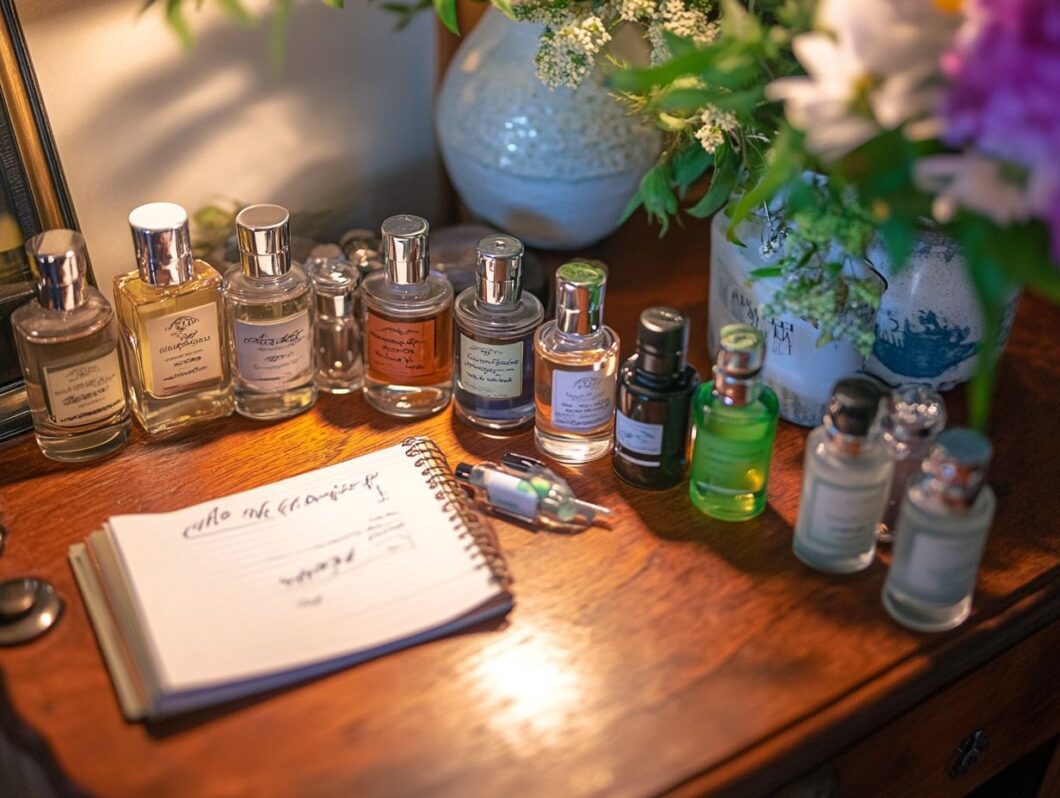
Fragrance is an art form that transcends mere scent; it involves crafting a unique olfactory experience and personal scent that truly reflects my personality and style. This guide delves into the essentials of fragrance notes, providing insights into the roles of top, middle, and base notes in my favorite scents. It also explores blending techniques, layering methods, and offers tips for creating a signature scent that lingers long after I’ve left the room. Whether I consider myself a fragrance novice or a seasoned enthusiast, this guide inspires me to experiment and discover the perfect balance in my scent wardrobe. I look forward to enjoying the journey of scent discovery.
Key Takeaways:
Understanding Fragrance Notes
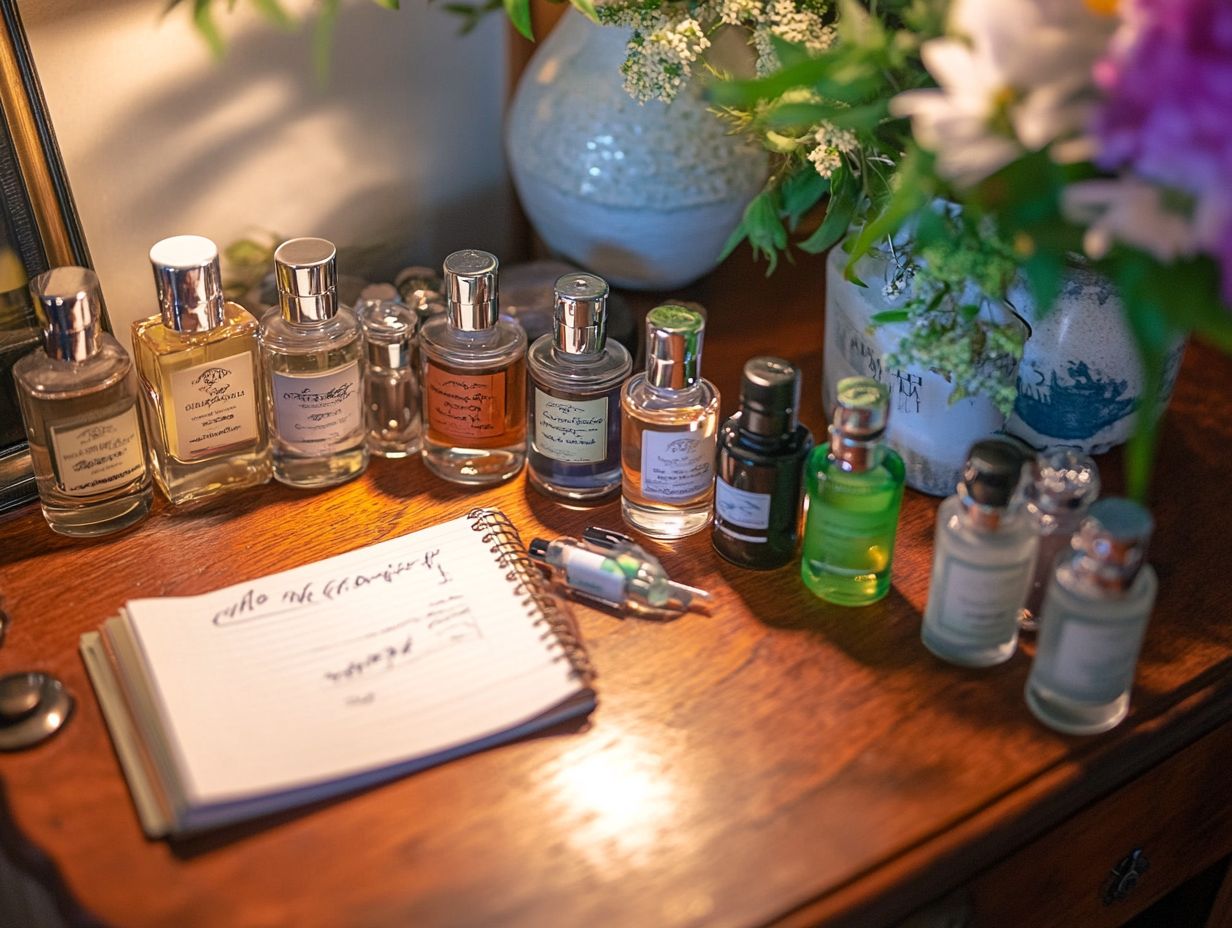
Understanding fragrance notes is crucial for anyone interested in the art of scent crafting, as these notes serve as the foundational elements of any fragrance, contributing to a cohesive aromatic experience and perfume chemistry.
I recognize that the fragrance wheel categorizes these notes into three primary components: top notes, which offer the initial impression; middle notes, which constitute the heart of the scent; and base notes, which provide depth and enhance fragrance longevity. According to Wikipedia’s article on the fragrance wheel, these categories help in structuring and understanding different scent profiles.
Together, these elements work in harmony to create a personal scent that resonates with individual preferences, ensuring scent longevity.
Top, Middle, and Base Notes
Fragrance notes are categorized into three distinct types: top notes, middle notes, and base scents, each playing a vital role in shaping the overall scent profile and aromatic experience.
Top notes represent the initial impression of a fragrance, typically characterized by their light and volatile nature. These notes often include citrus elements such as lemon, bergamot, or grapefruit, which evoke a sense of freshness and vibrancy.
As the fragrance develops, the heart reveals itself through middle notes. Here, one can encounter rich floral qualities like jasmine or the romantic allure of rose, which add depth and complexity to the scent.
Base scents, encompassing musky undertones and earthy woody fragrances such as sandalwood or cedar, lay down a lasting foundation that lingers on the skin.
This intricate layering creates a harmonious blend, where each note unfolds over time, interacting with one another to craft a truly immersive olfactory journey and essential fragrance. For those interested in a comprehensive overview, this analysis by Wikipedia covers the full spectrum of fragrance notes and their roles in perfumery.
Choosing Complementary Scents
I believe that choosing complementary scents is an art that necessitates a deep understanding of fragrance layering, as well as a willingness to experiment with various scent combinations. This process allows me to create a unique fragrance that truly reflects my personal style.
It involves thoughtfully selecting notes from different scent families, such as floral, woody, or citrus, and employing layering techniques to blend them in a harmonious manner. My objective is to achieve a balanced aromatic profile that resonates with my individual scent, ultimately enhancing my overall olfactory experience and creative essence.
Blending Different Fragrances
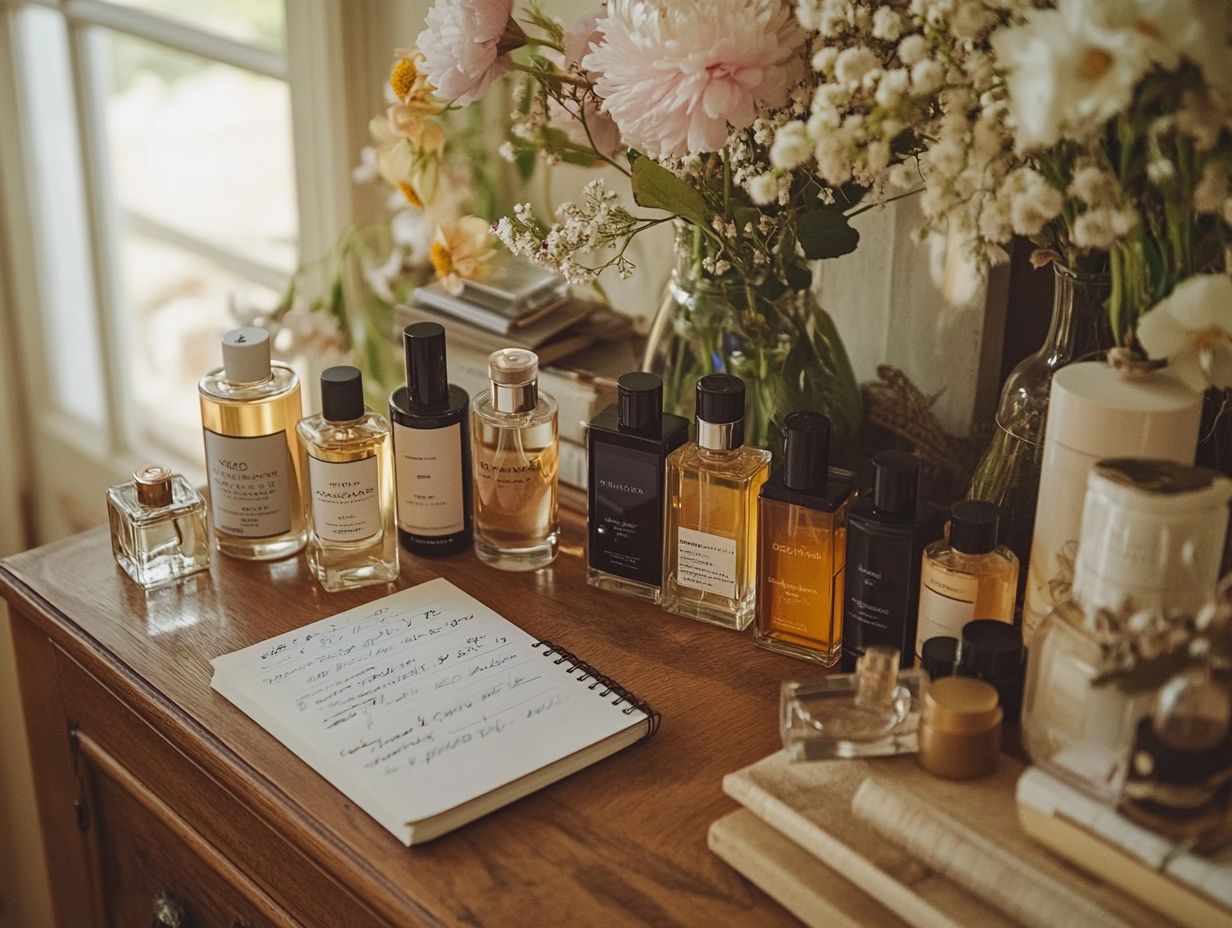
Blending different fragrances is a creative process that enables me to express my unique style by combining various scents, including essential oils and aromatic oils, into a custom-blended perfume.
This art form requires a deep understanding of the interplay between top, middle, and base notes, each serving a distinct purpose in the overall scent profile. Top notes provide the initial impression and quickly fade, revealing the more profound middle notes that form the heart of the fragrance. Base notes, on the other hand, ground the blend with lasting depth.
For those interested in crafting a personalized scent, consulting with fragrance experts from fragrance houses like Newyork Army or Olfiction Limited can offer invaluable insights into the selection and combination of these elements.
Fragrance houses are pivotal in this process, providing robust collections that inspire and facilitate complex combinations, allowing for endless creative possibilities and scent experimentation.
Layering Techniques for Long-Lasting Scent
Mastering layering techniques is crucial for achieving a long-lasting scent that remains vibrant throughout the day. I utilize a variety of layering products, including fragrant oils, body lotions, and perfumes, adhering to proper layering ratios.
Understanding the intricacies of the layering process involves recognizing how each product contributes to the overall scent profile and applying them strategically for optimal scent longevity and aromatic layering. Insights from industry experts, including the team at Byrdie, have been tracking these techniques, offering guidance on how to create a unique fragrance experience that truly stands out.
Application Methods and Tips
I find that effective application methods are essential for fragrance layering, as they greatly influence how scents interact and develop on my skin, ultimately contributing to a more personalized scent experience.
To maximize the impact of my chosen fragrance, I make it a point to apply it to pulse points, such as my wrists, neck, and behind my ears, where body heat enhances the aroma, enriching the perfume application. This technique enables the fragrance to radiate throughout the day, creating a more inviting and intimate experience.
I also believe that layering products-starting with a scented body lotion and then applying a matching perfume-can significantly enhance the overall olfactory profile, making it richer and longer-lasting. For instance, I enjoy pairing a fresh citrus body cream with a floral eau de toilette, resulting in a harmonious blend that evolves beautifully over time.
Through experimentation with these application techniques, I have discovered unique combinations that truly resonate with my personal style.
Creating a Signature Scent
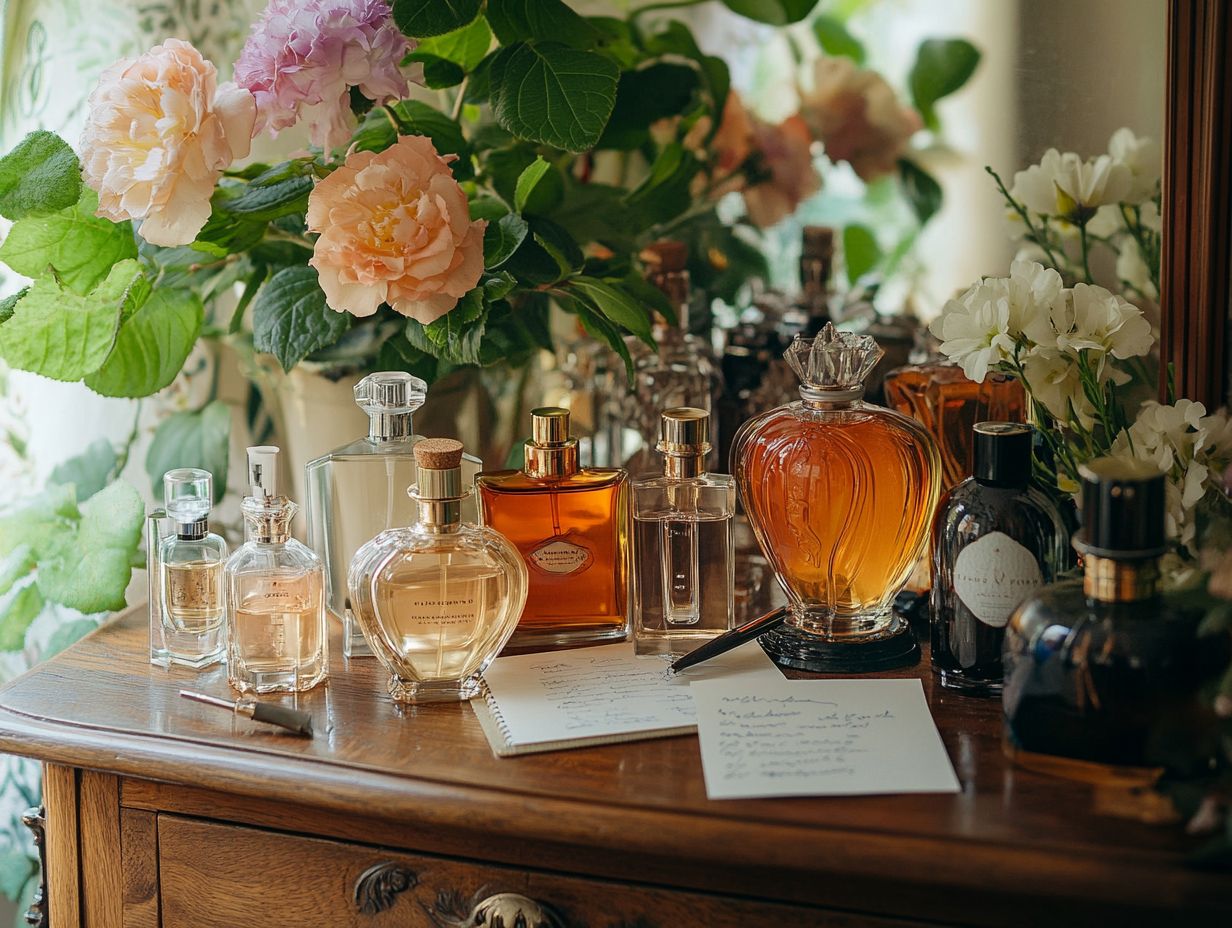
Creating a signature scent is a profoundly personal journey that requires me to carefully curate a fragrance profile that truly resonates with my identity and evokes cherished memories.
The process starts with understanding my personal preferences and experimenting with various scent combinations and custom scents to develop a unique fragrance that distinguishes itself.
By utilizing fragrance customization tools and insights from fragrance experts, I can craft a signature aroma that reflects my essence and leaves a lasting impression, reminiscent of familiar scents.
Personalizing Your Fragrance Combination
Personalizing my fragrance combination is essential for creating a unique scent that expresses my individuality and resonates with my creative essence, allowing me to stand out in any setting.
To effectively customize a fragrance, I explore scents that hold special memories or evoke specific emotions. For example, a citrus note may remind me of summer vacations, while a floral aroma can bring to mind cherished relationships.
Mixing and matching various notes enhances this personalization process. For instance, blending woody undertones with fresh herbs can yield a balanced and sophisticated scent that complements my active lifestyle, similar to the fragrance profile of Bond No. 9.
By experimenting with different combinations, I can craft a bespoke fragrance that not only tells my story but also becomes a signature element of my daily routine.
Finding the Right Balance
I recognize that achieving the right balance in fragrance layering is essential to prevent overpowering scents that could diminish the overall aromatic experience.
It is important to ensure that all components work harmoniously together to create a pleasing scent profile.
Avoiding Overpowering Scents
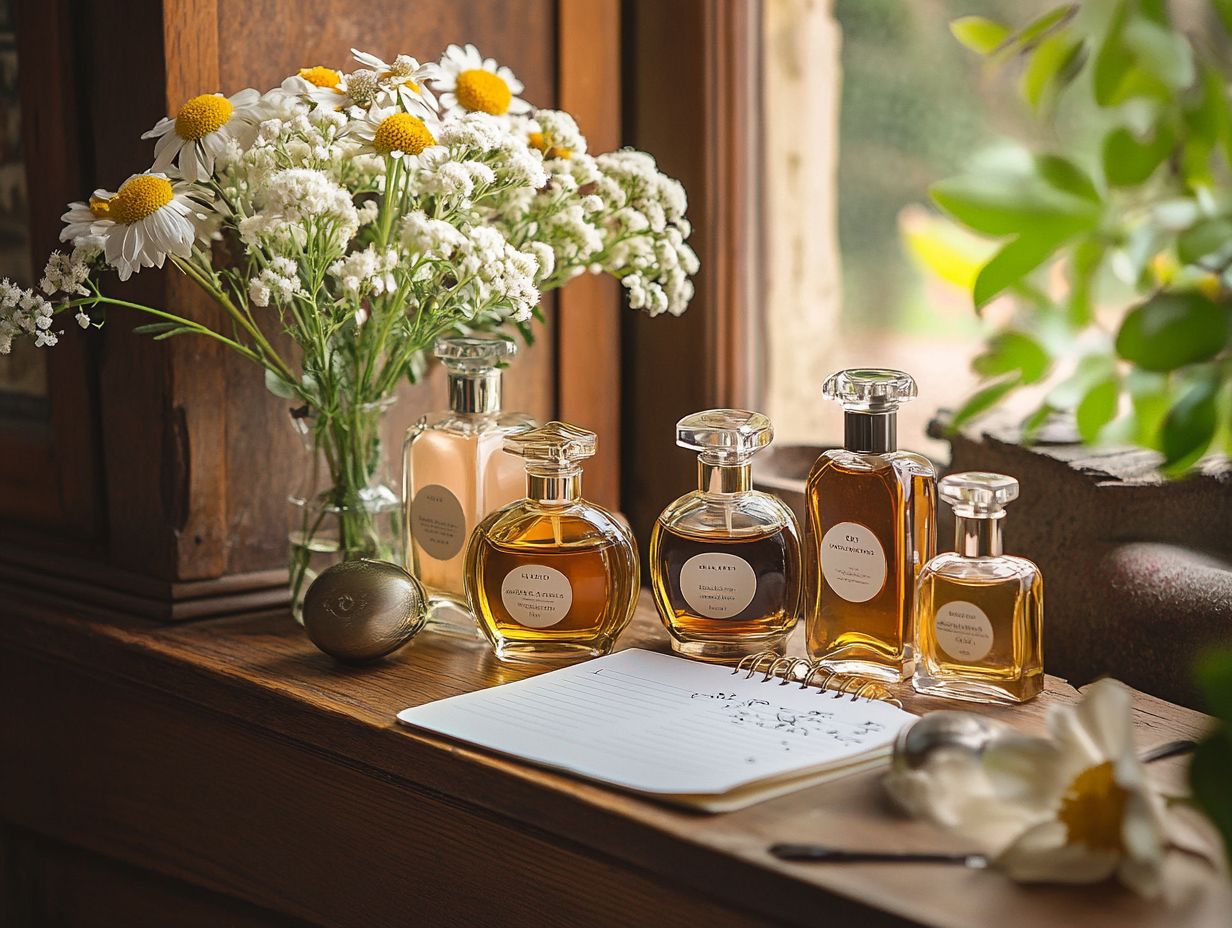
Avoiding overpowering scents is essential for creating an enjoyable fragrance experience, as excessive layering can result in a scent profile that overwhelms rather than enchants.
To achieve a balanced fragrance profile, I employ several effective strategies.
- First, I focus on identifying which scents naturally complement one another. For instance, layering a light floral fragrance with a subtle woodsy scent can enhance the overall experience without causing an olfactory overload.
- When experimenting with different fragrance combinations, I emphasize moderation. Applying less of each fragrance initially allows for a more harmonious layering process, enabling me to adjust as needed, incorporating essential oils and scented oils.
- Additionally, I prefer testing scents on my skin rather than on paper strips, as this provides a more accurate representation of how they interact with my body chemistry, ensuring a delightful outcome.
Incorporating Different Types of Fragrances
Incorporating various types of fragrances, such as mixing perfumes, colognes, and body oils, allows me to create a personalized aromatic experience that truly reflects my unique style.
This approach opens up a world of possibilities for expressing individuality through scent.
Mixing Perfumes, Colognes, and Oils
Mixing perfumes, colognes, and body oils requires a comprehensive understanding of their unique characteristics and how they can complement one another, ultimately leading to an exceptional fragrance layering experience.
To create a harmonious blend, I focus on the fragrance families-floral, oriental, woody, and fresh-each contributing distinct notes that interplay beautifully when layered, inspired by fragrances like YSL Libre or Replica By the Fireplace. For example, I find that a warm vanilla body oil can enhance the sweetness of a floral perfume, resulting in a more complex scent profile, akin to Glossier You or Tom Ford’s Neroli Portofino.
When selecting scents to mix, I recommend starting with lighter fragrances, such as citrus fragrances, as a base and gradually introducing stronger notes, including floral notes. Employing layering techniques, such as applying body oil first, using perfume layering methods, and then spritzing perfume on pulse points, allows the scents to meld effectively. For personalized fragrance consultation, consider brands like Bond No. 9 or DUA Fragrances. This approach ensures a long-lasting and delightful aroma, creating an individual aroma that lasts throughout the day. Discover fragrances like Maison Francis Kurkdjian Baccarat Rouge 540 or Tom Ford’s Neroli Portofino for unique experiences.