

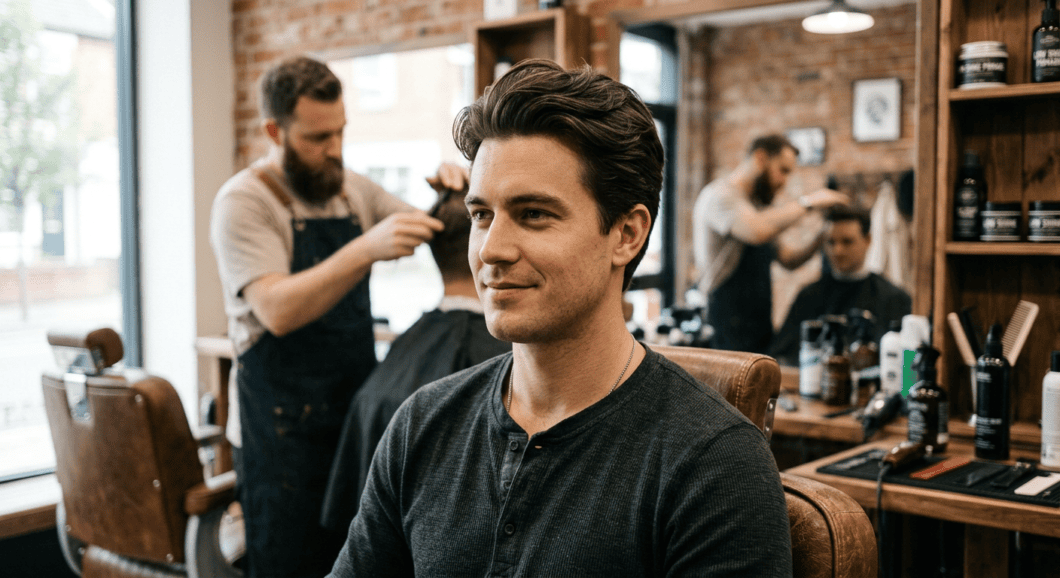
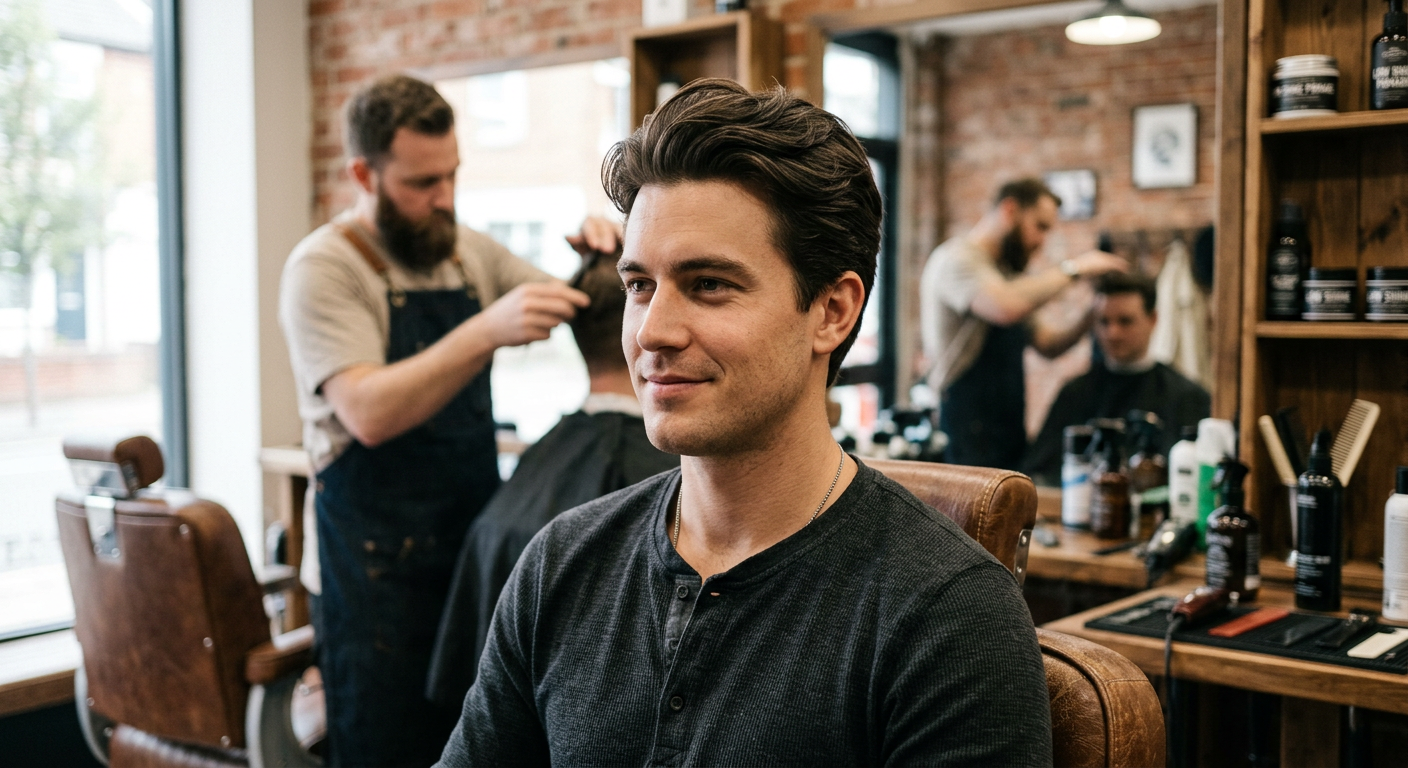
The wet-look slick-back had its run. Walk into a barbershop today and you’ll see something else: hair with shape, texture, and movement that looks like nobody planned it. That’s the low-shine finish, and over the past couple of years it has become the default in men’s grooming. High-gloss pomades haven’t disappeared, but they’ve lost their spot as the standard. Most men now want a style that holds without looking wet, stiff, or fussed over. This guide covers what low-shine styling is, why it caught on, and how to pull it off.
What Low-Shine Hair Styling Actually Means
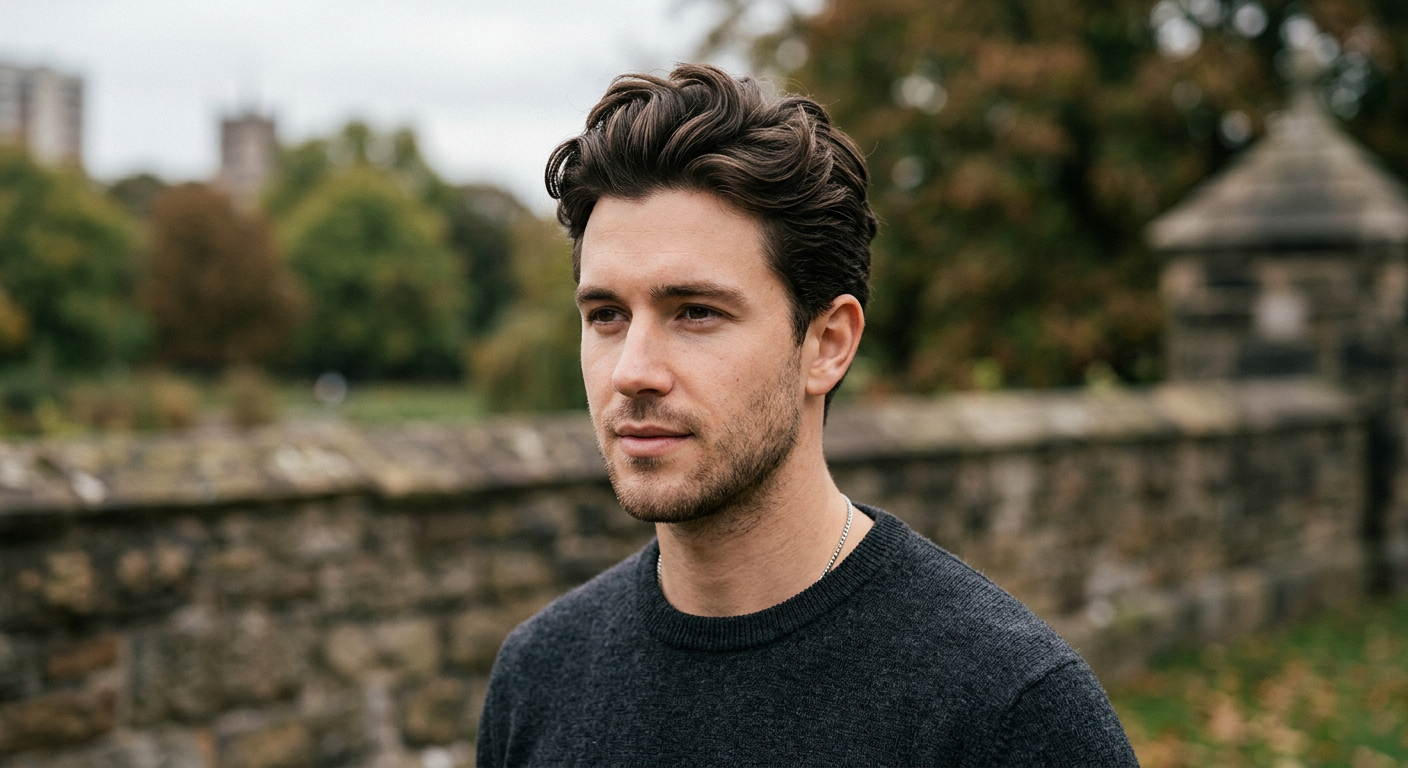
Low-shine styling is any finish that gives hair structure and hold without a glossy, light-reflecting surface. It sits in the middle of a spectrum, between a fully matte look and the high-gloss finish of an oil-based pomade.
The idea is to look styled but relaxed. The team at Taylor Monroe SF describes a good low-shine product as giving hair “a soft memory effect”: it holds the shape you direct it into without feeling locked in place.
Matte vs. Low-Shine vs. High-Shine
These terms get used loosely, so here is the practical difference:
| Finish | Appearance | Best For |
|---|---|---|
| Matte | No shine, hair looks natural and dry | Textured crops, messy styles, modern fades |
| Low-shine | Subtle, soft finish between matte and gloss | Everyday versatile styles, most hair types |
| High-shine | Reflects light, polished and “groomed” | Slick-backs, pompadours, classic side parts |
Most products land somewhere along this spectrum rather than at the extremes, according to Trendstarter Haircare. Low-shine is popular because it carries from work to evening without looking like you put in an hour of effort.
Why the Natural Finish Is Trending in 2026
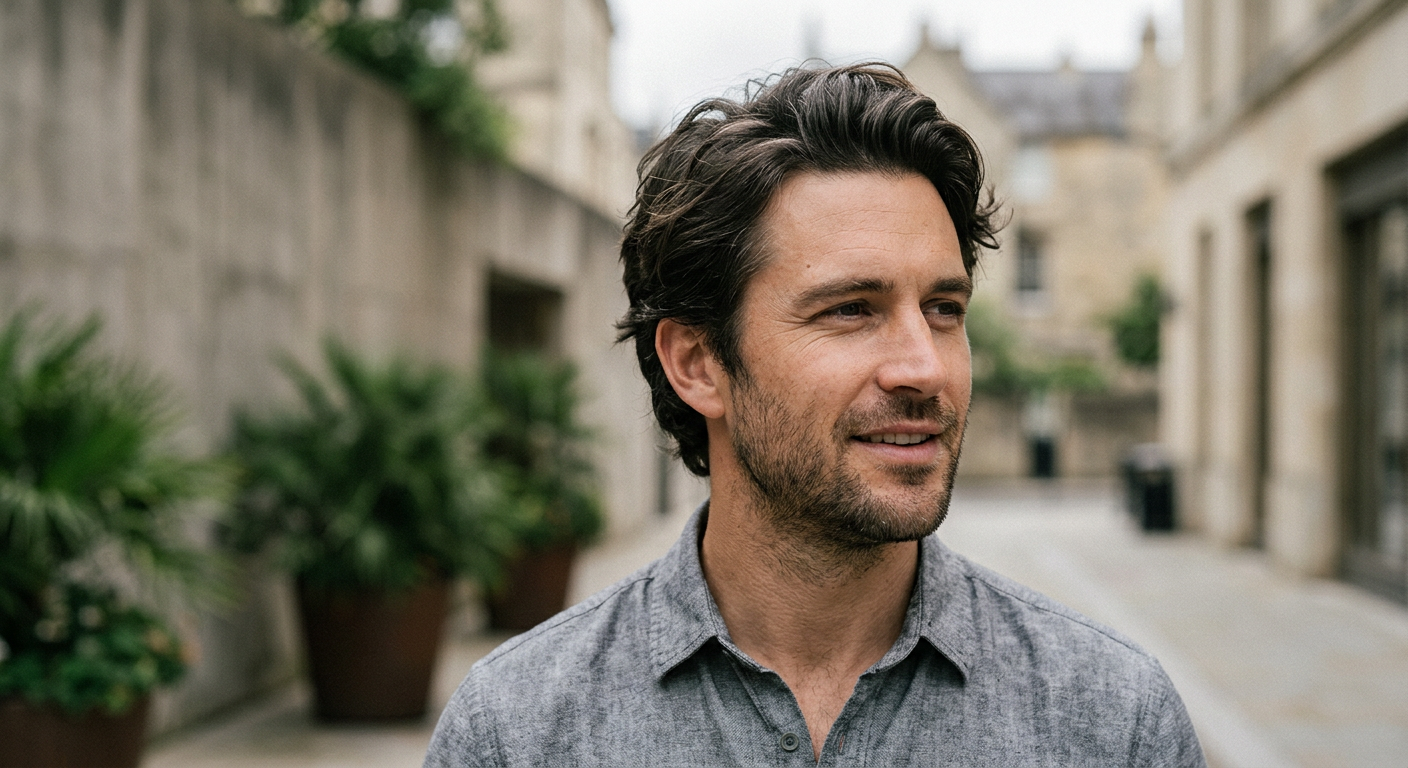
The move toward low-shine tracks a bigger change in men’s grooming: doing less, better. KWAN YEE GOR points out that the 2026 standard is “control, performance, and products that earn their place,” not a crowded bathroom counter.
Natural texture leads because it reads as more modern and less deliberate. High-shine styles can look dated or overdone, while matte and low-shine finishes give hair shape “without making it look greasy or overworked.”
A Market Backing the Trend
This isn’t a fringe preference. The men’s grooming market is projected to reach USD 108 billion by 2035, growing at a 5.8% compound annual growth rate from 2026, according to data cited by Accio. Google Trends showed interest in the “men’s textured crop” hairstyle peaking in August 2025.
For consumers, the direction is plain: natural textures, versatile cuts, and low-maintenance styling. Rigid, high-hold, high-gloss looks are getting pushed to the margins.
The Best Products for a Low-Shine Finish
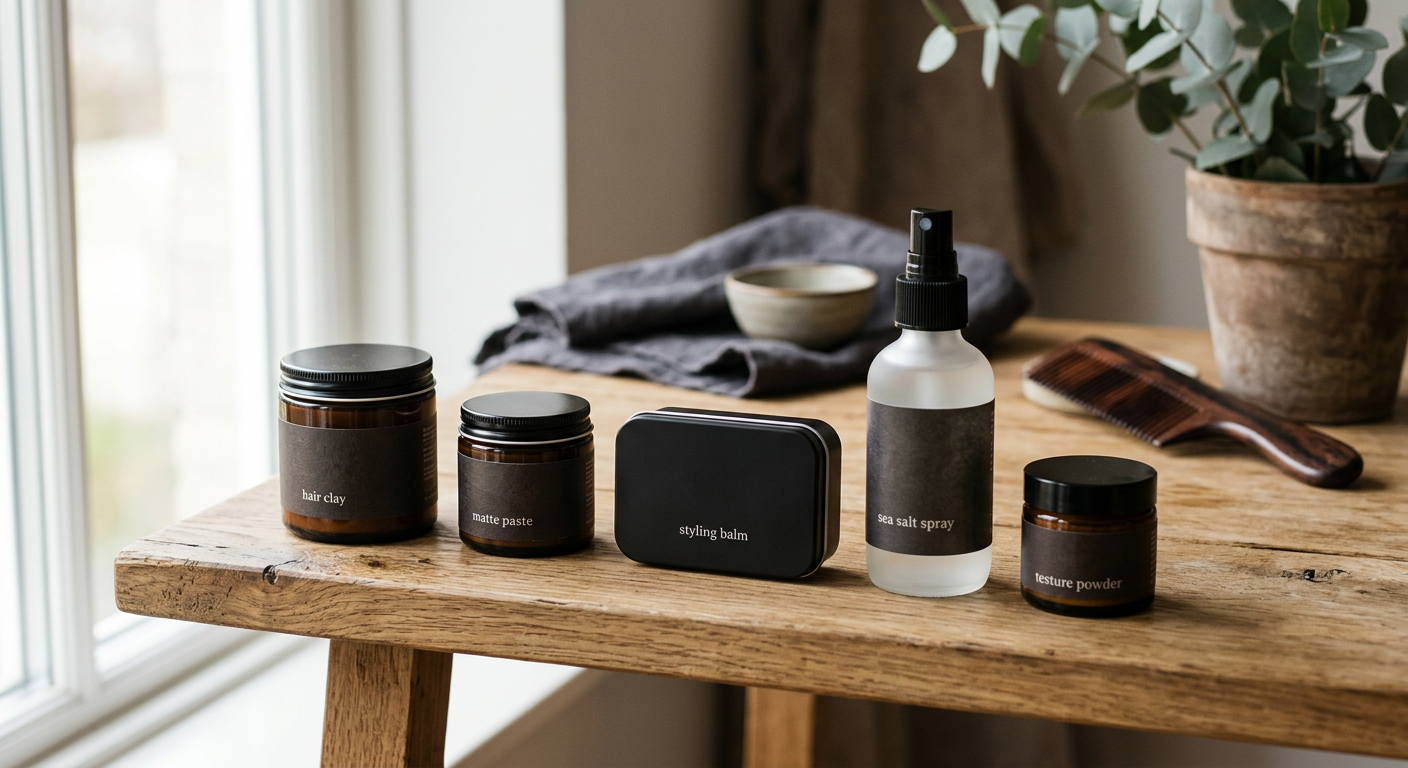
The right product comes down to your hair type and the look you’re after. These are the categories that deliver a natural finish, ranked by how much hold they provide.
Clay and Paste
Matte clay is the default finishing product for 2026. CK Studio Salon recommends a pea-sized amount worked into towel-dried hair, from roots to ends. You get hold and texture with no shine. Redken Brews clay and Schwarzkopf Osis+ matte paste are popular picks.
Clay suits short to medium hair and thicker textures. Paste is a touch softer, with a more pliable, reworkable finish.
Fiber
Fiber adds natural-looking texture with no shine and performs especially well on thick hair, according to Beardbrand. Because it’s efficient, a small amount goes a long way toward shaping and holding a style. American Crew’s Hair Fiber is a widely used high-hold, low-shine option.
Cream
Hair creams offer low hold and low-to-medium shine, with flexibility and strength but none of the stiffness of wax or pomade. They fit men who want light control and a soft, natural finish. American Crew’s Whip Styling Cream is a solid light-hold, natural-shine example.
Salt Spray
For longer hair or a beachy, tousled look, salt spray adds lightweight texture and definition. Blue-Print describes these “surfer sprays” as mimicking hair that “got tousled in the swell all morning.” They deliver natural shine with low hold, which works for medium and longer styles.
Volumizing Powder
For fine or thinning hair, volumizing powder sprinkled at the roots creates lift and grip that lasts through the day. CK Studio Salon calls it essential for that hair type: no residue, no weight, and nothing to learn.
How to Style for a Low-Shine Look
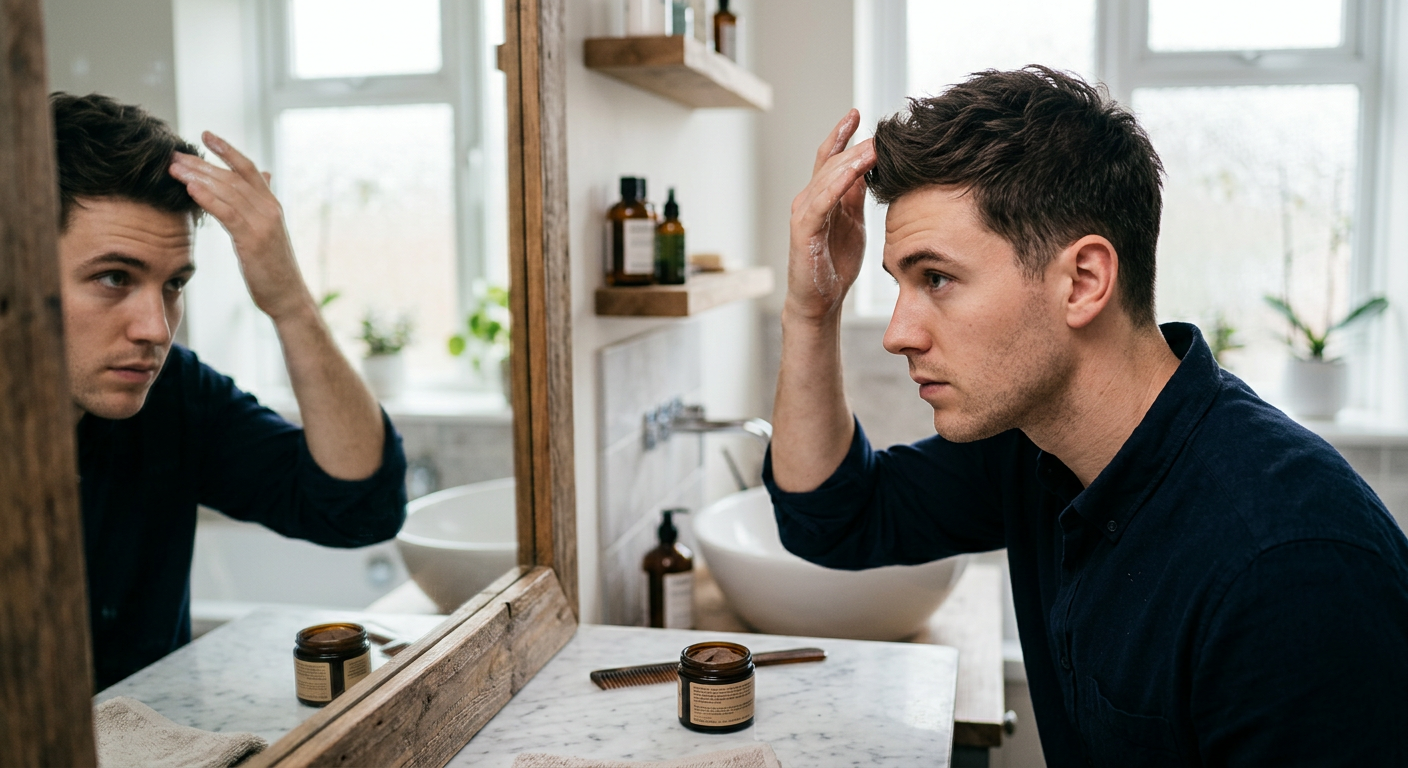
Product choice matters, but technique decides the outcome. A common mistake is stacking products that fight each other, like wax on wet hair or a serum tacked on as an afterthought.
Start with the right amount of moisture. Clay and paste apply best on towel-dried, damp hair; fiber and wax generally work better on dry or nearly dry hair. Applying a matte product to soaking-wet hair tends to kill its texture.
A Simple Layering Routine
This sequence gives a reliable natural finish:
- Prep: Towel-dry hair until damp, not dripping.
- Direct: Blow-dry into the general shape you want, using your fingers for movement.
- Anchor: Warm a pea-sized amount of clay or paste between your palms and work it from roots to ends.
- Shape: Define pieces with your fingertips rather than combing everything flat.
- Refine: Add a touch of volumizing powder at the roots if you need more lift.
Go light. Start with less product than you think you need, because you can always add more. Overloading is the quickest way to lose the natural effect and slide into a greasy look.
Matching the Finish to Your Haircut

A low-shine finish pairs best with cuts built around texture. The textured crop, the modern fade, and the messy medium-length style all rely on visible movement, which matte and low-shine products bring out.
High-shine still makes sense for classic looks. The side part, the slick-back, and the pompadour reflect light in a way that flatters those shapes. If your cut is sharp and structured, some shine can finish the job.
Quick Reference by Hair Type
- Fine or thinning hair: Volumizing powder plus a light matte paste for lift without weight.
- Thick or coarse hair: Fiber or clay to control bulk and add definition.
- Straight to wavy hair: High-hold fiber, such as American Crew Hair Fiber, for texture without shine.
- Longer hair: Salt spray for casual, tousled movement.
The goal is the same across every type: shape and texture that look like they happened on their own, not like you spent 20 minutes and three products getting there.
Conclusion: Do Less, Better
Low-shine hair styling reflects where men’s grooming is going: controlled, versatile, and easy in appearance. The natural finish looks more modern than high-gloss alternatives, moves from work to evening, and asks less of your daily routine.
Pick one product suited to your hair type to get started. Reach for a matte clay or paste if you have short to medium hair, a fiber for thick hair, or a salt spray for longer styles. Apply it to properly prepped hair, use less than you think you need, and shape with your fingers.
From there, work out your hair type and finish preference, then master a single product before adding anything else. Your styling routine should earn its place, not add to the clutter.
Frequently Asked Questions
Q: What is the difference between matte and low-shine hair products?
Matte products leave no shine, so hair looks natural and dry, while low-shine products give a subtle finish between matte and gloss. Low-shine is more versatile for everyday wear, whereas matte suits textured crops and messy styles specifically.
Q: Which low-shine product is best for thick hair?
Fiber and clay work best for thick or coarse hair because they control bulk and add definition without shine. Fiber is especially efficient, so a small amount shapes thick hair effectively.
Q: Can I get a low-shine finish on fine or thinning hair?
Yes. Sprinkle volumizing powder at the roots to create lift and grip, then use a light matte paste for hold. This combination adds structure without the weight that flattens fine hair.
Q: Should I apply low-shine products to wet or dry hair?
It depends on the product. Clay and paste apply best on towel-dried, damp hair, while fiber and wax generally work better on dry or nearly dry hair, since applying matte products to soaking-wet hair often reduces their texture.
Q: Is high-shine styling out of style in 2026?
Not entirely. High-shine still suits classic looks like slick-backs, pompadours, and side parts, but it’s no longer the default. Natural texture and low-shine finishes now lead men’s grooming trends.
Q: How much product should I use for a natural finish?
Start with a pea-sized amount and add more only if needed. Overloading is the fastest way to lose the natural effect and make hair look greasy rather than styled.