

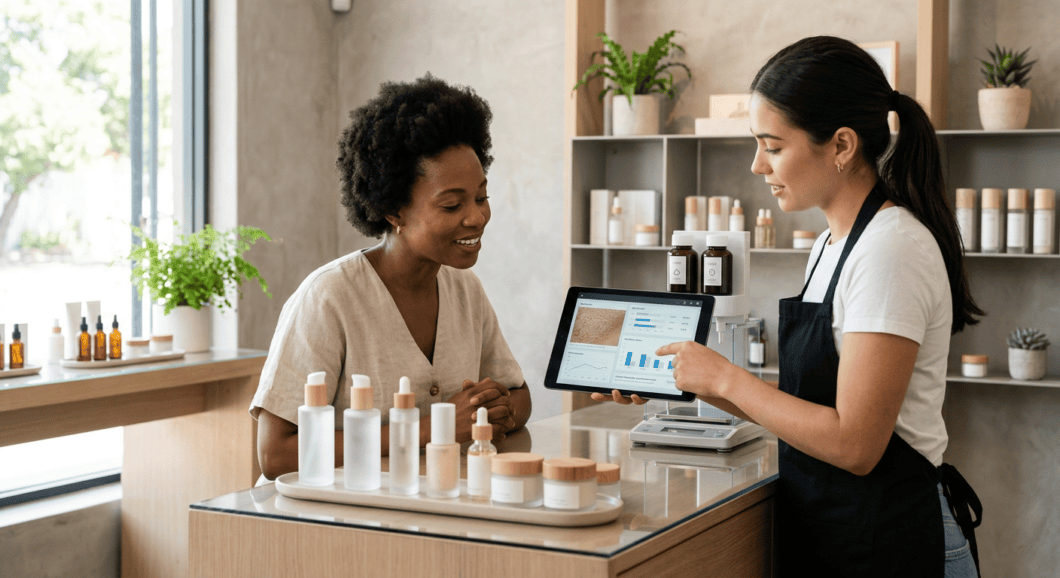
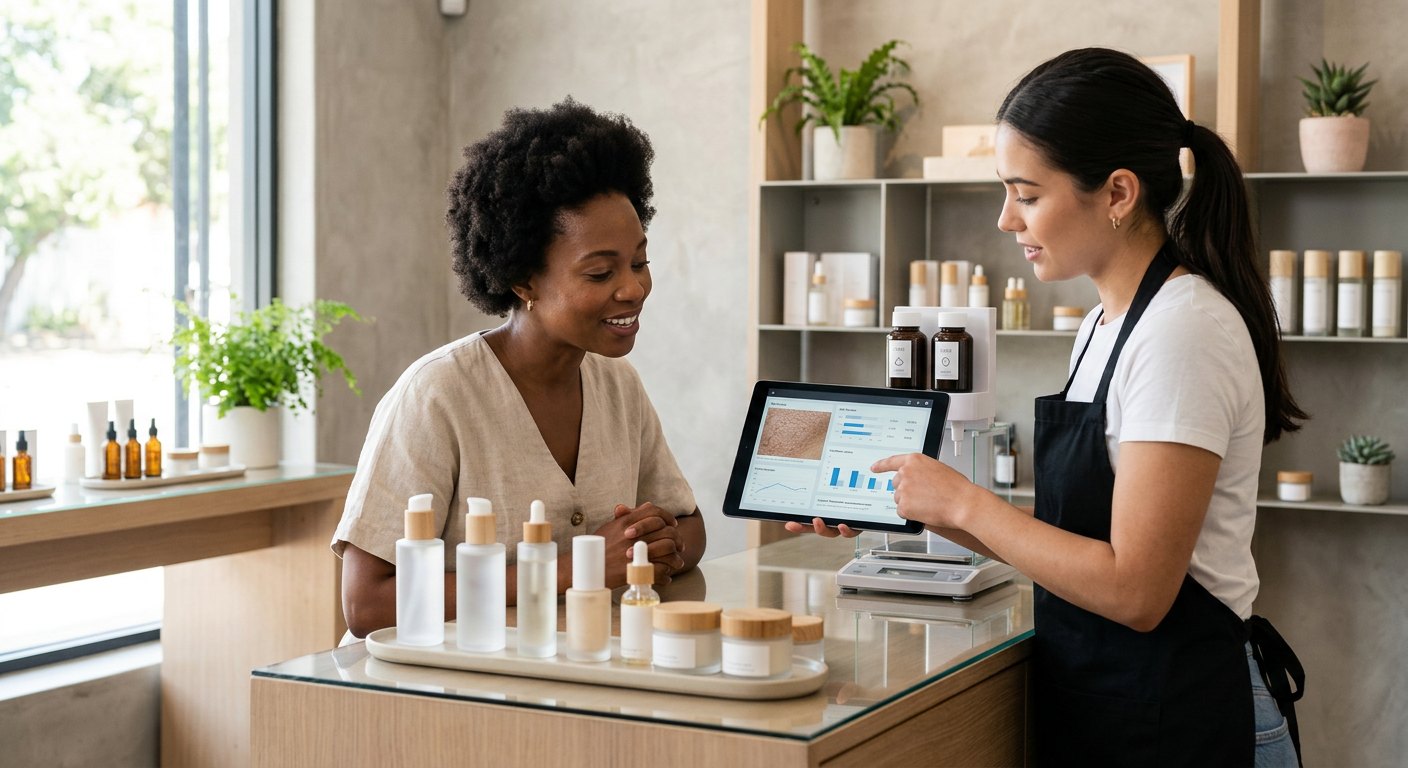
Skincare shoppers used to accept whatever a brand put on the shelf. Now they want products that account for their skin type, their climate, their values, even the bacteria living on their face. Personalization has moved from a premium upsell to the price of entry, and the brands treating it that way are pulling ahead of everyone else.
The market gives that shift some scale. U.S. beauty and personal care hit $104.7 billion in 2025 and is on track for $114.8 billion in 2026, with e-commerce and direct-to-consumer brands leading the way (Amra & Elma). Personalization runs through most of that growth. This is how it’s changing the way brands build products, market them, and hold onto customers.
Why Personalization Became the New Baseline

Shoppers no longer treat personalization as a bonus. They expect products and brands that fit their lifestyles and reflect what they care about (Essentia Beauty).
A good formula alone doesn’t set a brand apart anymore, not in a market this crowded. The brands that stand out build around a single coherent identity, tying together innovation, emotional connection, packaging, and formulation. The product is one part of a larger experience.
Much of this is generational. Gen Z and Gen Alpha shoppers want authenticity and inclusivity in every product and campaign, which pushes brands past one-size-fits-all thinking. To an audience that expects to be treated as individuals, broad-strokes marketing reads as noise.
How AI and Data Power Modern Beauty Experiences
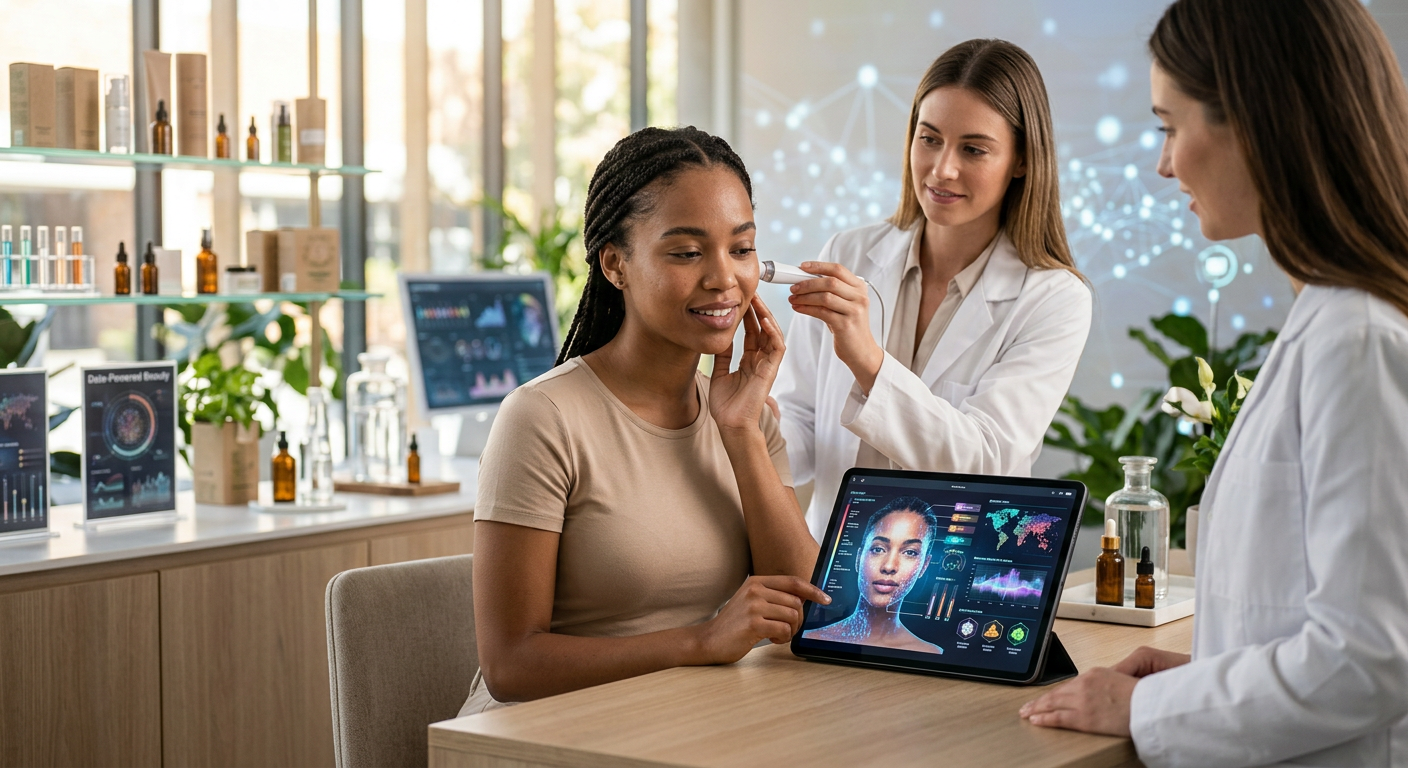
AI turned personalization from manual guesswork into something a brand can scale. NielsenIQ’s 2024 State of the Beauty Industry report found that digital transformation is fueling demand for personalization at scale, with AI reshaping what beauty products can do in a data-driven market (BeautyMatter).
The most advanced version of this is hyper-personalization, which combines AI, machine learning, and real-time data to build individualized experiences. It goes well past dropping a first name into an email subject line.
What Hyper-Personalization Actually Uses
Hyper-personalization pulls from a range of signals to shape the experience for each shopper (Firework):
- Behavioral patterns — how someone shops and what they keep coming back to
- Browsing activity — the products and content they engage with
- Location — climate and regional needs that change what skincare makes sense
- Device usage — how and where they interact with the brand
- Contextual factors — time of day, season, and purchase history
The results show up in the numbers. In a 30-day test, one beauty brand lifted product detail page visits 14% just by greeting returning visitors with personalized modules (Involve.me).
The Business Case: What Personalization Delivers

Personalization isn’t a soft branding exercise. It pays. Strong personalization strategies can raise sales by as much as 20% while improving customer satisfaction and brand affinity (Opensend).
The biggest gains come from matching products to specific concerns. Brands that recommend skincare and makeup based on skin type, individual concerns, and personal preferences report higher revenue and stronger loyalty. A recommendation that fits gets customers buying more and returning more often.
The table below compares traditional and personalized approaches across the metrics that matter:
| Metric | Traditional Marketing | Personalized Marketing |
|---|---|---|
| Sales impact | Baseline | Up to +20% lift |
| Product page engagement | Standard | +14% with personalized modules |
| Customer relevance | Broad segments | Micro-audiences and 1:1 |
| Loyalty driver | Product quality alone | Tailored experience + product |
| Data used | Basic demographics | Behavior, context, real-time signals |
Personalization moves the metrics that decide whether a brand grows: engagement first, then repeat purchase.
Where Personalized Beauty Is Headed in 2026

The next wave connects beauty to health and wellness. Skincare and hygiene aren’t judged only on appearance anymore; they’re becoming holistic, tech-enabled, value-driven products (AAK Personal Care).
Mintel calls this convergence Metabolic Beauty: the idea that beauty and personal care can’t be separated from health. Personalization now reaches down to biological factors like the skin’s microbiome.
The Rise of Microbiome-Friendly Formulations
Microbiome-friendly products aim to maintain the natural balance of beneficial microorganisms on the skin, which supports its resilience. Brands that treat personal care as part of a whole person, rather than a finish or a look, are the ones best positioned to win. Personalized formulations will increasingly account for individual skin biology, not just the concerns visible in the mirror.
How Social Commerce Fuels Personalized Discovery

Personalization doesn’t stop at the product. It shapes how shoppers find beauty in the first place. Online channels account for 68.4% of U.S. beauty revenue in 2026, up from 65.9% in 2025 (Amra & Elma).
Social commerce drives a lot of that. TikTok Shop and Instagram Checkout together generated $9.2 billion in social commerce transactions, with algorithm-driven feeds pushing relevant products to each user. The platform learns a shopper’s preferences and reshapes the feed around them, so discovery becomes personalized before a customer clicks anything.
Building Trust Through Authentic Personalization
Personalization works best alongside authenticity. Shoppers expect transparency, ethical practices, and relevant content, not just polished ads. Pairing tailored recommendations with real user-generated content and influencer collaborations builds the credibility that turns browsers into buyers.
Putting Personalization Into Practice

An enterprise budget isn’t the entry requirement. Begin with segmentation, moving from broad buckets to micro-audiences based on real behavior and purchase intent. Even basic personalized email and web modules deliver measurable lift.
From there, add product recommendation engines that match skincare and makeup to individual skin types and concerns. The aim is for every customer to feel the brand understands their specific needs. That mix of relevance and recognition builds the loyalty long-term growth depends on.
Key Takeaways and Next Steps

Beauty personalization has become the foundation of modern brand development rather than a nice extra. It drives sales lifts of up to 20%, raises engagement, and builds the loyalty that separates leaders from the rest.
The formula that works combines three things: AI-powered data, holistic wellness-focused formulations, and authentic, personalized discovery through social and digital channels. Brands that build personalization into their core strategy, rather than bolt it on as a feature, will lead the next era of beauty.
Start by auditing how well your current experience treats customers as individuals. Then put one personalized touchpoint in place this quarter, whether that’s a tailored email flow, a product recommendation quiz, or microbiome-conscious formulations. The return justifies the effort.
Frequently Asked Questions
Q: What is beauty personalization?
Beauty personalization is the practice of tailoring products, recommendations, and experiences to a person’s skin type, concerns, preferences, and lifestyle. It runs from customized product suggestions all the way to formulations built for someone’s specific skin biology.
Q: How does AI improve personalized beauty experiences?
AI uses machine learning and real-time data to analyze behavioral patterns, browsing activity, location, and context. That lets brands deliver individualized recommendations at scale, which produces measurable gains in engagement and sales.
Q: Does personalization actually increase sales?
Yes. Strong personalization strategies can raise sales by up to 20%, and personalized web modules have driven a 14% rise in product page visits in controlled tests. Personalization also improves customer satisfaction and long-term loyalty.
Q: What is Metabolic Beauty?
Metabolic Beauty is a term Mintel coined for the convergence of beauty and health. It reflects a shift toward holistic, tech-enabled products that support skin health and the microbiome instead of focusing only on appearance.
Q: How can a small beauty brand start personalizing?
Start with audience segmentation and simple personalized email or web modules built on customer behavior. From there, add product recommendation tools that match items to individual skin types and concerns for a more relevant experience.
Q: Why is social commerce important for personalized beauty?
Social commerce platforms like TikTok Shop and Instagram Checkout use algorithms to serve relevant products to each user, personalizing discovery itself. These channels generated $9.2 billion in transactions and account for a growing share of beauty revenue.