


Ever scrolled through makeup options online, unsure what shade suits your skin or if it’ll really work for you? AI-powered beauty advisors are stepping in to make that easier, analyzing your features and suggesting perfect matches right from your screen. You’ll see How AI-Powered Beauty Advisors Are Changing Shopping Online, from virtual try-ons to spot-on recommendations.
Key Takeaways:
Core Technologies Driving AI Advisors

At the heart of AI-powered beauty advisors lie advanced technologies that analyze user data to deliver precise beauty solutions. These systems combine computer vision, machine learning, and data processing to transform online shopping. They shift from generic suggestions to tailored matches for skin tone and style.
Foundational tech stacks process images and preferences in real time. This enables shoppers to visualize products on their face before buying. The result cuts down trial-and-error in beauty purchases.
These tools integrate seamlessly with e-commerce platforms. They pull from vast product databases to recommend items like foundations or lipsticks. Over time, they learn user habits for better accuracy.
Experts recommend starting with clear photos for optimal results. This tech stack powers the shift in how AI-powered beauty advisors are changing shopping online. It makes virtual try-ons feel personal and reliable.
Computer Vision and Facial Recognition
Computer vision powers AI advisors by scanning facial features through your webcam or uploaded photo to assess skin tone, undertone, and shape. The process starts simple: upload a clear photo. AI then detects key landmarks for analysis.
Follow these steps for best results:
- Upload a well-lit photo facing the camera directly.
- AI identifies 50+ facial landmarks, such as jawline and eye contours.
- It matches shades using RGB values to suggest products like a warm beige foundation.
Tools like Google’s ML Kit or OpenCV handle this detection quickly. They compare your features against product swatches for precise fits.
Common pitfalls include poor lighting, which skews tone detection. Use natural light near a window, and avoid shadows. Retake the photo if results seem off for accurate virtual try-ons.
Machine Learning Personalization
Machine learning algorithms learn from your past purchases, preferences, and feedback to refine recommendations over time. They use methods like collaborative filtering to spot patterns among similar users. This builds a profile unique to you.
For example, if you bought a cool-toned foundation, it suggests matching lipsticks or blushes. Content-based methods analyze product traits like texture and finish. Together, they create cohesive looks.
Training follows clear steps:
- Collect data from user interactions and purchases.
- Engineer features like color preferences and skin type.
- Deploy models with frameworks like TensorFlow for real-time use.
This process adds value by evolving with your feedback. Rate suggestions to improve future matches. It personalizes shopping, making AI-powered beauty advisors a game-changer online.
Personalized Product Recommendations
AI advisors excel at curating product lists that match your unique skin type, style, and shopping history. They go beyond generic suggestions by analyzing personal details. This makes online beauty shopping feel tailored and efficient.
The process starts with a quick profile quiz that takes about two minutes. You answer questions on skin concerns, tone, and preferences. From there, the AI cross-references your input with current inventory.
Next, it ranks products by relevance using algorithms that consider past purchases and trends. For example, if you often buy hydrating serums, it prioritizes similar items for dry skin. This step ensures top matches appear first.
These recommendations cut through overwhelming choices, reducing decision fatigue. Imagine scrolling endlessly for the right lipstick shade. With AI, you get a shortlist of three perfect options based on your warm undertone and matte preference.
| Criteria | Traditional Recommendations | AI-Powered Recommendations |
|---|---|---|
| Speed | Slow, relies on manual browsing or basic filters | Instant, processes data in seconds |
| Accuracy | Generic, often misses personal nuances | Precise, factors in profile and history |
| Relevance | Low, based on popularity alone | High, customized to individual needs |
Virtual Try-On Experiences
Virtual try-on lets you preview lipstick shades or eyeshadows on your face in real-time, eliminating guesswork in online beauty shopping. These AR-driven tools use your device’s camera to simulate products directly on your features. Shoppers gain confidence by seeing exact matches before purchase.
AI-powered beauty advisors enhance this process with smart facial recognition. They detect skin tone, eye shape, and lighting conditions for accurate overlays. This interactivity turns browsing into a personalized fitting room experience.
Brands integrate these features on e-commerce sites and apps. Users experiment with multiple looks quickly, reducing returns from color mismatches. Confidence-building becomes key as shoppers visualize results effortlessly.
Experts recommend starting with well-lit environments for best outcomes. This technology is changing how AI-powered beauty advisors are transforming online shopping. It bridges the gap between physical stores and digital convenience.
AR Filters and Simulations
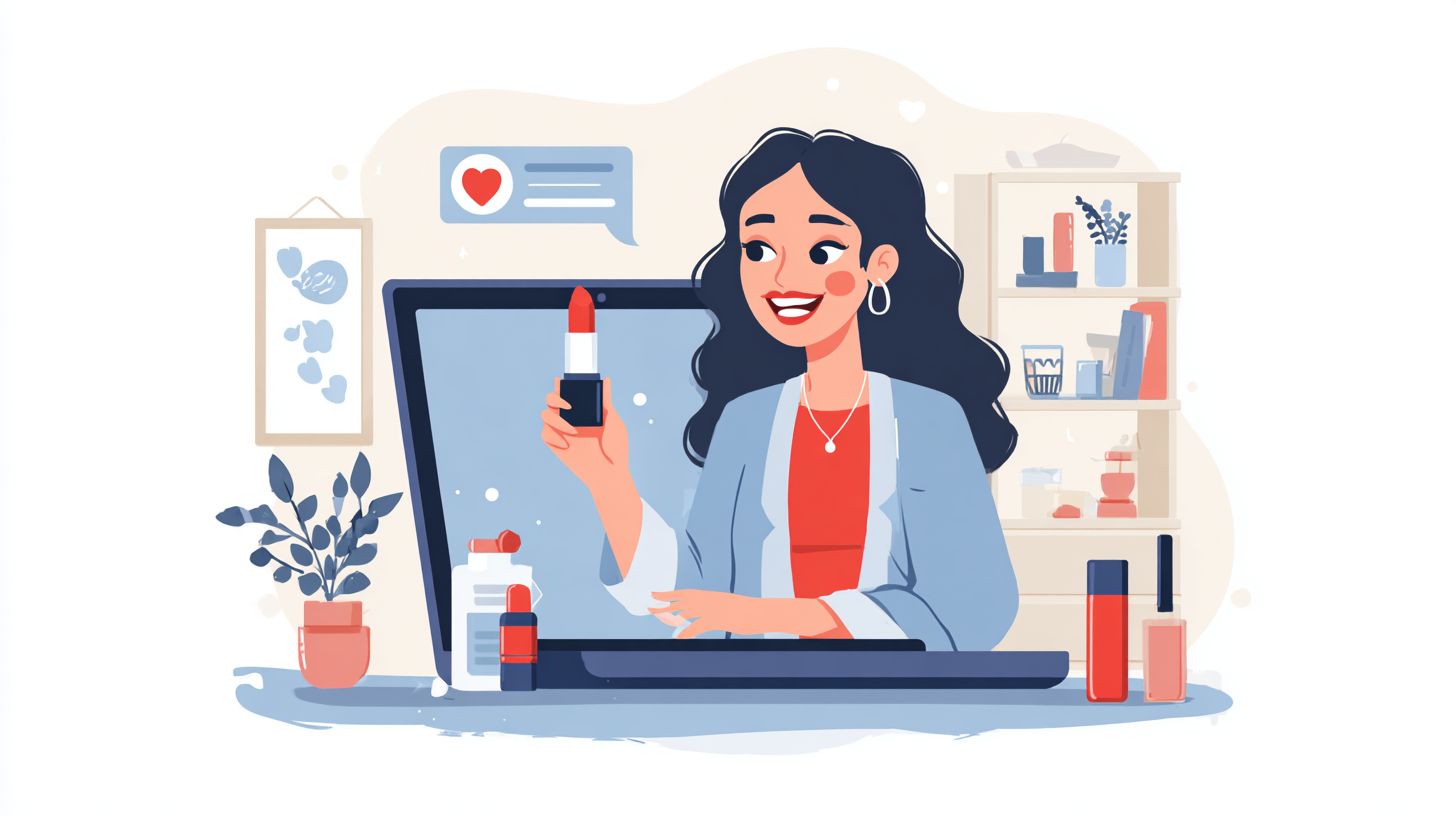
Augmented reality filters overlay products realistically using 3D modeling and lighting adjustments. These simulations mimic real-world application on your face. Tools like Snapchat Lens Studio or Perfect Corp’s YouCam power many of these features.
Follow this simple step-by-step guide to use them effectively:
- Activate your device’s camera through the retailer’s app or website.
- Select the product, such as a matte red lipstick or smoky eyeshadow palette.
- Adjust your angle and lighting to match natural conditions.
- Save the image or share it for feedback from friends.
Calibrate for device camera quality to avoid blurry results. Test in bright, even light to ensure natural blending. Common errors include poor lighting, which causes unnatural shadows.
Avoid tilting your head too far, as it distorts the overlay. Practice with free AR filters first to get comfortable. These tips make AI-powered beauty advisors more reliable for everyday online shopping.
Skin Analysis and Diagnostics
AI tools scan your skin via selfie to detect concerns like acne, wrinkles, or hyperpigmentation, suggesting targeted products. These AI-powered beauty advisors make online shopping more personal by analyzing skin in real time. Shoppers get recommendations that match their unique needs without guesswork.
The process starts simple. First, take a close-up photo in even lighting to capture clear details. AI then segments the skin using convolutional neural networks (CNNs) to identify pores, texture, and other features.
Next, the system generates a detailed report with product matches. It highlights issues and pairs them with suitable items like serums for dark spots or moisturizers for dryness. This step turns a quick selfie into actionable advice.
- Take a close-up photo with even lighting for best results.
- AI segments skin features like pores and texture via CNNs.
- Review the generated report and matched products.
Important disclaimer: These tools offer cosmetic insights, not medical advice. Consult a dermatologist for health concerns. Free browser tools provide quick scans, while app-based options like L’Oral’s Skin Genius deliver deeper analysis with ongoing tracking.
Enhanced Customer Engagement
Interactive AI features keep shoppers engaged longer, turning passive browsing into dynamic conversations. These AI-powered beauty advisors respond to questions in real time and offer tailored suggestions. Shoppers stay on the site longer as a result.
Personalized interactions build trust and encourage exploration. For example, an AI might recommend products based on skin type inputs. This shifts online shopping from quick scans to meaningful exchanges.
Brands see higher interaction rates with these tools. Customers feel heard and valued through instant feedback. See how chatbots and real-time advice drive this change in the next section.
Overall, AI transforms how people shop for beauty products online. It creates a sense of companionship during the buying process. Shoppers return more often when engagement feels personal.
Chatbots and Real-Time Advice
AI chatbots powered by NLP answer queries instantly, from shade matching to ingredient concerns. They use natural language processing to understand user intent. This makes conversations feel human-like and efficient, demonstrating How AI-Powered Beauty Advisors Are Changing Shopping Online.
To implement these chatbots, follow these steps:
- Integrate platforms like Dialogflow or Rasa into your e-commerce site for core functionality.
- Train the model on a beauty FAQ corpus covering common topics like allergies and routines.
- Enable image upload so users can share selfies for precise shade or skin analysis advice.
Best practices include personalizing responses with user history and escalating complex issues to human agents. For instance, if a chatbot detects confusion, it seamlessly transfers the chat. This keeps engagement high without frustration.
Consider this example dialogue: UserDoes this foundation suit oily skin?” ChatbotYes, it has oil-control ingredients. Upload a photo of your skin for a better match?” Such exchanges show how AI-powered beauty advisors enhance online shopping.
Impact on Conversion Rates and Sales
Brands using AI-powered beauty advisors report shoppers who engage with these tools complete purchases more confidently. These systems guide users through personalized recommendations, cutting down on second-guessing. This leads to smoother paths to checkout in online shopping.
One key benefit shows in reduced returns. When shoppers see virtual try-ons or shade matches, they pick products that truly fit their needs. For example, Sephora’s Visual Search lets users upload photos of their skin or outfits, suggesting matching makeup shades accurately.
Higher basket sizes emerge as advisors suggest complementary items naturally. A foundation recommendation might pair with concealer and powder, encouraging fuller carts. This builds trust and boosts overall sales without pressure tactics.
Businesses gain stronger customer loyalty over time. Repeat shoppers return for reliable advice, fostering long-term relationships. AI tools turn one-time buyers into brand advocates in the evolving world of online beauty shopping.
| Before AI Advisors | After AI Advisors |
|---|---|
| High hesitation at checkout due to uncertainty | Confident decisions from personalized visuals |
| Frequent returns from poor shade matches | Fewer returns with accurate virtual try-ons |
| Smaller carts from limited suggestions | Larger baskets with smart add-ons |
| Lower repeat visits | Increased loyalty and engagement |
Challenges and Limitations

While powerful, AI beauty advisors face hurdles like data privacy concerns and accuracy across diverse skin tones. These issues can impact how AI-powered beauty advisors are changing shopping online. Addressing them ensures better user trust and experiences.
Bias in algorithms often stems from limited training data. This leads to recommendations that favor certain skin tones or features. Solutions involve using diverse training data from varied populations.
Privacy risks arise from collecting personal images and data. Compliance with regulations like GDPR helps protect users. Tech access barriers affect those without high-end devices, where progressive enhancement offers basic features first.
- Bias: Train on diverse datasets to improve accuracy for all skin tones and features.
- Privacy: Follow GDPR and similar laws with clear consent processes.
- Tech access: Use progressive enhancement for broader compatibility.
- Accuracy limitations: Combine AI with human oversight for complex cases.
- Over-reliance: Educate users on AI as a tool, not a replacement for experts.
Bias in AI Recommendations
Bias in AI recommendations occurs when models learn from skewed datasets. For example, if training data mostly features light skin tones, suggestions may not suit darker complexions. This undermines trust in AI-powered beauty advisors.
Solutions start with diverse training data. Companies audit datasets to include global representations. Regular updates keep models inclusive.
Experts recommend partnering with diverse creators for real-world input. Testing across demographics catches issues early. This approach makes shopping online fairer for everyone.
Data Privacy Concerns
Data privacy concerns grow as AI analyzes user photos for skin analysis. Shoppers worry about data storage and sharing. Strong protections build confidence.
GDPR compliance requires explicit consent and data minimization. Users should know what info is collected and how it’s used. Anonymization techniques add security.
Practical steps include opt-in features and easy data deletion. Transparent policies explain AI processes clearly. These measures support ethical AI beauty advisors.
Technology Access Barriers
Not everyone has devices for advanced AI features like AR try-ons. Slower internet or older phones limit access. This creates unequal shopping experiences online.
Progressive enhancement loads basic advice first, then upgrades for capable devices. Fallback options ensure usability for all. Developers prioritize core functions universally.
Examples include text-based shade matchers for low-bandwidth users. This inclusivity expands how AI-powered beauty advisors are changing shopping online for broader audiences.
Balancing Accuracy and Expectations
AI struggles with nuances like lighting variations in photos. Recommendations may miss subtle undertones. Setting realistic expectations helps users.
Combine AI with human input for verification. Provide disclaimers on limitations. User feedback loops refine accuracy over time.
Educating shoppers on AI as a starting point encourages consulting experts. This balanced view enhances credibility in online beauty shopping.
Future Trends in AI Beauty Shopping
Looking ahead, AI beauty advisors will integrate multimodal inputs like voice and wearables for hyper-personalized experiences. Shoppers might describe their skin concerns via voice, while smartwatches provide real-time data on hydration levels. This fusion creates recommendations that feel intuitive and precise.
Key trends include AI-genomes for custom formulas, where algorithms analyze genetic data to craft unique skincare blends. Brands could offer at-home kits that pair with apps for tailored serums. Such personalization elevates online shopping beyond generic suggestions.
Another shift involves metaverse try-ons and blockchain for authenticity. Virtual worlds let users test makeup in immersive environments, while blockchain verifies product origins to build trust. These innovations address common pain points like fit uncertainty and counterfeit worries.
- Adopt edge AI to process data on devices, speeding up responses without cloud delays.
- Partner with wearable tech firms for seamless data integration.
- Invest in blockchain pilots to certify supply chains early.
Brands preparing now will lead this transformation. AI-powered beauty advisors promise to make online shopping as engaging as in-store visits, fostering loyalty through genuine customization.
Frequently Asked Questions
How AI-Powered Beauty Advisors Are Changing Shopping Online?
AI-Powered Beauty Advisors are revolutionizing online shopping by providing personalized recommendations, virtual try-ons, and expert advice tailored to individual skin types, preferences, and styles, making the process faster, more accurate, and enjoyable without needing to visit a physical store.
What are AI-Powered Beauty Advisors?
AI-Powered Beauty Advisors are intelligent systems using machine learning and computer vision to analyze user inputs like selfies, quizzes, or purchase history, offering customized beauty product suggestions and simulations on How AI-Powered Beauty Advisors Are Changing Shopping Online for a seamless experience.
How do AI-Powered Beauty Advisors personalize shopping?
They use facial recognition, skin analysis, and data from user profiles to recommend products suited to specific needs, such as shade matching for foundation or anti-aging solutions, fundamentally altering How AI-Powered Beauty Advisors Are Changing Shopping Online by reducing returns and boosting satisfaction.
What benefits do shoppers get from AI-Powered Beauty Advisors?
Shoppers enjoy virtual makeup try-ons, real-time advice, lower return rates due to better matches, and time savings, as these tools transform traditional browsing into an interactive consultation, showcasing How AI-Powered Beauty Advisors Are Changing Shopping Online.
Which beauty brands use AI-Powered Beauty Advisors?
Brands like Sephora, L’Oral, and Ulta have integrated AI tools such as ModiFace or YouCam Makeup, enabling features like AR try-ons that exemplify How AI-Powered Beauty Advisors Are Changing Shopping Online through innovative tech adoption.
What is the future of AI-Powered Beauty Advisors in online shopping?
The future involves advanced AR/VR integrations, predictive analytics for trends, and deeper personalization via wearables, continuing to disrupt retail by making How AI-Powered Beauty Advisors Are Changing Shopping Online even more immersive and data-driven.