

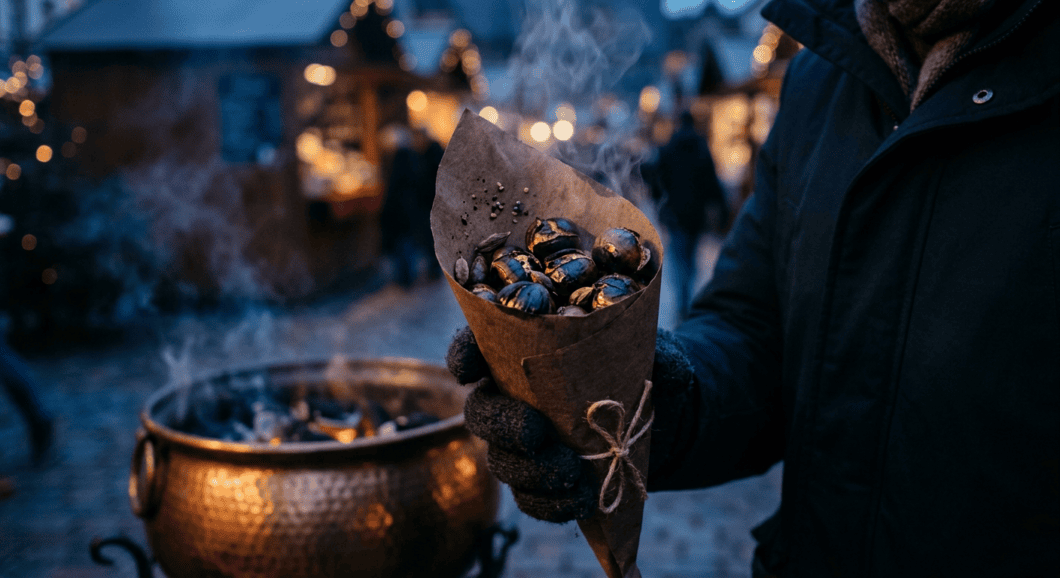
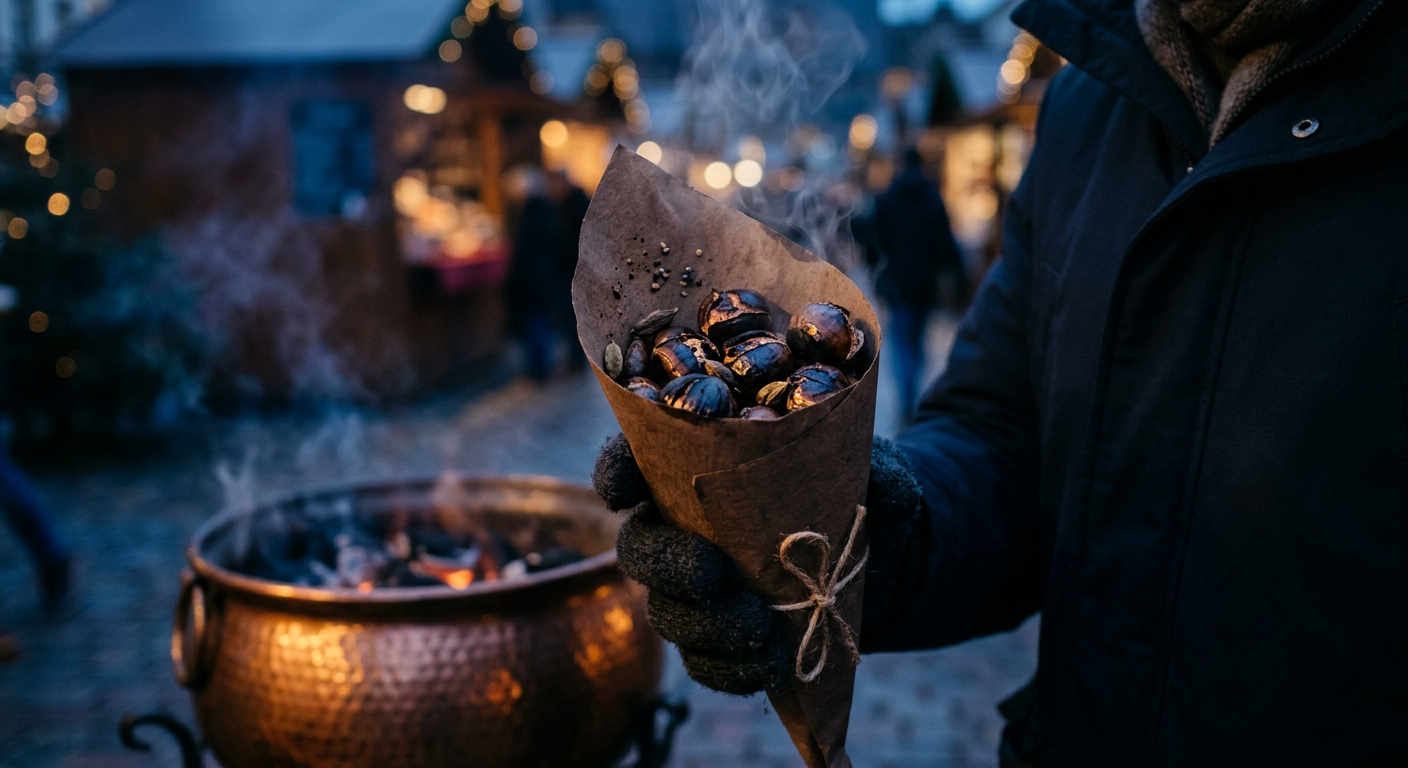
Cinnamon sticks and sugar cookies have company this year. The scent making the strongest case for winter 2026 is smoky black cardamom wrapped around a paper cone of roasted chestnuts. The pairing has moved from novelty to the center of the category, and the search data tracks the shift: queries for “gourmand scents” are up 137% year-over-year since 2024, according to Scento. It delivers warmth without the sugary crash of older winter blends. Below is how the two notes work, how to wear them, and where to buy.
Why Winter Changes the Way Scents Behave

Cold weather changes more than what you reach for. It changes how fragrance performs on skin and in a room.
Lighter citrus and delicate florals fade fast in the cold. Rich, lingering notes like amber, vanilla, and sandalwood do the opposite. Scento calls these “winter heroes” because low temperatures slow their evaporation, stretching out the trail they leave behind.
Chestnut follows the same physics. Cooler temperatures suppress volatility, which lets chestnut’s creamy, roasted, woody notes unfold and project gradually, as CaPerfume notes. That slow release is what you want when you’re moving between frozen sidewalks and overheated rooms all day.
Cardamom balances the equation. It brings a spicy, slightly green crispness that lifts heavier blends while still reading as seasonal, according to Fragrancelord. Between them, the two notes solve winter’s main fragrance problem: how to stay warm without tipping into cloying.
The Rise of the Sophisticated Gourmand

Gourmand fragrances are built around edible notes: vanilla, caramel, chocolate. For years that meant one thing, sweet, and little else. That has changed.
The category has shifted toward what perfumers now call “neo gourmands,” which pair sweet notes with contrasting elements like smoky woods and spices. The result wears better and feels less juvenile than the sugar bombs of a decade ago, per Scento.
Why Chestnut Fits the Trend
Chestnut fills a real gap in modern perfumery. Pairfum describes it as giving depth to perfumes that want to feel grounded but soft, rich but not overpowering. Its character is creamy, gently toasted, lightly woody.
Perfumers rarely extract chestnut directly. They build accords instead, using woody notes, creamy facets drawn from chestnut purée, and faint smoky tones that recall the roasted version. The aim is to evoke a feeling, not reproduce a literal smell.
Why Cardamom Earns Its Place
Fragrance forecasters keep naming cardamom as a defining note of the season. The Essential Oil Company lists creamy notes paired with cardamom, saffron, and pistachio as the backbone of a softer, more complex take on winter gourmands. In a blend, cardamom is the spark, adding personality and crisp energy to formulas that would otherwise fall flat.
What Cardamom and Chestnut Actually Smell Like
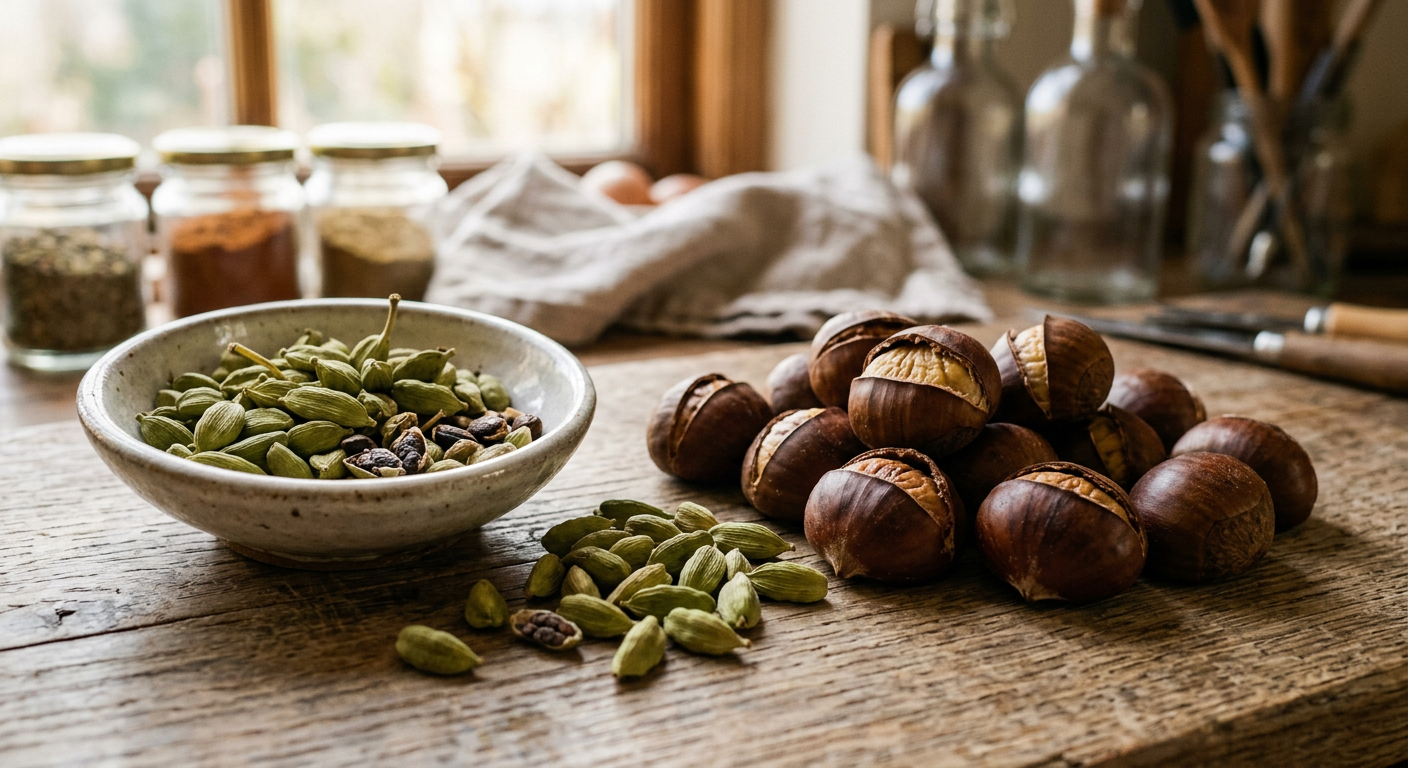
The appeal comes down to contrast. Cardamom is sharp and aromatic. Chestnut is warm and nutty. Layer them and they read as cozy rather than heavy.
Here is how the two notes break down:
| Note | Scent Profile | Role in a Fragrance | Pairs Well With |
|---|---|---|---|
| Black Cardamom | Spicy, smoky, slightly green or minty | Top note; adds crispness and lift | Chestnut, vanilla, woods, allspice |
| Chestnut | Creamy, roasted, gently woody | Heart or base; adds warmth and staying power | Vanilla, leather, woods, spices |
Chestnut usually sits in the heart or base of a composition, where it supplies warmth and longevity rather than brightness, according to Pairfum. It partners naturally with vanilla, woods, leather, and spices, which is why cardamom drops in so cleanly.
A commercial blend shows the structure plainly. APOTHEKE’s Cardamom Chestnut candle lists black cardamom, allspice, and lemon on top; chestnut and coconut in the middle; oakwood and vanilla at the base, per Macy’s. That layered progression turns the scent into a full arc instead of a single flat impression.
How to Wear Cardamom and Chestnut Scents
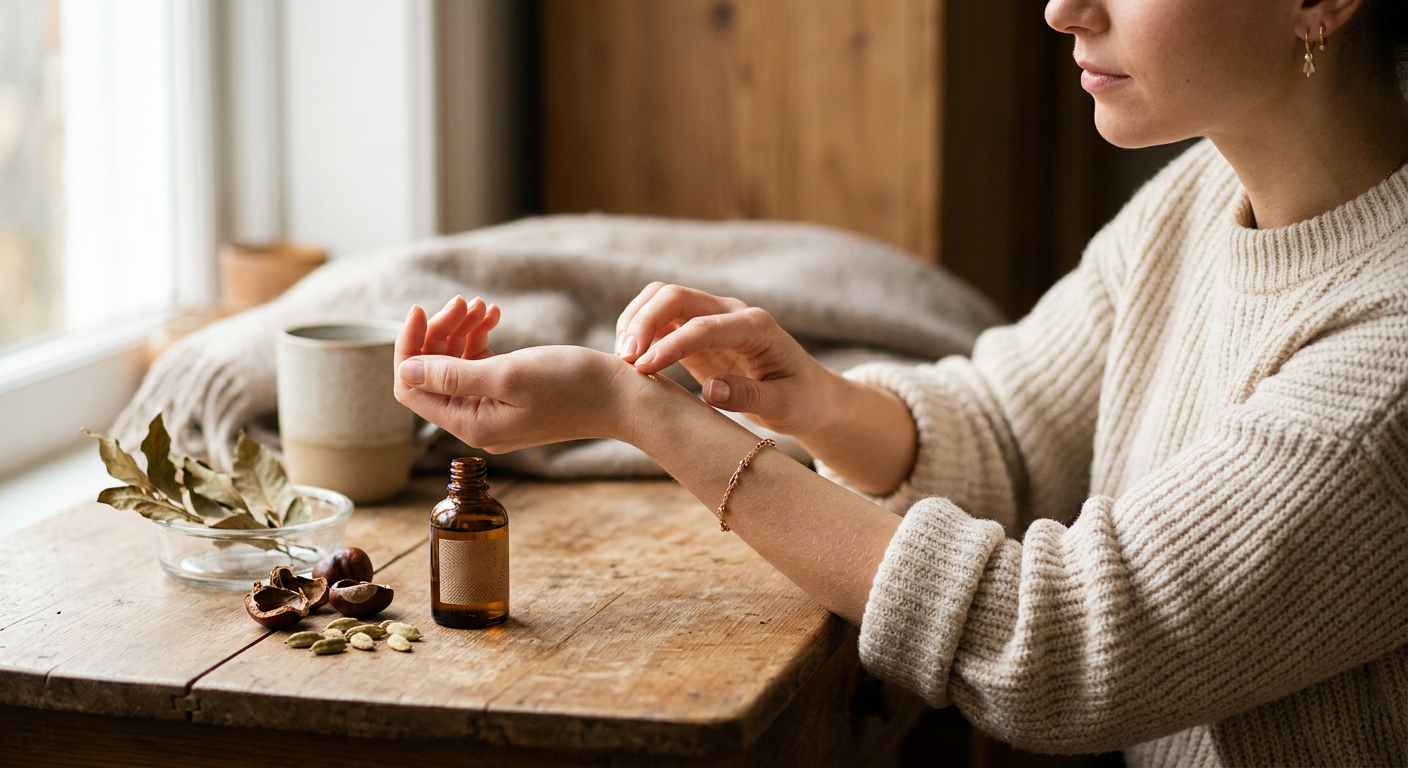
Both notes reward a bit of technique.
Begin with your skin. Apply to pulse points like the wrist or the crook of the elbow, where body heat warms the molecules and helps the scent open up, as Fragrancelord advises. Resist the instinct to rub your wrists together, which crushes the top notes.
For more warmth and sillage, CaPerfume recommends applying chestnut-forward scents to clothing as well as skin. A wool scarf holds gourmand notes far longer than skin does.
A Quick Application Checklist
- Moisturize first. Hydrated skin holds fragrance longer.
- Target pulse points. Wrists, neck, and the inner elbow.
- Add fabric. A spritz on a scarf or collar extends the trail.
- Choose the right concentration. Eau de Parfum, at 15 to 20% perfume oil, gives the best balance of longevity and projection for winter, according to Fragrancelord.
- Sample before committing. A small vial runs to 50-plus uses, per Scento, which is enough to learn how a scent behaves on your skin.
Where to Find Cardamom and Chestnut This Season
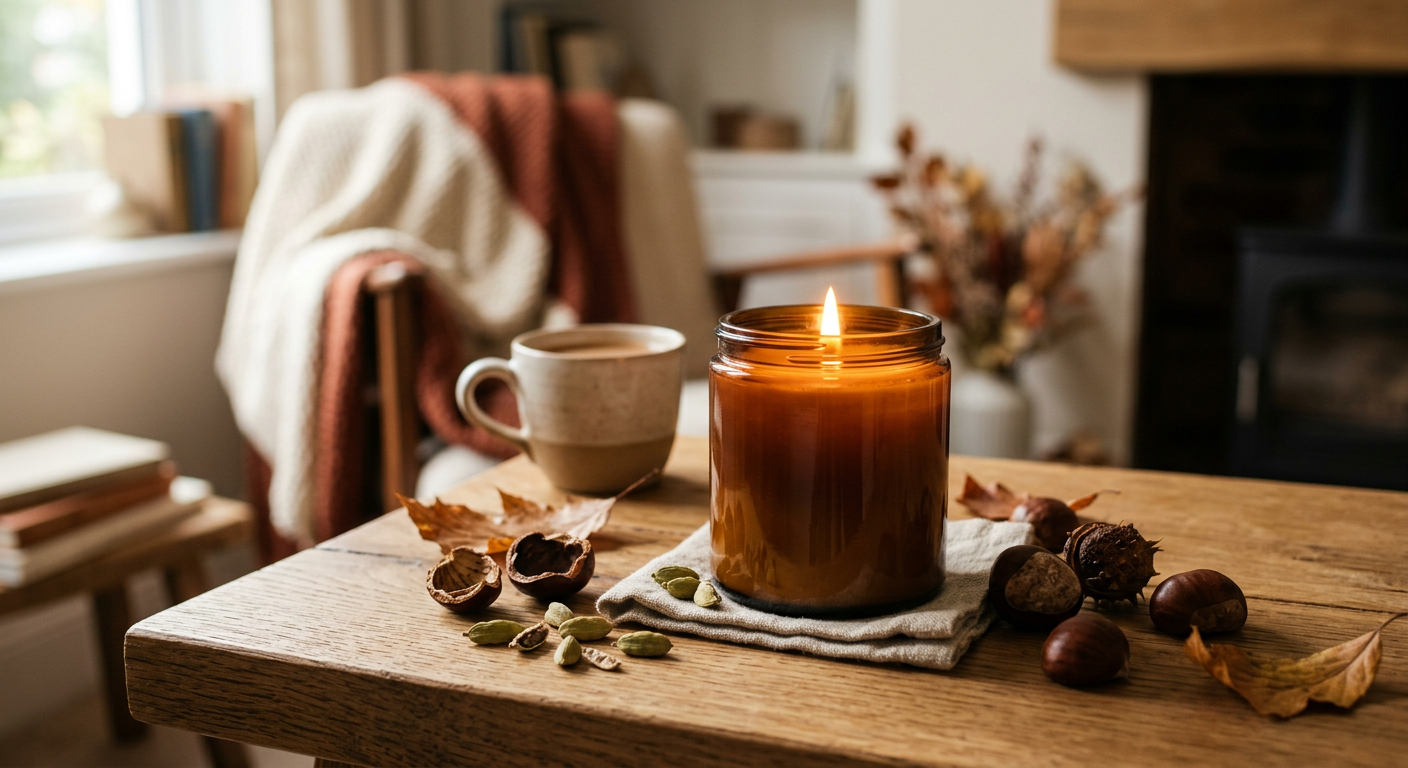
The pairing has spread across both home and personal fragrance, and candles are the cheapest way in.
APOTHEKE carries the scent across its full range, from an $84 three-wick down to a $48 classic candle, plus petite tins, air fresheners, and reed diffusers, according to APOTHEKE. Its collaboration with Norman Rockwell, sold through Crate & Barrel, is a 26-ounce triple-wick that burns for about 75 hours.
Smaller makers interpret the formula their own way. Pearl Candle Company’s Cardamom & Chestnut opens on cinnamon, peppercorn, and ginger, then settles into tonka bean, chestnut, and wood at the base, per Pearl Candle Company. That version swaps lemon brightness for extra kitchen-spice warmth.
This reaches beyond a single product’s moment. Fragrance Science names roasted chestnut, brown butter, and vanilla custard among the season’s leading gourmand notes, with cardamom and saffron supplying the spice. The pairing turns up in candles, soap, body care, and fine fragrance.
The Bottom Line on Winter’s Unexpected Scents
Cardamom and chestnut have earned their spot at the center of winter fragrance. Cardamom brings the crisp, spicy lift; chestnut brings the creamy, roasted warmth and the staying power. Together they land squarely in the neo-gourmand lane driving the market right now, where edible notes meet smoky woods and spice for depth instead of sugar overload.
The numbers hold up. Gourmand searches are up 137% year-over-year, and forecasters across the industry keep pointing to cardamom and roasted chestnut as the notes to watch. Cold weather only helps, slowing these rich notes down so they stick around.
If you want to try it, start with a sample or a candle before committing to a full bottle. Apply to both skin and fabric for the longest trail, and see whether winter’s oddest pairing works as your signature for the season.
Frequently Asked Questions
What do cardamom and chestnut smell like together?
Cozy and warm without being overly sweet. Cardamom adds a spicy, slightly smoky and minty crispness, while chestnut brings a creamy, roasted, gently woody depth that lingers.
Are cardamom and chestnut fragrances only for winter?
They perform best in cold weather, since low temperatures slow their evaporation and let the rich notes linger. CaPerfume notes that chestnut can work in summer too, if it’s blended with lighter citrus or floral notes and applied sparingly.
What fragrance concentration works best for these scents in winter?
Eau de Parfum, at 15 to 20% perfume oil, gives the best balance of longevity and projection for cold weather, according to Fragrancelord. It outlasts the lighter Eau de Toilette formulas.
Is chestnut a natural perfume ingredient?
Rarely in direct form. Perfumers usually build chestnut accords from woody notes, creamy facets, and faint smoky tones to suggest roasted chestnuts, as Pairfum explains.
What is a neo gourmand fragrance?
A neo gourmand blends traditional sweet, dessert-like notes with contrasting elements like smoky woods, spices, and boozy accents. Per Scento, this makes modern gourmands more sophisticated and versatile than their sugary predecessors.
Where can I buy a cardamom and chestnut candle?
APOTHEKE offers the scent in several formats, including candles and diffusers, according to APOTHEKE. Retailers like Crate & Barrel and independent makers such as Pearl Candle Company carry their own versions.